


















COP30: When Climate Action Became Inevitable
Expert analysis of COP30 Belém by Dr. Samiullah Khan explores climate finance, adaptation, just transition, carbon markets, biodiversity, and trade impacts.


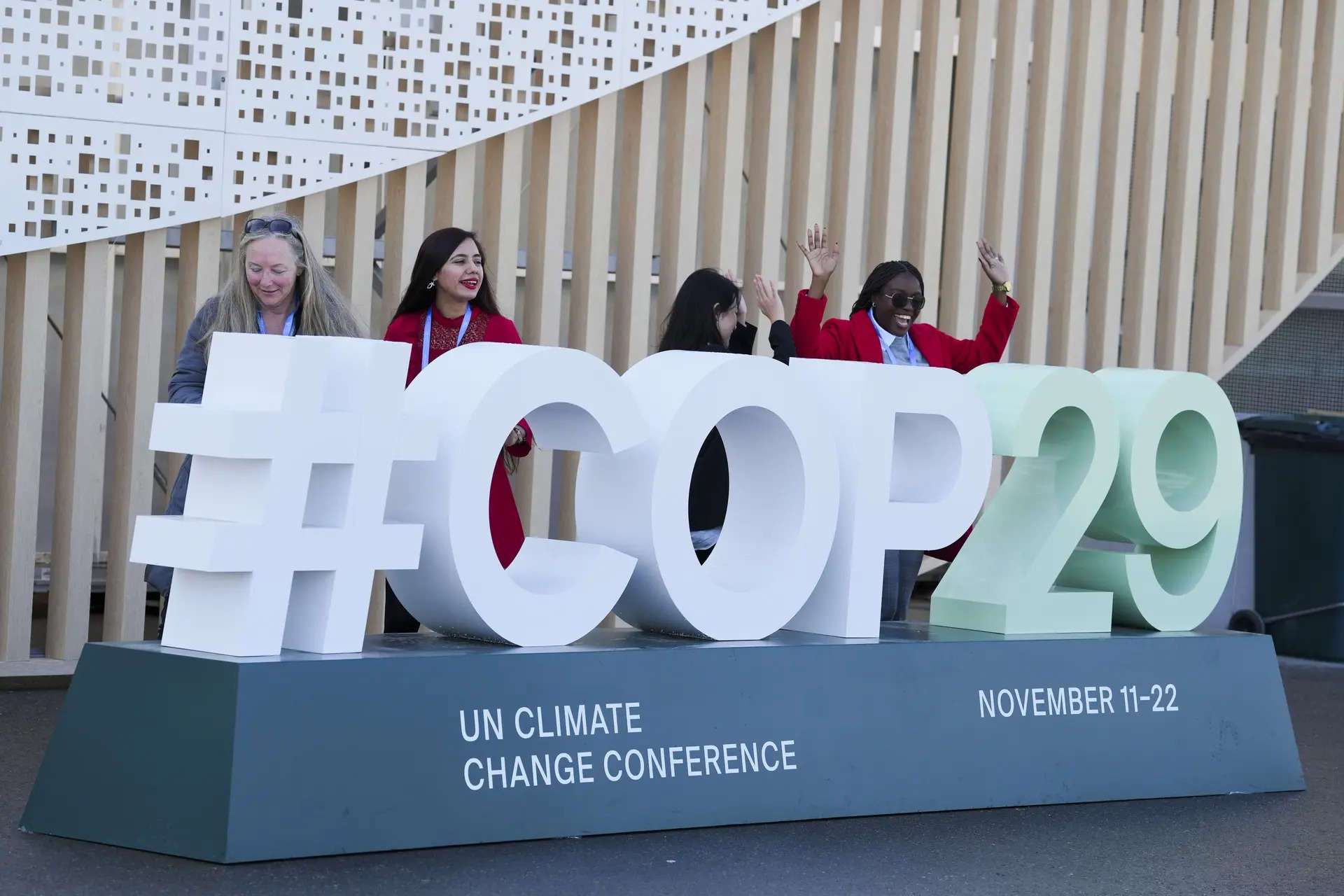
COP30 took place at a critical inflection point for global climate governance. Ten years after the Paris Agreement, the summit confronted a stark reality: while ambition has increased rhetorically, emissions trajectories remain misaligned with the 1.5°C goal. Against this backdrop, COP30 did not deliver a single dramatic breakthrough; instead, it focused on operationalising existing commitments, reflecting the complexity of aligning 195 (-1, USA) national circumstances within a still fossil-fuel-dependent global economy.
The summit embodied Brazil’s philosophy of mutirão—collective effort—prioritising consensus-building, institutional mechanisms, and pragmatic frameworks over headline declarations.

Climate Finance and the Baku-to-Belém Roadmap
A central outcome of COP30 was political endorsement of the Baku-to-Belém Roadmap, which charts a pathway to mobilise at least USD 1.3 trillion per year in climate finance by 2035. While the roadmap stops short of specifying binding funding sources, it provides strategic direction and continuity following the New Collective Quantified Goal (NCQG) agreed at COP29.
The COP sets out five action fronts aimed at scaling up climate finance to developing
countries for NDC and NAP implementation and sustainable development supporting the
achievement of 1.3T:
Replenishing—Grants, concessional finance and low-cost capital
Rechannelling—Transformative private finance and affordable cost of capital
Rebalancing—Fiscal space and debt sustainability
Revamping—Capacity and coordination for scaled climate portfolios
Reshaping—Systems and structures for equitable capital flows
Key decisions:
· Commitment to triple global adaptation finance by 2035, recognising the widening adaptation gap.
· Reinforcement of long-term predictability in finance flows to enable national planning, particularly for climate-vulnerable countries.
Dr. Samiullah Khan’s perspective (UAE):
“From a Gulf and emerging-economy standpoint, the Baku-to-Belém Roadmap is significant not for its headline numbers, but for signalling inevitability. Capital markets, sovereign wealth funds, and development banks now have a directional anchor. For countries like the UAE, this reinforces the need to position climate finance as an investment-grade opportunity, not concessional charity.”
Adaptation and the Global Goal on Adaptation (GGA)
COP30 delivered substantive progress on adaptation by agreeing on 59 indicators under the Global Goal on Adaptation, covering finance, technology transfer, capacity building, and gender responsiveness. Although implementation details remain under review through 2027, the indicators create a long-missing measurement framework.

Key decisions:
· Political agreement to scale adaptation finance to USD 120 billion annually, while acknowledging this remains below actual needs.
· Formal recognition that adaptation is not secondary to mitigation but a core pillar of climate resilience.
Dr. Khan’s perspective:
“For arid and semi-arid regions such as the Middle East, adaptation is no longer a future risk—it is a present economic cost. COP30 correctly reframed adaptation as a strategic investment in asset protection, infrastructure resilience, and supply-chain continuity, rather than a sunk cost.”
Just Transition and Social Equity
A landmark outcome of COP30 was the establishment of the Belém Action Mechanism (BAM) for a Global Just Transition—the first such mechanism under the UNFCCC.
Key decisions:
· Formal integration of labour rights, community protection, and human rights into climate transition frameworks.
· Recognition that workers and communities must be protected during the shift to clean energy systems.
In parallel, the Belém Gender Action Plan was adopted, explicitly recognising the intersectional vulnerabilities of Indigenous women, women with disabilities, and women of African descent.
Dr. Khan’s perspective:
“The just transition mechanism aligns strongly with the UAE’s own narrative of inclusive growth. Climate action that ignores social stability will fail politically and economically. COP30’s emphasis on fairness strengthens the legitimacy of climate policies globally.”

Nature, Forests, and Biodiversity
COP30 elevated biodiversity to a central pillar of climate action, acknowledging that climate and nature crises are inseparable.

Key decisions and initiatives:
· Advancement of the Tropical Forests Forever Facility (TFFF), mobilising over USD 6.7 billion toward a USD 125 billion target for results-based forest protection.
· Stronger recognition of Indigenous rights and stewardship, particularly in forested regions.
· Increased alignment between climate finance and nature-positive outcomes.
Dr. Khan’s perspective:
“Nature-based solutions resonate strongly with desert and coastal ecosystems in the UAE. COP30’s treatment of biodiversity as economic infrastructure—not just environmental heritage—marks a necessary shift in how nations assess risk and value natural capital.”
Carbon Markets and Article 6
Rather than reopening negotiations, COP30 focused on implementing the Article 6 rulebook finalised at COP29.
Key decisions:
· Formal closure of the Clean Development Mechanism (CDM) by end-2026, providing certainty for market participants.
· Continued operationalisation of the Paris Agreement Crediting Mechanism (Article 6.4).
· Launch of cooperative initiatives such as Brazil’s Open Coalition on Compliance Carbon Markets, enabling interoperability across diverse carbon pricing systems.
Dr. Khan’s perspective:
“For the UAE and regional markets, Article 6 clarity is critical. Carbon markets are no longer experimental—they are becoming trade infrastructure. Companies and governments that build measurement, verification, and governance capabilities now will gain strategic advantage.”
Fossil Fuels, Energy Transition, and NDCs
COP30 did not include explicit fossil-fuel phase-out language in its final negotiated text. However, progress occurred through political and institutional channels outside the formal decision.

Key developments:
· Acknowledgement of a likely temporary overshoot of the 1.5°C threshold.
· COP30 Presidency commitment to develop roadmaps on fossil fuel transition and deforestation.
· Announcement of the International Conference for the Phase-Out of Fossil Fuels (Colombia, April 2026).
Dr. Khan’s perspective:
“The absence of explicit language should not be mistaken for inaction. Energy transition is increasingly driven by economics, security, and competitiveness. In regions like the Gulf, diversification and clean energy investment are now rational risk-management strategies, not ideological choices.”
Trade, Competitiveness, and Carbon Border Measures
For the first time, COP30 formally linked international trade and climate policy, launching a three-year dialogue involving the WTO.
This is particularly relevant given the imminent implementation of CBAM regimes in the EU and UK, which will materially affect exporters.
Dr. Khan’s perspective:
“COP30 made it clear that carbon is becoming a trade variable. For UAE-linked supply chains, proactive carbon accounting and supplier engagement are essential to maintain market access and competitiveness.”
Overall Assessment
COP30 will be remembered less for dramatic declarations and more for building the machinery of implementation. It strengthened frameworks on finance, adaptation, just transition, carbon markets, biodiversity, and trade—incremental steps that collectively shift economic incentives.
Dr. Samiullah Khan’s concluding view:
“COP30 confirmed that climate transition is not a single leap but an accumulation of systems, rules, and capabilities. Governments move at diplomatic speed, markets move at profit speed, and climate physics moves relentlessly. The winners will be those—countries and companies alike—who build resilience across all three.”
Media contact:
Press Release Author-Dr. Samiullah Khan
This Press release is for informational purpose only. All information is subject to change without notice. The publisher and authors assume no responsibility for errors or for any actions taken based on this content.
What's Your Reaction?