





























Aramco denies Ukraine drone defence talks
Arabian Post Staff -Dubai Saudi oil producer Aramco has rejected claims that it is negotiating with Ukrainian companies to acquire interceptor drones to defend its oilfields, pushing back against reports that the energy giant was seeking aerial defence systems amid escalating regional security threats. The company issued a statement saying reports of discussions with Ukrainian manufacturers were inaccurate, after media coverage suggested Aramco was exploring purchases […] The article Aramco denies Ukraine drone defence talks appeared first on Arabian Post.
Arabian Post Staff -Dubai
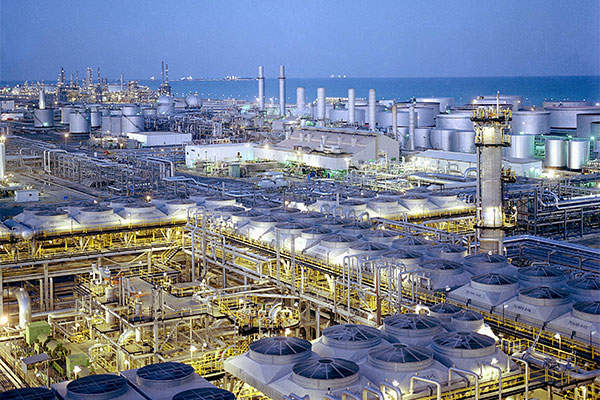
Saudi oil producer Aramco has rejected claims that it is negotiating with Ukrainian companies to acquire interceptor drones to defend its oilfields, pushing back against reports that the energy giant was seeking aerial defence systems amid escalating regional security threats.
The company issued a statement saying reports of discussions with Ukrainian manufacturers were inaccurate, after media coverage suggested Aramco was exploring purchases of interceptor drones designed to destroy incoming unmanned aerial vehicles. The speculation emerged as tensions in the Gulf intensified following retaliatory strikes linked to the wider confrontation involving Iran, the United States and Israel.
Aramco said it was aware of the claims circulating in international media but emphasised that no such procurement talks were under way. The clarification came after reports that the firm had been in contact with at least two Ukrainian defence companies that produce low-cost drones capable of intercepting hostile aircraft or loitering munitions.
The speculation surfaced at a time when the region’s energy infrastructure has been exposed to heightened security risks. Iranian retaliation following military strikes against its territory has included attacks on energy facilities across the Gulf and threats to key transport routes. The Strait of Hormuz, one of the world’s most critical oil shipping corridors, has been severely disrupted, with flows through the chokepoint accounting for roughly a fifth of global oil supply.
Energy analysts say such developments have renewed concern among oil producers about the vulnerability of major extraction and refining facilities to drone and missile strikes. Gulf infrastructure has faced similar threats in earlier confrontations, prompting governments and companies to reassess defensive capabilities around strategic installations.
Reports that Aramco was exploring Ukrainian drone interceptors reflected the growing international interest in Kyiv’s rapidly developing unmanned defence technologies. Since Russia’s invasion, Ukrainian firms have expanded production of systems designed to neutralise the Iranian-designed Shahed drones widely deployed on the battlefield. These interceptors are typically cheaper than traditional missile-based air defence systems, costing only a fraction of the price while providing a flexible counter-drone capability.
Manufacturers in Ukraine have developed several interceptor platforms, including compact unmanned aircraft able to ram or detonate near hostile drones. Some models are produced in large numbers and have reportedly destroyed thousands of aerial targets during the conflict. Their effectiveness against low-cost attack drones has attracted attention from defence planners seeking affordable ways to protect civilian infrastructure.
Interest in Ukrainian counter-drone technology extends beyond Europe. Governments in the United States and parts of the Middle East have explored partnerships with Ukrainian companies and military experts to replicate detection and interception systems developed during the war. Such cooperation has included discussions on drone detection networks and training programmes for operators.
Ukraine’s leadership has indicated that several countries have requested assistance in countering Iranian-origin drones, which have been deployed in conflicts from Eastern Europe to the Middle East. Ukrainian defence manufacturers, having built up production capacity beyond domestic demand, have increasingly positioned themselves as potential exporters of drone defence technologies.
Despite this wider interest, Aramco’s denial suggests that any potential procurement by the company remains speculative. Industry observers note that security decisions for critical infrastructure in the Gulf are typically coordinated closely with national defence authorities rather than undertaken independently by energy firms.
The debate surrounding drone defences also reflects a broader transformation in warfare and industrial security. Unmanned aerial systems have emerged as one of the most disruptive technologies in modern conflicts, allowing relatively inexpensive devices to threaten high-value targets such as refineries, pipelines and shipping terminals.
Saudi Arabia’s energy infrastructure has faced drone and missile attacks during earlier regional confrontations, including strikes on oil facilities that temporarily disrupted production and rattled global markets. Those incidents accelerated investment in air defence systems and reinforced the strategic importance of protecting energy assets from asymmetric threats.
The broader geopolitical crisis has intensified fears that energy infrastructure could again become a focal point of hostilities. Iranian strikes have targeted facilities and installations across the region following the military campaign launched against Tehran, and several Gulf states have placed security forces on heightened alert.
Oil markets have responded sharply to the uncertainty surrounding the Strait of Hormuz and the potential for further attacks on energy facilities. The narrow waterway is the primary export route for crude produced in several Gulf countries, making any disruption a matter of global economic concern.
Security experts say the proliferation of low-cost drones has altered the defensive calculus for governments and companies alike. Traditional missile defence systems can cost millions of dollars per interception, while drones used in attacks often cost only thousands. This imbalance has encouraged the development of alternative counter-drone solutions, including interceptor drones and electronic warfare systems designed to disrupt communication signals.
The article Aramco denies Ukraine drone defence talks appeared first on Arabian Post.
What's Your Reaction?