



















From Sand to Sustainability: The UAE’s Bold Answer to a World Losing Its Forests
As global forest carbon sinks decline, the UAE leads with desert reforestation, mangroves, bamboo forests, and climate-smart urban development.
Desert to Forest: UAE Is Championing Reforestation in a World Losing Its Forest Carbon Sink
At a time when the world’s forests are approaching a dangerous tipping point, the United Arab Emirates (UAE) is emerging as an unlikely yet compelling leader in reforestation and ecosystem restoration. Globally, forests have historically absorbed nearly 30% of annual human-induced carbon emissions. However, recent data shows that this forest carbon sink has weakened dramatically due to deforestation, agricultural expansion, and unprecedented wildfires, with 2023 and 2024 marking the lowest net forest carbon absorption in over two decades .
Over the past 24 years, the dominant driver of forest-related emissions has been agriculture, accounting for just over half (53%) of emissions from all tree cover loss from 2001-2024. Sometimes forests are cleared, farmed for a few years, and then left to regrow as forests — a practice known as shifting cultivation — while in other cases, forests are permanently cleared, destroying their ability to act as a carbon sink. Emissions from agriculture-driven tree cover loss have risen steadily over the past two decades.

Against this alarming backdrop, the UAE’s desert forest initiatives stand out—not as symbolic gestures, but as strategic, science-led interventions designed to restore nature, strengthen climate resilience, and redefine what is possible in arid environments.
A Global Crisis Meets a Regional Opportunity
The analysis makes one fact unequivocally clear: forests are no longer guaranteed climate allies. Extreme fires, land-use change, and ecosystem degradation are pushing forests in several regions—from parts of South America to boreal Canada—from net carbon sinks into net carbon sources . The implications are profound: accelerated climate change, destabilised rainfall patterns, and growing risks to food and water security.
For UAE an arid nation, this crisis presents both a challenge and an opportunity. The UAE has chosen the latter—positioning reforestation, mangroves, bamboo, and urban forestry as part of a broader climate, economic, and social resilience strategy.
Policy, Law, and Institutional Leadership
The UAE’s success is anchored in governance. Federal Law No. 24 of 1999 for the Protection and Development of the Environment establishes legal protection for ecosystems and vegetation, while the UAE National Climate Change Plan (2017–2050) and the Net Zero by 2050 Strategic Initiative embed nature-based solutions into national climate architecture.
At the emirate level, Dubai’s Green Agenda 2030 and Abu Dhabi’s Environmental Vision 2030 translate policy into implementation—integrating urban greening, afforestation, and ecosystem restoration into land-use planning and infrastructure development.

A defining institutional milestone has been the establishment of the Dubai Environment and Climate Change Authority (DECCA). Under the proactive leadership of H.E. Ahmed Mohammed bin Thani, DECCA has actively supported mangrove restoration, bamboo forest initiatives, and nature-positive urban interventions—reinforcing Dubai’s role as a regional climate and biodiversity leader.
Research reveals just how critical healthy forests are to society.For example, forests mitigate climate change by removing and storing carbon from the atmosphere as the trees within them grow. According to the Woodwell Climate Research Center, forests hold 861 gigatonnes (GT) of carbon in their branches, leaves, roots and soils. That’s nearly 5,000 times the CO2 emitted annually from aviation. On top of that, they absorb nearly 16 GT of carbon dioxide per year, almost as much as the annual global emissions from agriculture.
Regenerating forests typically absorb carbon fastest when they are between 20 and 40 years old. But even mature forests continue to pull carbon from the air while creating other benefits.

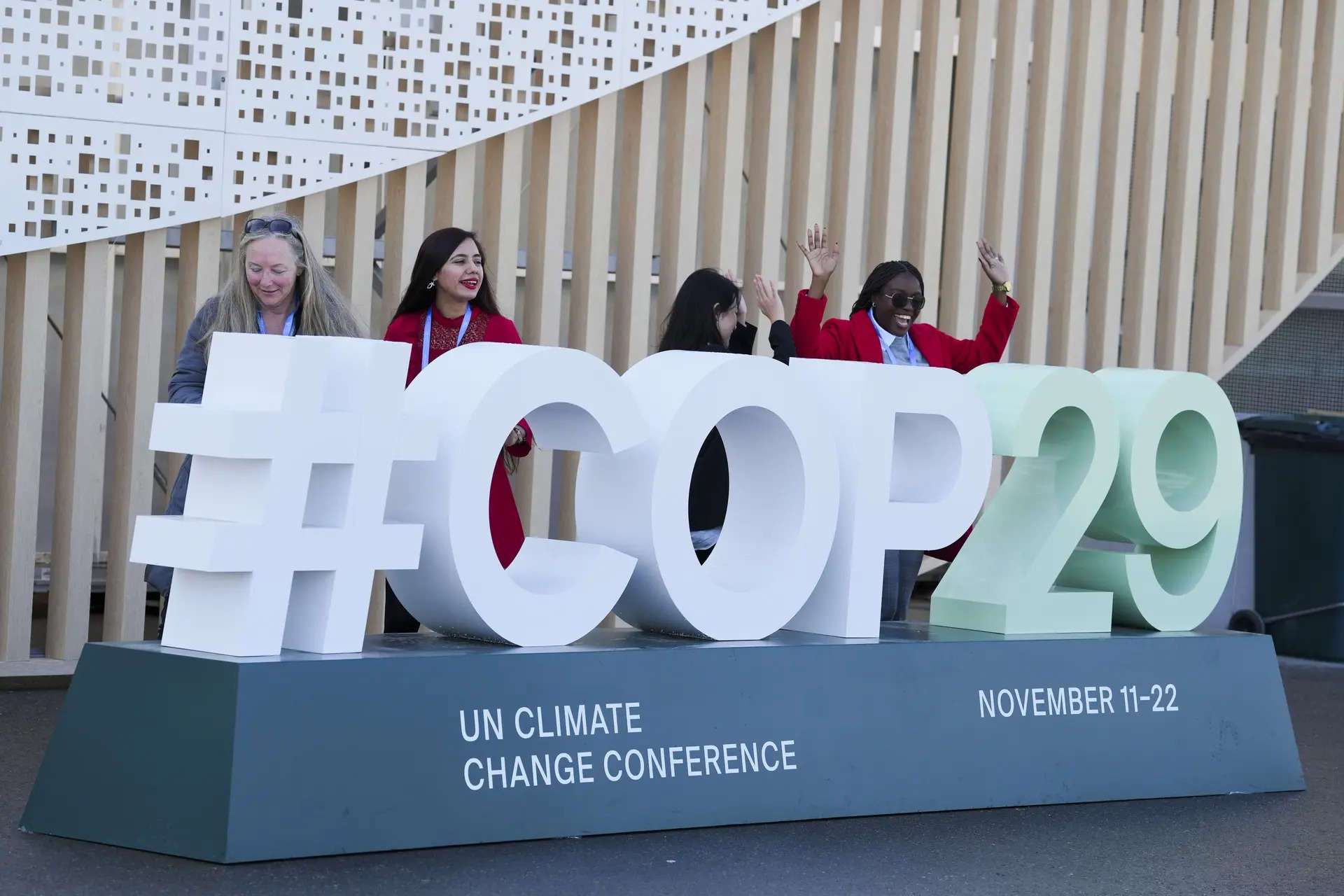
In the climate negotiations in Belém (COP 30) Brazil officially launched its Tropical Forest Forever Facility (TFFF), securing $6.7 billion to provide long-term, predictable finance for tropical forest protection – a start toward its initial $25 billion target.
COP30 also made strides in including Indigenous voices, with over 2,500 Indigenous People participating and key COP documents recognizing their land tenure and forests management rights.

From Tree Planting to Ecosystem Engineering
Unlike conventional afforestation models, the UAE’s approach recognises that desert reforestation must be engineered, not improvised.
Mangroves and Blue Carbon

Mangroves—though representing a fraction of global forest cover—deliver disproportionately high carbon storage, coastal protection, and biodiversity benefits . UAE mangrove projects align directly with these global findings, strengthening coastlines while contributing to national carbon inventories under the Paris Agreement.
Bamboo and Desert Forestry Innovation
Private-sector innovation has been decisive. Aakash Green has leveraged advanced AI simulations to develop multiple bamboo strains capable of thriving in hostile desert conditions using treated grey water and minimal maintenance. Its O2 Parks initiative is redefining desert agriculture by demonstrating that fast-growing, high-carbon biomass crops can succeed where traditional models fail.
Similarly, Multiplex, a global leader in agri-technology, has demonstrated that with the right scientific intervention, soil rehabilitation, and water management, even degraded land can be cultivated—echoing global research that restoration, when done correctly, can meaningfully rebuild carbon sinks.
Real Estate as a Climate Actor
One of the UAE’s most distinctive contributions is the integration of reforestation into real estate and urban development.
Leading developers such as Fakhruddin Properties, Al-Futtaim, and Diamond Developers are embedding biophilic design, urban forests, and nature-integrated architecture into large-scale developments. These projects move beyond aesthetics, delivering measurable benefits in microclimate cooling, air quality improvement, biodiversity support, and occupant wellbeing—while aligning with ESG expectations and long-term asset resilience.
People Power: Youth, Activists, and Cross-Sector Collaboration
The UAE’s forest initiatives are also human stories. Eng. Maitha Alblooshi, a young Emirati climate activist working under the patronage of Her Highness Sheikha Maryam bint Mohammed bin Ahmed Al Maktoum, alongside Ms. Karen Story, Mr. Ramasubramanian, Mr. Mahesh Shetty, and Mr. Dawood, are contributing to iconic forest projects across the region. Their work reflects a new generation of climate leadership—technically grounded, socially engaged, and action-oriented.

Academia as the Innovation Backbone
Academic institutions are playing a catalytic role. RIT Dubai, under the leadership of Dr. Yousuf (President) and Dr. Ghalib (Head of the Sustainability Park), is conducting path-breaking research on sustainable materials, ecosystem restoration, and climate-resilient design. By embedding sustainability across curricula and partnering directly with industry, RIT exemplifies how education can accelerate real-world climate solutions.
The UAE Model: Government, Academia, and Private Sector in Sync

The attached global analysis emphasises that forests must be treated as strategic assets, requiring constant maintenance, monitoring, and protection . The UAE’s experience shows how this can be achieved in practice.
The success of the UAE’s desert forest projects can be directly attributed to seamless collaboration between government authorities, academic institutions, and the private sector—a model increasingly recognised as essential for scaling climate solutions globally.
Conclusion: From Exception to Blueprint
In a world where forests are weakening under pressure, the UAE offers a counter-narrative: that with governance, technology, finance, and collaboration, even deserts can become part of the global solution.
From desert soils to mangrove and forests, the UAE’s journey is not merely symbolic—it is legal, strategic, and operational.
What distinguishes the UAE’s approach is the integration of:
· legal mandates for environmental protection,
· evidence-based implementation of reforestation,
· technology and monitoring systems for accountability, and
· cross-sector engagement across government, business, and civil society.
In doing so, the UAE exemplifies how arid nations can transform ecological challenges into opportunities for climate resilience, economic diversification, and global leadership.
“From Desert to Forest” is no longer aspirational language in the UAE. It is an operational reality—demonstrating that climate leadership is defined not by geography, but by vision, execution, and the courage to rethink what nature-based solutions can achieve in the 21st century.
Media Contact:
Press Release Author- Dr. Samiullah Khan.
This Press release is for informational purpose only. All infomation is subject to change without notice. The publisher and authors assume no responsibility for errors or for any actions taken based on this content.
What's Your Reaction?