






























UAE’s Plastic Ban Phase 2 (2026): Law, Policy & Business Implications
As the UAE enters 2026, Phase 2 of its nationwide single-use plastic ban comes into force, expanding restrictions beyond bags to cups, cutlery, containers, and ultra-thin packaging. Anchored in federal and emirate-level legislation, this policy marks a decisive shift toward enforceable sustainability governance, impacting importers, manufacturers, retailers, and hospitality operators across the value chain.
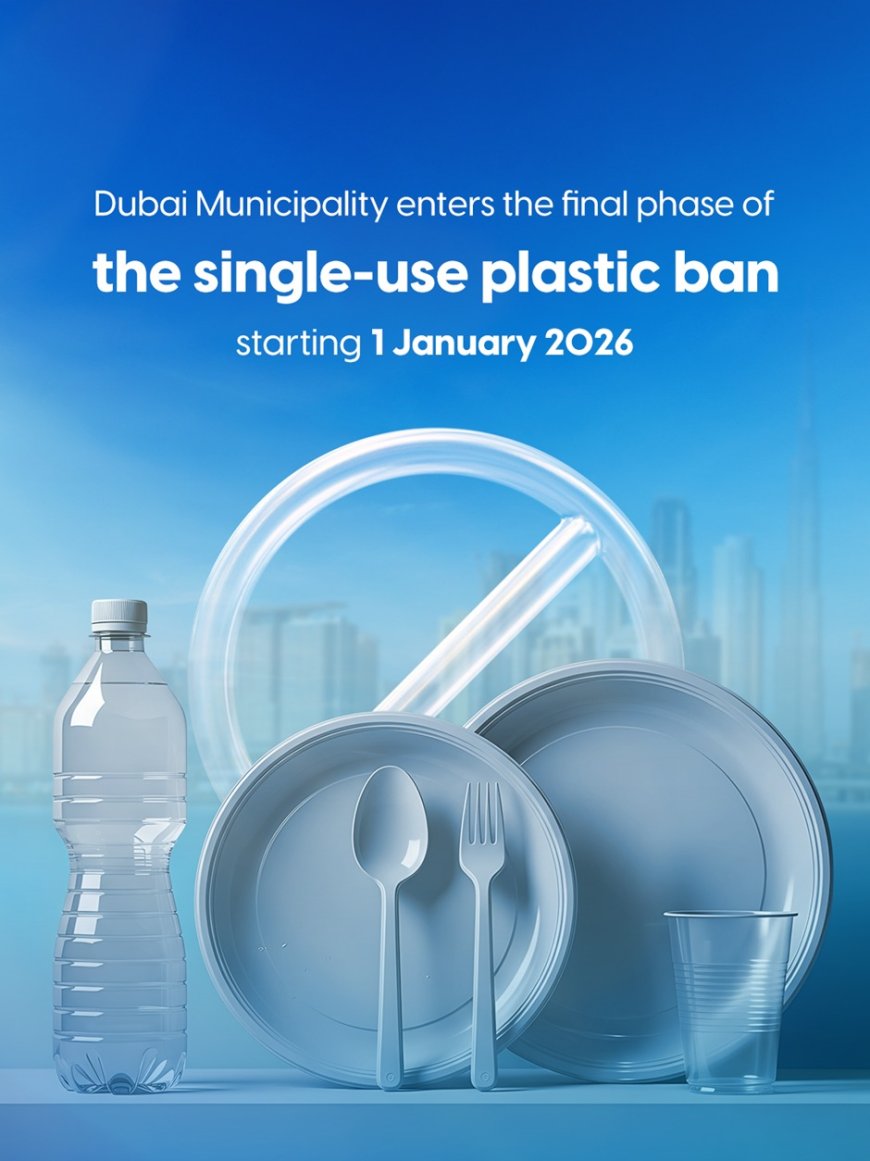
As we enter January 2026, the United Arab Emirates (UAE) will implement Phase 2 of its nationwide single-use plastic ban, a landmark policy in the country’s sustainability trajectory.
This development is not abrupt. It follows a phased implementation strategy designed to allow businesses and consumers to adapt ahead of enforcement. Phase 2 significantly broadens the restriction on single-use plastics, extending regulatory reach beyond bags into a wider range of consumer products.
Legal and Policy Basis
The expanded ban is anchored in Cabinet Resolution No. 380 of 2022 issued by the Ministry of Climate Change and Environment (MOCCAE). This federal decision regulates the import, manufacture and trade of single-use products across the UAE’s markets with the objective of protecting ecosystems, improving waste management, and advancing the principles of a circular economy.

In parallel, at the emirate level, Executive Council Resolution No. 124 of 2023 regulates single-use products specifically in the Emirate of Dubai, reinforcing and detailing scope and enforcement mechanisms.
These laws reflect the UAE’s commitment to sustainability policy that is predictable, phased, and operationally integrated into commercial and environmental governance frameworks.
What Phase 2 Covers (Effective 1 January 2026)
Under the expanded regulatory scope, the ban now includes:
- Single-use cups and lids (plastic and Styrofoam)
- Plastic cutlery and plates (spoons, forks, knives, chopsticks)
- Straws and stirrers
- Styrofoam food containers
- Single-use bags below 50 microns, regardless of material (plastic or paper)
This last point concerning bag thickness is significant in that it eliminates loopholes based on material type alone — paper bags under the specified thickness are treated like plastic in the context of the ban.

Compliance Responsibility Across the Value Chain
The regulation applies comprehensively at three points in the commercial lifecycle:
- Import
- Manufacture
- Trade
Therefore, compliance obligations extend beyond retailers to manufacturers, importers, distributors, and hospitality operators. This reinforces that regulatory responsibility flows across the whole value chain, not just end-user behaviour.
Exemptions and Conditions
Certain exemptions exist but are tightly circumscribed:
- Products manufactured for export/re-export outside the UAE may be produced, provided they are clearly labelled and not distributed domestically.
- Products made from UAE-recycled materials are exempt, encouraging local recycling and secondary material markets.
- Some hygiene-critical bags (e.g., for medicines, refuse, very thin food-wrapping bags) are allowed, again subject to documentation and traceability.
These exemptions are not automatic — they require proof of condition, traceability and documentation to satisfy regulators.
Strategic Direction: Sustainability as a Regulatory Reality
This policy evolution demonstrates a shift in the UAE from ad-hoc environmental announcements to predictable, phased, and policy-led sustainability implementation. What was once framed as a voluntary sustainability dialogue is increasingly a regulatory reality with clear compliance obligations for business operations.

Practical questions organisations must now consider include:
- “Does our packaging strategy align with evolving sustainability compliance?”
- “Are our supply chain decisions forward-aligned with 2026 compliance milestones?”
Answering these questions will determine readiness not just for enforcement on 1 January, but for the competitive landscape of sustainability performance and ESG compliance.
Conclusion
The UAE’s Phase 2 plastic ban marks a definitive escalation in environmental governance. By extending prohibitions to cups, lids, cutlery, containers, and ultra-thin bags, the policy signals a systematic transition towards circular economy principles. As regulatory structures become more integrated into operational planning, sustainability becomes more than messaging — it becomes a core compliance and strategic imperative for businesses and institutions operating in the UAE.

Media Contact:
Press Release Author- Dr. Samiullah Khan.
This Press release is for informational purpose only. All infomation is subject to change without notice. The publisher and authors assume no responsibility for errors or for any actions taken based on this content.
What's Your Reaction?