

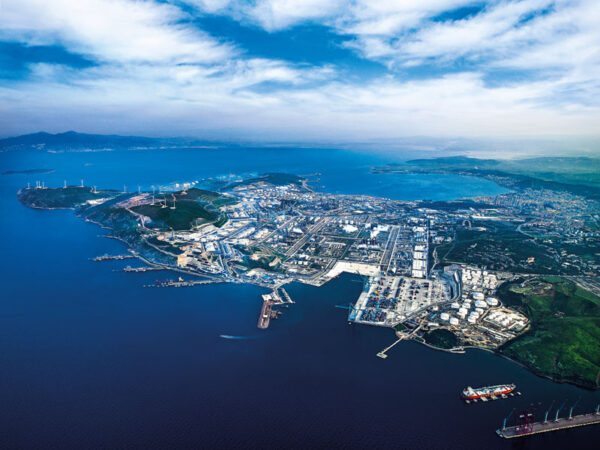


































Aramco restores Ras Tanura refinery output
Arabian Post Staff -Dubai Saudi Arabia’s state energy giant Saudi Aramco has restarted operations at its Ras Tanura refinery, marking a significant step in stabilising crude processing capacity at one of the world’s most strategically important oil hubs. The resumption follows a disruption that had drawn attention across global energy markets already sensitive to supply risks and geopolitical tensions. Ras Tanura, located on the kingdom’s eastern coast […]The article Aramco restores Ras Tanura refinery output appeared first on Arabian Post.

Arabian Post Staff -Dubai
Ras Tanura, located on the kingdom’s eastern coast along the Arabian Gulf, is widely regarded as a cornerstone of Saudi Arabia’s downstream infrastructure. With refining and export facilities integrated into one of the largest oil terminals globally, the site plays a central role in converting crude into refined products while also supporting large-scale export flows. The restoration of activity signals a return to normalcy for a facility that underpins both domestic fuel supply and international shipments.
Aramco has not disclosed full technical details of the disruption that led to the temporary halt, though industry observers indicate that the pause may have been linked to operational or maintenance issues rather than structural damage. The company has emphasised its ability to maintain supply commitments during the outage, drawing on its extensive network of storage and alternative processing facilities.
Market reaction to the restart has been measured, reflecting confidence in Aramco’s capacity to manage disruptions without significant export shortfalls. Oil prices, which had shown sensitivity to Middle East developments, remained within established trading ranges, suggesting that traders viewed the interruption as contained. Analysts note that the swift resumption helps reinforce Saudi Arabia’s reputation for reliability in energy markets, particularly at a time when supply chain resilience is under heightened scrutiny.
Ras Tanura’s importance extends beyond its refining capacity. The facility is closely linked to export terminals capable of handling millions of barrels per day, making it a critical node in the global oil supply chain. Any disruption at the site tends to attract immediate attention due to its potential impact on shipments to Asia, Europe and beyond. The restart therefore alleviates concerns among major importing nations that rely on consistent flows from the Gulf.
Energy experts highlight that Aramco’s operational model is designed to mitigate precisely such disruptions. The company maintains redundancy across its infrastructure, including multiple processing sites and pipeline networks that allow for flexibility in routing crude and refined products. This integrated approach has been cited as a key factor enabling rapid recovery from outages.
The broader context surrounding the restart is shaped by ongoing geopolitical uncertainties in the region, where energy infrastructure has at times been a focal point of security concerns. While there has been no indication that the Ras Tanura disruption was linked to external factors, the event underscores the vulnerability of critical facilities and the importance of robust contingency planning.
Saudi Arabia’s position within OPEC+ also adds another layer of significance. As one of the leading producers in the alliance, the kingdom’s ability to sustain production and refining operations influences global supply balances. The return of Ras Tanura to full functionality supports the country’s capacity to meet its output targets and manage export volumes in line with agreed production strategies.
Refining margins have been a point of focus for the industry, with fluctuations driven by demand patterns, seasonal consumption and economic conditions. The restoration of Ras Tanura’s operations is expected to contribute to the availability of refined products such as petrol, diesel and jet fuel, helping to stabilise regional markets. Traders will be monitoring whether increased throughput at the facility exerts any downward pressure on product prices.
Aramco’s investment in maintenance and modernisation of its assets has been central to its long-term strategy. The company has consistently emphasised operational efficiency and reliability, positioning itself as a supplier capable of weathering disruptions while maintaining output. The handling of the Ras Tanura interruption is likely to be viewed within this broader framework of resilience.
Shipping activity at the terminal is expected to normalise as processing ramps up, with logistics chains adjusting to restored flows. Tanker movements, which had seen minor scheduling adjustments during the outage, are anticipated to align with regular patterns. This normalisation is crucial for buyers who depend on predictable delivery schedules.
The article Aramco restores Ras Tanura refinery output appeared first on Arabian Post.
What's Your Reaction?