






















Beyond oil: Internet bandwidth, global commerce at risk with Hormuz strait closure
[Editor's Note: Follow Khaleej Times live blog amid US-Israel-Iran war for the latest regional developments.]The Strait of Hormuz – long viewed as the world's most dangerous energy chokepoint – is rapidly emerging as something far more consequential and vulnerable. Beneath tanker routes carrying roughly 21 percent of global petroleum distribution, are dense clusters of fibre optic cables that transmit digital signals powering finance, trade, cloud computing and supply chains across three continents, according to maritime transit estimates widely cited by the US Energy Information Administration.With the US-Israel-Iran war entering its fourth week and not showing any signs of resolution, this convergence of physical and digital infrastructure creates a systemic vulnerability of unprecedented scale, which analysts warn will place $5 trillion of global commerce at risk."What most people don't understand is that the Strait of Hormuz isn't just an oil bottleneck it's the digital jugular of three continents," Rayad Kamal Ayub, Dubai-based cybersecurity expert and managing director of Rayad Group, told Khaleej Times over the weekend.Stay up to date with the latest news. Follow KT on WhatsApp channels. Subsea infrastructure fragility is alarming. The International Cable Protection Committee estimates around 200 undersea cable faults occur globally each year, most triggered by anchors, fishing trawlers or natural hazards. And now, there is war.Ayub explained at least six major cable systems traverse the strait's constrained geography, forming a critical digital artery linking Europe, Asia and the Middle East.These networks carry more than 95 per cent of intercontinental data traffic, underpinning digital infrastructure supporting $32 trillion in annual global digital commerce, according to UNCTAD (UN Trade and Development).“The sheer concentration of this traffic through a single geographic chokepoint represents what infrastructure analysts increasingly describe as the most dangerous single point of failure in the global digital economy,” Ayub noted."We've modeled various disruption scenarios, and the numbers are staggering. A coordinated cable cut would cause $10 billion to $50 billion in losses per week, with cumulative damage potentially reaching $3 trillion to $5 trillion over a three to six month disruption period,” he added.Unprecedented infrastructure threatsThe situation is now beyond theoretical modeling as both the Red Sea and Strait of Hormuz have effectively become zones where commercial cable repair vessels cannot safely operate. Media reports note Meta and its partners have been forced to halt work on the 2Africa Pearls project, an extension of the broader 2Africa subsea cable system designed to strengthen regional connectivity. Alcatel Submarine Networks, the French company contracted to lay critical cables, has issued force majeure notices to its clients, declaring it can no longer safely operate in the Arabian Gulf due to active military operations.Rayad Kamal Ayub“This represents a watershed moment where the global internet now faces its most serious infrastructure threat in decades,” Ayub pointed out, noting: “Regional exposure remains severe. Analysts estimate 70 to 90 per cent connectivity loss across GCC countries, affecting 54 million people; while India could see 30 to 40 per cent capacity reductions, Pakistan 50 to 60 per cent, and East Africa 40 to 50 per cent.Shocking speedNot sounding alarmists but realists, industry leaders note that cable disruption along Strait of Hoymuz, “would likely paralyze global financial markets with shocking speed”. High frequency trading firms cannot tolerate interruption; routing failures could trigger automated shutdowns across global exchanges, and payment infrastructure would strain simultaneously.An IMF (International Monetary Fund) analyst said: “A Strait of Hormuz cable cut would halt regional stock markets. The disruption would ripple rapidly into global technology operations, including India's $254 billion IT services industry that remains deeply dependent on international cable routes, according to National Association of Software and Service Companies."A 40 percent capacity reduction means $3 billion to $7 billion in daily losses from contractual penalties, plus immeasurable reputational damage," Ayub pointed out.Repairing damaged cables is costly and slow. The International Cable Protection Committee estimates restoration costs of $50 million to $150 million per cable, with timelines typically four to eight weeks. In militarized environments, delays could stretch to three to six months.“The Strait of Hormuz represents a convergence point of geopolitics, technology and systemic fragility. The real danger is not just that cables could be cut. It is that the global economy is still behaving as if they never will be,” Ayub warned.Hormuz shipping disruption puts over Dh10 trillion in global trade at riskUS‑Israel‑Iran war turns cloud infrastructure int
[Editor's Note: Follow Khaleej Times live blog amid US-Israel-Iran war for the latest regional developments.]
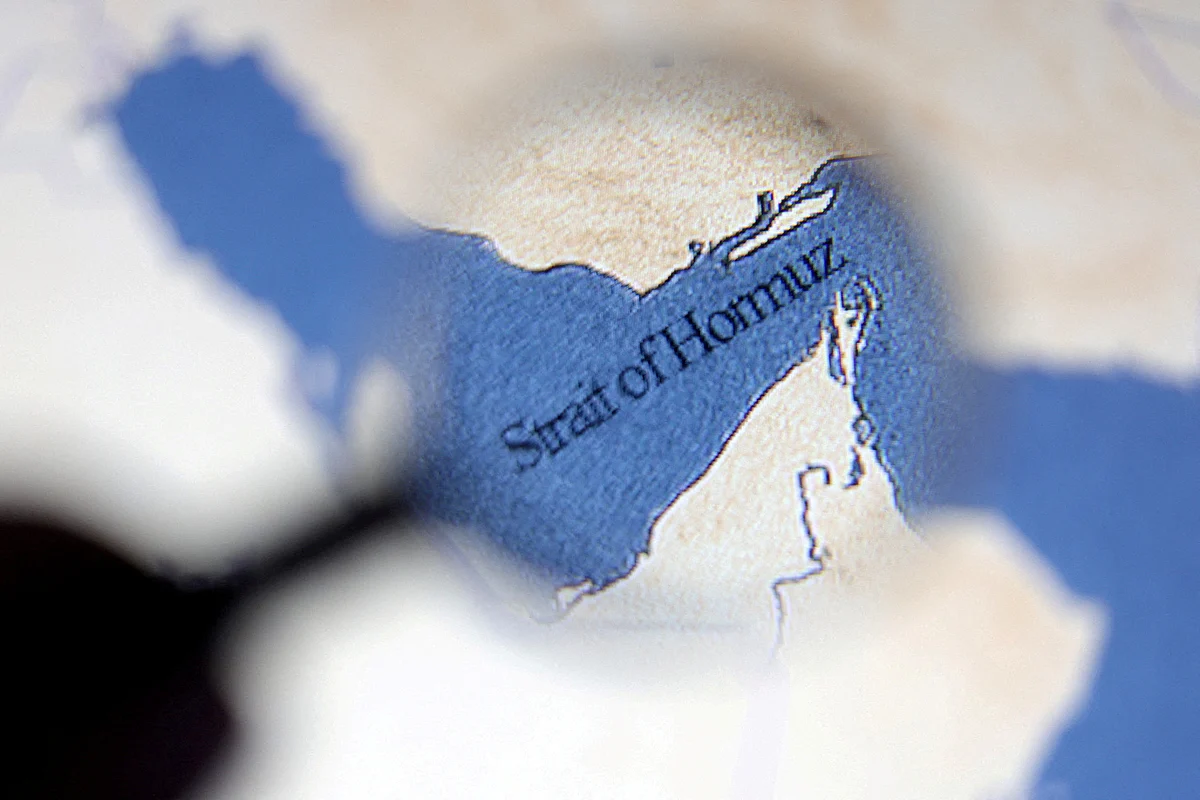
The Strait of Hormuz – long viewed as the world's most dangerous energy chokepoint – is rapidly emerging as something far more consequential and vulnerable. Beneath tanker routes carrying roughly 21 percent of global petroleum distribution, are dense clusters of fibre optic cables that transmit digital signals powering finance, trade, cloud computing and supply chains across three continents, according to maritime transit estimates widely cited by the US Energy Information Administration.
With the US-Israel-Iran war entering its fourth week and not showing any signs of resolution, this convergence of physical and digital infrastructure creates a systemic vulnerability of unprecedented scale, which analysts warn will place $5 trillion of global commerce at risk.
"What most people don't understand is that the Strait of Hormuz isn't just an oil bottleneck it's the digital jugular of three continents," Rayad Kamal Ayub, Dubai-based cybersecurity expert and managing director of Rayad Group, told Khaleej Times over the weekend.
Stay up to date with the latest news. Follow KT on WhatsApp channels.
Subsea infrastructure fragility is alarming. The International Cable Protection Committee estimates around 200 undersea cable faults occur globally each year, most triggered by anchors, fishing trawlers or natural hazards. And now, there is war.
Ayub explained at least six major cable systems traverse the strait's constrained geography, forming a critical digital artery linking Europe, Asia and the Middle East.
These networks carry more than 95 per cent of intercontinental data traffic, underpinning digital infrastructure supporting $32 trillion in annual global digital commerce, according to UNCTAD (UN Trade and Development).
“The sheer concentration of this traffic through a single geographic chokepoint represents what infrastructure analysts increasingly describe as the most dangerous single point of failure in the global digital economy,” Ayub noted.
"We've modeled various disruption scenarios, and the numbers are staggering. A coordinated cable cut would cause $10 billion to $50 billion in losses per week, with cumulative damage potentially reaching $3 trillion to $5 trillion over a three to six month disruption period,” he added.
Unprecedented infrastructure threats
The situation is now beyond theoretical modeling as both the Red Sea and Strait of Hormuz have effectively become zones where commercial cable repair vessels cannot safely operate. Media reports note Meta and its partners have been forced to halt work on the 2Africa Pearls project, an extension of the broader 2Africa subsea cable system designed to strengthen regional connectivity. Alcatel Submarine Networks, the French company contracted to lay critical cables, has issued force majeure notices to its clients, declaring it can no longer safely operate in the Arabian Gulf due to active military operations. Rayad Kamal Ayub
“This represents a watershed moment where the global internet now faces its most serious infrastructure threat in decades,” Ayub pointed out, noting: “Regional exposure remains severe. Analysts estimate 70 to 90 per cent connectivity loss across GCC countries, affecting 54 million people; while India could see 30 to 40 per cent capacity reductions, Pakistan 50 to 60 per cent, and East Africa 40 to 50 per cent.
Shocking speed
Not sounding alarmists but realists, industry leaders note that cable disruption along Strait of Hoymuz, “would likely paralyze global financial markets with shocking speed”. High frequency trading firms cannot tolerate interruption; routing failures could trigger automated shutdowns across global exchanges, and payment infrastructure would strain simultaneously.
An IMF (International Monetary Fund) analyst said: “A Strait of Hormuz cable cut would halt regional stock markets. The disruption would ripple rapidly into global technology operations, including India's $254 billion IT services industry that remains deeply dependent on international cable routes, according to National Association of Software and Service Companies.
"A 40 percent capacity reduction means $3 billion to $7 billion in daily losses from contractual penalties, plus immeasurable reputational damage," Ayub pointed out.
Repairing damaged cables is costly and slow. The International Cable Protection Committee estimates restoration costs of $50 million to $150 million per cable, with timelines typically four to eight weeks. In militarized environments, delays could stretch to three to six months.
“The Strait of Hormuz represents a convergence point of geopolitics, technology and systemic fragility. The real danger is not just that cables could be cut. It is that the global economy is still behaving as if they never will be,” Ayub warned.
What's Your Reaction?