























BlackRock expands BUIDL onto UniswapX platform
BlackRock has unveiled plans to deploy its tokenised money market fund, BUIDL, through UniswapX, marking a further step by the world’s largest asset manager into decentralised finance infrastructure and signalling a deeper engagement with public blockchain liquidity. The move, disclosed on 11 February, will allow eligible participants to access the BlackRock USD Institutional Digital Liquidity Fund via Uniswap’s off-chain order routing protocol, UniswapX, which is designed to […] The article BlackRock expands BUIDL onto UniswapX platform appeared first on Arabian Post.
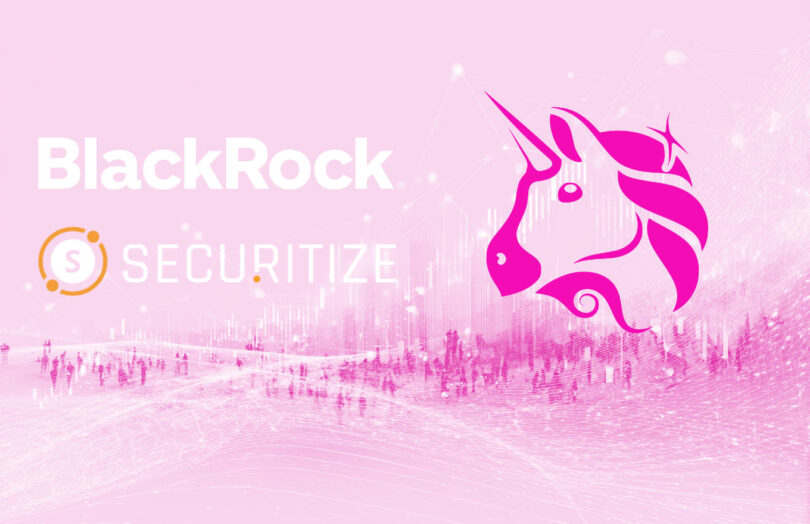
BlackRock has unveiled plans to deploy its tokenised money market fund, BUIDL, through UniswapX, marking a further step by the world’s largest asset manager into decentralised finance infrastructure and signalling a deeper engagement with public blockchain liquidity.
The move, disclosed on 11 February, will allow eligible participants to access the BlackRock USD Institutional Digital Liquidity Fund via Uniswap’s off-chain order routing protocol, UniswapX, which is designed to source competitive pricing across multiple liquidity pools. BlackRock also confirmed that it has acquired UNI tokens, the governance asset of the Uniswap ecosystem, as part of its strategy to support on-chain liquidity and governance participation.
The expansion builds on BlackRock’s earlier launch of BUIDL on the Ethereum network in partnership with digital asset platform Securitize. The fund, which invests in short-term US Treasury bills and cash equivalents, was structured to offer institutional investors exposure to traditional money market instruments in tokenised form. Since its debut, BUIDL has attracted hundreds of millions of dollars in assets, positioning it among the largest tokenised funds in operation.
By bringing BUIDL to UniswapX, BlackRock is effectively bridging traditional asset management and decentralised trading rails. UniswapX operates by matching orders off-chain and settling them on-chain, often enabling better execution prices and lower slippage compared with direct interaction with automated market maker pools. Market participants view the integration as an attempt to improve secondary market liquidity for tokenised securities while preserving compliance controls.
Executives involved in the initiative described the step as part of a broader effort to modernise capital markets infrastructure. They argued that tokenisation can streamline settlement, enhance transparency and reduce operational friction. The company has maintained that its digital asset strategy focuses on regulated products and institutional-grade standards, rather than speculative trading.
Uniswap Labs, the developer behind the Uniswap protocol, said the collaboration reflects growing institutional interest in decentralised liquidity mechanisms. The firm has positioned UniswapX as a more flexible trading interface that aggregates liquidity from market makers and decentralised exchanges, potentially making it attractive to larger financial players seeking efficient execution.
The decision to acquire UNI tokens adds another dimension. UNI holders participate in governance votes that shape protocol upgrades, fee structures and treasury allocations. While BlackRock has not disclosed the size of its holding, the purchase indicates a willingness to engage with protocol governance rather than remaining a passive user. Analysts say such participation could influence discussions around compliance features and institutional access pathways.
The development comes as asset managers increasingly experiment with tokenisation of traditional assets, including government bonds, private credit and funds. Industry data show that the value of tokenised real-world assets on public blockchains has grown steadily over the past two years, driven by demand for yield-bearing instruments that settle instantly and can be integrated into decentralised finance applications.
Regulatory scrutiny remains a central consideration. United States authorities have continued to evaluate the treatment of tokenised securities and decentralised platforms under existing financial laws. BlackRock’s approach has been to structure BUIDL within established regulatory frameworks, limiting access to verified investors and embedding compliance measures into its token architecture. Observers note that operating through UniswapX will require careful alignment between decentralised execution and regulatory obligations.
Critics of institutional involvement in decentralised finance argue that large asset managers could dilute the open ethos of blockchain networks or steer governance in ways that favour traditional finance. Supporters counter that mainstream participation enhances credibility, deepens liquidity and accelerates adoption. The debate has intensified as established firms enter spaces once dominated by crypto-native actors.
Market reaction to the announcement was measured. UNI token prices showed volatility around the disclosure, reflecting both enthusiasm over institutional validation and uncertainty about the long-term implications for governance dynamics. Broader digital asset markets have been sensitive to shifts in regulatory signals and macroeconomic conditions, which continue to influence capital flows into tokenised products.
BlackRock’s chief executive, Larry Fink, has previously spoken about the transformative potential of tokenisation, arguing that every asset class could eventually be represented on-chain. The extension of BUIDL onto UniswapX appears consistent with that vision. By situating a Treasury-backed fund within decentralised trading infrastructure, the firm is testing whether blockchain-based settlement can coexist with conventional asset management principles.
Arabian Post – Crypto News Network
The article BlackRock expands BUIDL onto UniswapX platform appeared first on Arabian Post.
What's Your Reaction?