






























Credibility Of CBI, And By Implication Modi Govt, Destroyed Beyond Redemption
By K Raveendran A trial court’s decision to throw out the Delhi excise policy case against Arvind Kejriwal, Manish Sisodia and 21 others triggers a political and institutional reckoning that goes far beyond the fate of one prosecution. By sharply criticising the Central Bureau of Investigation for procedural violations, dependence on hearsay and disregard for […] The article Credibility Of CBI, And By Implication Modi Govt, Destroyed Beyond Redemption appeared first on Latest India news, analysis and reports on Newspack by India Press Agency). The article Credibility Of CBI, And By Implication Modi Govt, Destroyed Beyond Redemption appeared first on Arabian Post.
By K Raveendran
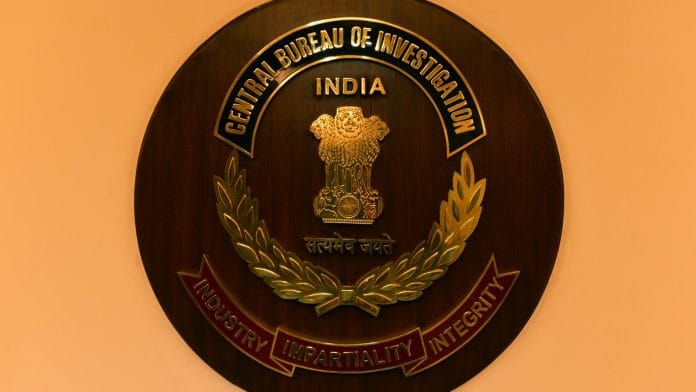
A trial court’s decision to throw out the Delhi excise policy case against Arvind Kejriwal, Manish Sisodia and 21 others triggers a political and institutional reckoning that goes far beyond the fate of one prosecution. By sharply criticising the Central Bureau of Investigation for procedural violations, dependence on hearsay and disregard for constitutional safeguards, the Rouse Avenue court has not merely discharged the accused; it has cast a long shadow over the credibility of India’s premier investigative agency.
For months, the excise case had dominated the political discourse. The allegations, centred on purported irregularities in the framing and implementation of Delhi’s liquor policy, were projected as evidence of systemic corruption at the highest levels of the Aam Aadmi Party government. Kejriwal, then chief minister, and his former deputy Sisodia were arrested, questioned extensively and portrayed by political opponents as the architects of a policy crafted for private gain. Kejriwal became India’s first chief minister to be arrested while in office. The Modi government presented the case as a decisive blow against corruption, part of a larger narrative of zero tolerance and used it to the hilt in the subsequent elections.
The court’s dismissal disrupts that narrative. In its order, the judge underscored serious lapses in the manner the investigation was conducted, pointing to failures that strike at the heart of criminal jurisprudence. The court’s finding that constitutional principles were compromised and that the prosecution leaned heavily on uncorroborated statements undermines the very foundation of the case. Courts rarely use language that so directly questions investigative integrity. When they do, the consequences reverberate beyond the immediate proceedings.
The CBI has long struggled with the perception of being vulnerable to political influence. More than a decade ago, the Supreme Court famously described it as a “caged parrot speaking in its master’s voice” while hearing a coal allocation case. That metaphor entered public vocabulary as shorthand for institutional subservience. Successive governments have insisted on the agency’s autonomy, yet allegations of selective zeal have persisted across political regimes. The excise case dismissal risks entrenching the belief that little has changed.
Kejriwal’s response was characteristically combative. He described the excise prosecution as the “biggest political conspiracy” in independent India and directly accused Prime Minister Narendra Modi and Home Minister Amit Shah of orchestrating it. Such rhetoric is politically charged, yet the court’s rebuke gives it added traction. When an investigation collapses under judicial scrutiny for procedural infirmities, the space for political interpretation widens. Supporters of the Aam Aadmi Party argue that the prosecution was never about accountability but about neutralising a rival who has repeatedly challenged the BJP in Delhi and beyond.
BJP leaders have consistently rejected accusations of vendetta, contending that anti-corruption agencies must be allowed to function without fear or favour. They maintain that the judiciary remains the ultimate arbiter and that adverse orders are part of the legal process. Yet the optics of a high-profile case collapsing on grounds of investigative misconduct are politically damaging.
The broader concern is institutional. The CBI’s legitimacy depends not only on convictions but on public confidence that it operates independently, adheres scrupulously to procedure and respects constitutional safeguards. Criminal investigations, particularly in cases involving public officials, must withstand the most rigorous scrutiny. If courts find that due process was compromised, the agency’s standing suffers irrespective of political context. Credibility, once eroded, is difficult to restore.
The excise case unfolded against a backdrop of intensified use of central agencies in political disputes. Opposition parties across the spectrum have alleged disproportionate targeting by the Enforcement Directorate, the CBI and income tax authorities. Data presented in Parliament and public forums have been cited to argue that a large share of cases registered in the past decade involve opposition figures. The government counters that enforcement reflects patterns of wrongdoing rather than political alignment. The truth may lie in the quality of individual cases. When investigations are seen as shoddy or procedurally flawed, suspicion deepens.
The Rouse Avenue court’s order also touches on constitutional principles, an aspect that cannot be dismissed as technicality. The rights of the accused, safeguards against arbitrary arrest and the requirement of evidentiary rigour are cornerstones of criminal justice system. Courts have repeatedly emphasised that agencies must not treat procedure as an inconvenience. A high-profile prosecution collapsing because those safeguards were ignored invites questions about institutional culture and oversight.
Politically, the verdict alters the calculus in Delhi. Kejriwal, who had faced prolonged legal battles and incarceration, can claim vindication. Sisodia, once presented as the policy’s chief architect, stands discharged. For the Aam Aadmi Party, which built its brand on anti-corruption activism, the court’s order provides ammunition to argue that it was the victim rather than the perpetrator of wrongdoing. Kejriwal has dared Modi to hold elections in Delhi. Whether that narrative translates into electoral advantage will depend on voter perception, but the immediate boost is undeniable.
Public memory is shaped as much by metaphor as by judgment. The Supreme Court’s “caged parrot” remark became a symbol of compromised autonomy. The Rouse Avenue court’s reprimand risks adding another chapter to that narrative. Restoring faith will require more than public statements. It will demand demonstrable adherence to law, internal accountability for lapses and a consistent record of cases that survive judicial scrutiny.
Kejriwal’s allegation of a grand political conspiracy may resonate with his supporters and sections of the opposition. The government will reject it as partisan hyperbole. Between those positions stands the judiciary, whose role is neither to validate political claims nor to adjudicate narratives, but to assess evidence and procedure. In this instance, the assessment has been unequivocal in its criticism of the investigation.
A prosecution that begins with dramatic arrests and ends in dismissal for procedural infirmities leaves scars. It affects not only the individuals involved but the institutions tasked with upholding the rule of law. (IPA Service)
The article Credibility Of CBI, And By Implication Modi Govt, Destroyed Beyond Redemption appeared first on Latest India news, analysis and reports on Newspack by India Press Agency).
The article Credibility Of CBI, And By Implication Modi Govt, Destroyed Beyond Redemption appeared first on Arabian Post.
What's Your Reaction?