

















Dubai unveils first phase of underground Loop
Dubai has confirmed plans for the first four stations of its underground Dubai Loop transport system, linking Dubai International Financial Centre and Dubai Mall in an initial phase designed to transform short-distance urban travel. Authorities say the network will ultimately expand to 19 stations, with a fleet of 100 specialised vehicles capable of moving up to 13,000 passengers a day. The project, valued at approximately AED 2.5 […] The article Dubai unveils first phase of underground Loop appeared first on Arabian Post.
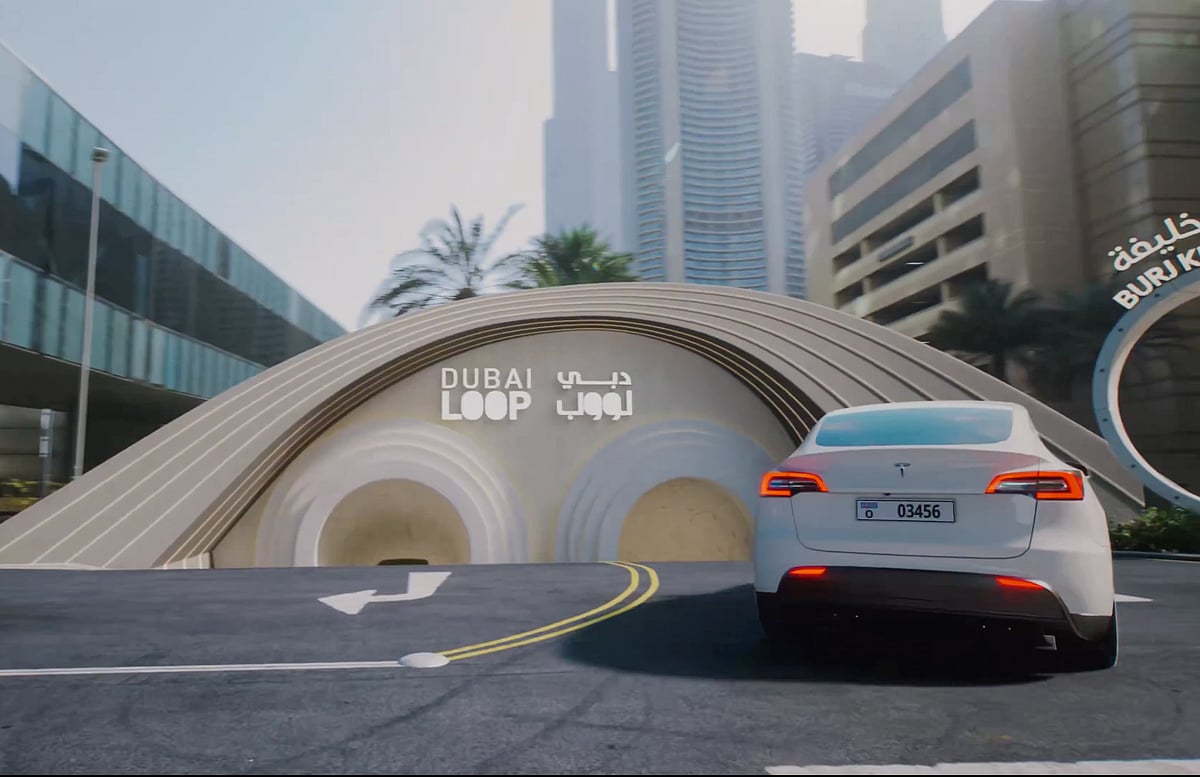
Dubai has confirmed plans for the first four stations of its underground Dubai Loop transport system, linking Dubai International Financial Centre and Dubai Mall in an initial phase designed to transform short-distance urban travel. Authorities say the network will ultimately expand to 19 stations, with a fleet of 100 specialised vehicles capable of moving up to 13,000 passengers a day.
The project, valued at approximately AED 2.5 billion, marks one of the emirate’s most ambitious mobility initiatives outside the established metro and tram corridors. Travel time between key commercial and retail zones is expected to fall from around 20 minutes by road to as little as three minutes through the subterranean route, according to officials involved in the scheme.
Dubai’s Roads and Transport Authority confirmed that the first stage will focus on high-density areas around DIFC and Downtown Dubai, including the vicinity of Dubai Mall, one of the world’s largest shopping destinations. The corridor is intended to address persistent congestion in a district that combines office towers, hospitality venues and tourist attractions within a compact footprint.
Officials described the Loop as a high-frequency underground system operating with electric vehicles tailored for tunnel transport. Each vehicle is designed to carry multiple passengers, with the total daily throughput estimated at 13,000 people during the opening phase. The network’s design prioritises rapid, point-to-point connectivity rather than multiple intermediate stops typical of metro systems.
The announcement aligns with Dubai’s broader transport strategy, which seeks to raise the share of journeys made via public or shared mobility options. The emirate has invested heavily over the past decade in metro expansions, autonomous vehicle trials and smart traffic management systems. The Loop concept reflects a growing global interest in smaller-scale underground transit networks that aim to bypass surface congestion in dense business districts.
Authorities indicated that construction planning has been structured to minimise disruption in the busy DIFC and Downtown corridors. Engineering work will focus on tunnel excavation and the integration of ventilation, safety and emergency systems compliant with international standards. Officials said the infrastructure will be built to accommodate future extensions, allowing the system to scale from four to 19 stations as demand rises.
Transport analysts note that DIFC functions as a major financial hub, hosting global banks, asset managers and professional services firms, while Dubai Mall attracts tens of millions of visitors annually. Peak-hour traffic between these two nodes frequently leads to delays, particularly during major events at nearby venues. Reducing journey times to around three minutes could alter commuting patterns for office workers and visitors alike.
The projected AED 2.5 billion investment underscores Dubai’s willingness to commit significant capital to transport innovation. Comparable underground tunnel initiatives elsewhere have often faced scrutiny over cost efficiency and long-term ridership projections. Officials in Dubai maintain that the concentration of commercial activity in the Loop’s initial footprint provides a strong base of daily users.
Urban planning specialists say the project reflects a shift towards multimodal connectivity, where short underground links complement existing metro lines rather than compete with them. Dubai Metro’s Red Line already serves the wider area, but the Loop is positioned as a hyper-local connector, reducing dependence on private vehicles and ride-hailing services for brief cross-district trips.
Environmental considerations are also central to the proposal. The use of electric vehicles within enclosed tunnels is expected to reduce surface traffic emissions and noise levels. Dubai has set targets to lower carbon intensity and expand sustainable transport options as part of its long-term development strategies. While the Loop’s overall environmental impact will depend on energy sourcing and operational efficiency, authorities argue that diverting thousands of daily car journeys underground could contribute to emission reductions.
Safety features are being incorporated from the outset, with emergency egress routes, surveillance systems and automated controls forming part of the core design. Transport officials said international benchmarks for tunnel safety and passenger evacuation are being applied, though detailed technical specifications have not yet been made public.
Business groups in DIFC welcomed the prospect of faster intra-district travel, suggesting it could enhance the attractiveness of the financial centre to global firms. Retail operators near Dubai Mall also see potential benefits in easing visitor access during peak tourist seasons. However, some transport economists caution that ridership projections must be monitored closely to ensure operational sustainability once the system becomes functional.
The expansion plan to 19 stations indicates that the Loop could eventually extend beyond the initial corridor, potentially linking additional commercial clusters. Authorities have not yet outlined a detailed timeline for the later phases, stating that expansion will be guided by usage patterns and urban growth trends.
The article Dubai unveils first phase of underground Loop appeared first on Arabian Post.
What's Your Reaction?