














Dubai’s Trade Centre bridges explained: How traffic will ease and when they will open
Dubai’s Roads and Transport Authority (RTA) has opened two new bridges at the busy Trade Centre Roundabout ahead of schedule, marking a key milestone in a Dh696-million redevelopment of one of the city’s key intersections.The early opening, announced on Sunday, is part of a wider project that will eventually replace the existing roundabout with a multi-level traffic system designed to cut delays, ease congestion and improve connectivity between some of Dubai’s busiest districts.But what exactly is the Trade Centre Roundabout Development Project, when will it be completed, and how is it expected to ease long-standing traffic bottlenecks? Here is all you need to know.Stay up to date with the latest news. Follow KT on WhatsApp Channels.What is the Trade Centre Roundabout Development Project?It is a major infrastructure overhaul targeting a critical junction that links Sheikh Zayed Road with five key roads: Sheikh Khalifa bin Zayed Street, Sheikh Rashid Street, 2nd December Street, Zabeel Palace Street and Al Majlis Street.This convergence of high-volume corridors serves major destinations including Dubai World Trade Centre, DIFC, Downtown Dubai and several densely populated residential areas. Over time, rising traffic volumes and event-related surges have made the roundabout a choke point, particularly during peak hours.To address this, RTA is:Constructing five new bridges with a combined length of 5,000 metresConverting the existing roundabout into an at-grade intersectionSeparating major traffic movements vertically to reduce conflict and stop-start congestionThe total cost of the project exceeds Dh696 million, with construction being carried out in phases.What’s the latest update on the project?Two bridges have now been opened to traffic ahead of the originally scheduled mid-January date.The bridges serve traffic moving from 2nd December Street towards Sheikh Rashid Street and Al Majlis Street, which connects to Al Mustaqbal Street.Each bridge:Provides two lanes in both directionsHas a combined length of 2,000 metresCan carry around 6,000 vehicles per hourAccording to RTA, the opening has reduced journey times from 2nd December Street to Al Majlis Street, Al Mustaqbal Street and Zabeel Palace Street from 10 minutes to just two minutes, while easing congestion at the roundabout itself.Overall project completion has now reached nearly 50 per cent, with further phased openings planned over the next two years.Check out the video below, as shared by Dubai Media Office:So what exactly changes for Dubai drivers and when?At the core of the project is a simple idea: removing the heaviest traffic movements from the surface junction and allowing them to flow freely on bridges, reducing delays for everyone else.Here’s how that plays out for motorists.2nd December Street - Sheikh Rashid Street / Al Majlis Street (now open) Drivers travelling from 2nd December Street towards Sheikh Rashid Street or Al Majlis Street no longer need to pass through the roundabout. The newly opened bridges allow this traffic to bypass the junction entirely, cutting journey times from 10 minutes to two minutes and easing pressure on surface traffic at the roundabout.Sheikh Zayed Road- Sheikh Khalifa bin Zayed Street (opening March 2026) A second-level bridge will allow traffic from Sheikh Zayed Road to flow directly towards Sheikh Khalifa bin Zayed Street, eliminating the need to navigate multiple signals or merges. RTA estimates this will reduce travel time on this route from six minutes to just one minute, a significant improvement for commuters heading towards Deira. Sheikh Rashid Street / Al Majlis Street - 2nd December Street (opening October 2026) Two further bridges will serve traffic moving from Sheikh Rashid Street and Al Majlis Street towards 2nd December Street, creating uninterrupted flow in both directions. Together, these bridges will remove several major turning movements from the surface intersection.How will this ease traffic overall?Once fully completed, RTA says the project will:Reduce average delay at the intersection from 12 minutes to 90 secondsSignificantly cut journey times across central DubaiImprove access to major destinations such as Dubai World Trade Centre, especially during large exhibitions and eventsStrengthen connectivity between Sheikh Zayed Road, Sheikh Khalifa bin Zayed Street and surrounding corridorsThe project is designed not only to address current congestion but also to accommodate future traffic growth in one of Dubai’s most economically active zones.What happens next?The Trade Centre Roundabout upgrade forms part of a broader master plan that also includes the redevelopment of Al Mustaqbal Street, extending from Zabeel Palace Street to Financial Centre Street, with overall completion targeted for 2027.Dubai opens 2 Trade Centre bridges; travel time slashed down to 2 minutesKey Dubai corridor to see travel time cut from 20 minutes to fiveDubai: 2 bridges to open in January 2026 as Trade Centre Round
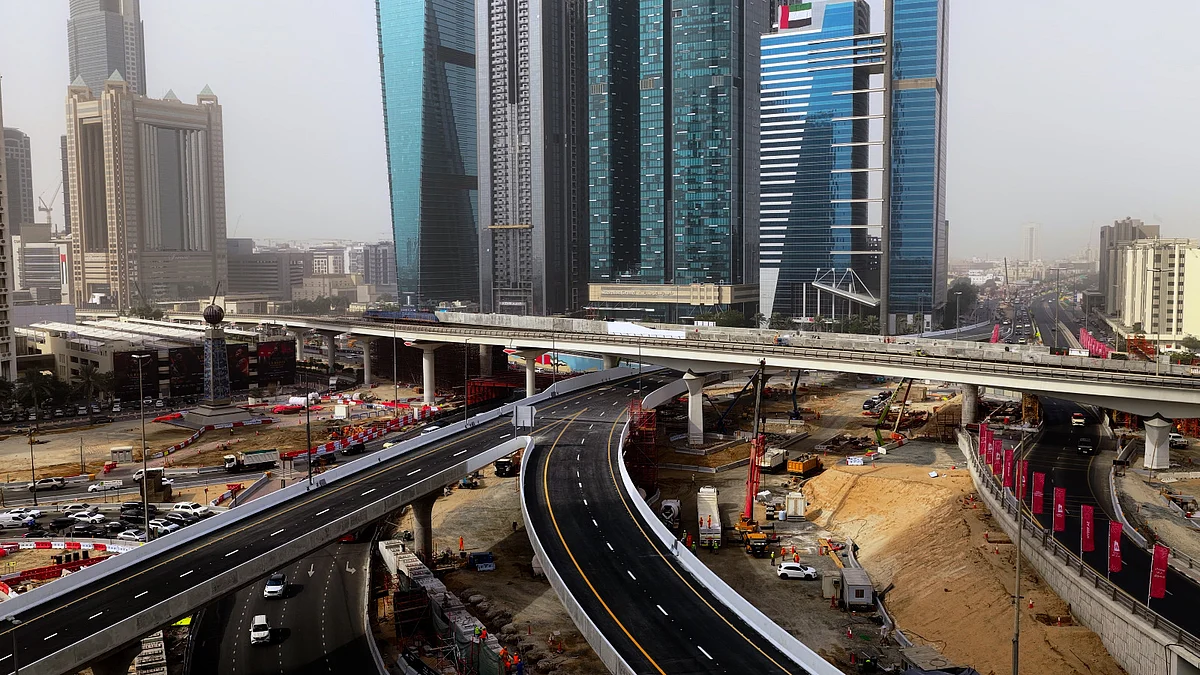
Dubai’s Roads and Transport Authority (RTA) has opened two new bridges at the busy Trade Centre Roundabout ahead of schedule, marking a key milestone in a Dh696-million redevelopment of one of the city’s key intersections.
The early opening, announced on Sunday, is part of a wider project that will eventually replace the existing roundabout with a multi-level traffic system designed to cut delays, ease congestion and improve connectivity between some of Dubai’s busiest districts.
But what exactly is the Trade Centre Roundabout Development Project, when will it be completed, and how is it expected to ease long-standing traffic bottlenecks? Here is all you need to know.
Stay up to date with the latest news. Follow KT on WhatsApp Channels.
What is the Trade Centre Roundabout Development Project?
It is a major infrastructure overhaul targeting a critical junction that links Sheikh Zayed Road with five key roads: Sheikh Khalifa bin Zayed Street, Sheikh Rashid Street, 2nd December Street, Zabeel Palace Street and Al Majlis Street.
This convergence of high-volume corridors serves major destinations including Dubai World Trade Centre, DIFC, Downtown Dubai and several densely populated residential areas. Over time, rising traffic volumes and event-related surges have made the roundabout a choke point, particularly during peak hours.
To address this, RTA is:
Constructing five new bridges with a combined length of 5,000 metres
Converting the existing roundabout into an at-grade intersection
Separating major traffic movements vertically to reduce conflict and stop-start congestion
The total cost of the project exceeds Dh696 million, with construction being carried out in phases.
What’s the latest update on the project?
Two bridges have now been opened to traffic ahead of the originally scheduled mid-January date.
The bridges serve traffic moving from 2nd December Street towards Sheikh Rashid Street and Al Majlis Street, which connects to Al Mustaqbal Street.
Each bridge:
Provides two lanes in both directions
Has a combined length of 2,000 metres
Can carry around 6,000 vehicles per hour
According to RTA, the opening has reduced journey times from 2nd December Street to Al Majlis Street, Al Mustaqbal Street and Zabeel Palace Street from 10 minutes to just two minutes, while easing congestion at the roundabout itself.
Overall project completion has now reached nearly 50 per cent, with further phased openings planned over the next two years.
Check out the video below, as shared by Dubai Media Office:
So what exactly changes for Dubai drivers and when?
At the core of the project is a simple idea: removing the heaviest traffic movements from the surface junction and allowing them to flow freely on bridges, reducing delays for everyone else.
Here’s how that plays out for motorists.
2nd December Street - Sheikh Rashid Street / Al Majlis Street (now open)
Drivers travelling from 2nd December Street towards Sheikh Rashid Street or Al Majlis Street no longer need to pass through the roundabout.
The newly opened bridges allow this traffic to bypass the junction entirely, cutting journey times from 10 minutes to two minutes and easing pressure on surface traffic at the roundabout.
Sheikh Zayed Road- Sheikh Khalifa bin Zayed Street (opening March 2026)
A second-level bridge will allow traffic from Sheikh Zayed Road to flow directly towards Sheikh Khalifa bin Zayed Street, eliminating the need to navigate multiple signals or merges.
RTA estimates this will reduce travel time on this route from six minutes to just one minute, a significant improvement for commuters heading towards Deira.
Sheikh Rashid Street / Al Majlis Street - 2nd December Street (opening October 2026)
Two further bridges will serve traffic moving from Sheikh Rashid Street and Al Majlis Street towards 2nd December Street, creating uninterrupted flow in both directions.
Together, these bridges will remove several major turning movements from the surface intersection.
How will this ease traffic overall?
Once fully completed, RTA says the project will:
Reduce average delay at the intersection from 12 minutes to 90 seconds
Significantly cut journey times across central Dubai
Improve access to major destinations such as Dubai World Trade Centre, especially during large exhibitions and events
Strengthen connectivity between Sheikh Zayed Road, Sheikh Khalifa bin Zayed Street and surrounding corridors
The project is designed not only to address current congestion but also to accommodate future traffic growth in one of Dubai’s most economically active zones.
What happens next?
The Trade Centre Roundabout upgrade forms part of a broader master plan that also includes the redevelopment of Al Mustaqbal Street, extending from Zabeel Palace Street to Financial Centre Street, with overall completion targeted for 2027.
What's Your Reaction?