























Falcon-H1 Arabic sets new AI benchmark
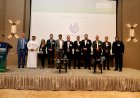
Abu Dhabi has unveiled a new Arabic-first artificial intelligence model that researchers say redefines how large language systems can understand, generate and reason in the Arabic language at scale. Technology Innovation Institute, the applied research arm of the Advanced Technology Research Council, announced Falcon-H1 Arabic as the latest addition to its Falcon family of large language models, positioning it as the most capable open Arabic AI model […] The article Falcon-H1 Arabic sets new AI benchmark appeared first on Arabian Post.

Abu Dhabi has unveiled a new Arabic-first artificial intelligence model that researchers say redefines how large language systems can understand, generate and reason in the Arabic language at scale. Technology Innovation Institute, the applied research arm of the Advanced Technology Research Council, announced Falcon-H1 Arabic as the latest addition to its Falcon family of large language models, positioning it as the most capable open Arabic AI model developed to date.
Falcon-H1 Arabic has been trained from the ground up to handle the linguistic complexity of Arabic, including its rich morphology, diverse dialects and formal registers, rather than relying on translated data or secondary fine-tuning from English-centric models. Researchers involved in the project say this approach has produced notable gains in accuracy, fluency and contextual understanding across modern standard Arabic and regionally used forms of the language, areas where global AI systems have struggled.
The model is built on a hybrid architecture that combines dense and mixture-of-experts techniques, enabling strong performance while keeping compute requirements comparatively efficient. TII said Falcon-H1 Arabic was trained on a carefully curated corpus dominated by high-quality native Arabic sources, including literature, media, educational material and technical texts, with additional multilingual data used selectively to strengthen reasoning and generalisation. Safeguards were applied to reduce duplication, bias and low-quality content, a process the institute describes as critical for languages that are under-represented in global AI training sets.
Benchmark tests conducted by TII indicate Falcon-H1 Arabic outperforms other publicly available Arabic-capable models across a range of tasks, including question answering, summarisation, translation, reasoning and code-related prompts expressed in Arabic. Independent researchers familiar with the evaluations say the gains are particularly visible in long-form responses and in handling nuanced prompts that require cultural or contextual awareness rather than literal translation.
For Abu Dhabi, the launch reflects a broader strategy to establish the emirate as a centre for advanced AI research and deployment, while addressing a long-standing gap in language technology for the Arabic-speaking world. Arabic is used by hundreds of millions of people across more than 20 countries, yet it has remained underserved in the global AI ecosystem, where English, Mandarin and a handful of European languages dominate training data and model optimisation.
TII said Falcon-H1 Arabic is designed to support practical applications across government, education, healthcare, finance and media, enabling organisations to deploy AI systems that operate natively in Arabic without compromising accuracy or data sovereignty. Use cases highlighted by researchers include automated document analysis, citizen-service chatbots, educational tutors, legal and regulatory support tools, and enterprise knowledge management systems tailored to Arabic content.
The model will be released under an open-weight framework, consistent with the Falcon programme’s emphasis on open science and collaborative development. This approach allows developers, universities and companies to adapt the model for local needs, fine-tune it on domain-specific data and deploy it on-premise or in controlled cloud environments. TII argues that open access is essential for building trust and accelerating innovation, particularly for public-sector and research applications that cannot rely on closed, foreign-hosted systems.
The launch comes amid intensifying global competition over sovereign AI capabilities, as governments seek models aligned with local languages, laws and values. Analysts say Falcon-H1 Arabic strengthens Abu Dhabi’s position in this landscape by offering a credible alternative to proprietary systems while focusing on a language often treated as an afterthought by major AI labs.
The article Falcon-H1 Arabic sets new AI benchmark appeared first on Arabian Post.
What's Your Reaction?