


























GCC condemns Iran strike on Qatar gas hub
Arabian Post Staff -Dubai Jasem Mohamed Albudaiwi, Secretary-General of the Gulf Cooperation Council, issued a forceful denunciation of what he described as Iran’s targeting of Ras Laffan Industrial City in Qatar, calling it a grave escalation that threatens regional stability and global energy security. The remarks followed reports of a strike affecting the strategic energy complex, one of the world’s largest liquefied natural gas hubs. The facility […]The article GCC condemns Iran strike on Qatar gas hub appeared first on Arabian Post.

Arabian Post Staff -Dubai
Jasem Mohamed Albudaiwi, Secretary-General of the Gulf Cooperation Council, issued a forceful denunciation of what he described as Iran’s targeting of Ras Laffan Industrial City in Qatar, calling it a grave escalation that threatens regional stability and global energy security.
The remarks followed reports of a strike affecting the strategic energy complex, one of the world’s largest liquefied natural gas hubs. The facility plays a central role in Qatar’s position as a leading LNG exporter, supplying markets across Asia and Europe. Any disruption, even temporary, has drawn immediate attention from energy traders and policymakers concerned about supply risks.
Albudaiwi characterised the incident as a “flagrant violation of international laws and norms,” warning that attacks on energy infrastructure mark a dangerous shift in regional tensions. He said such actions were “unacceptable by all standards” and aimed at destabilising both Gulf states and global markets. His statement reflected a unified position among GCC member states, which have repeatedly emphasised the importance of safeguarding critical infrastructure in an already volatile geopolitical environment.
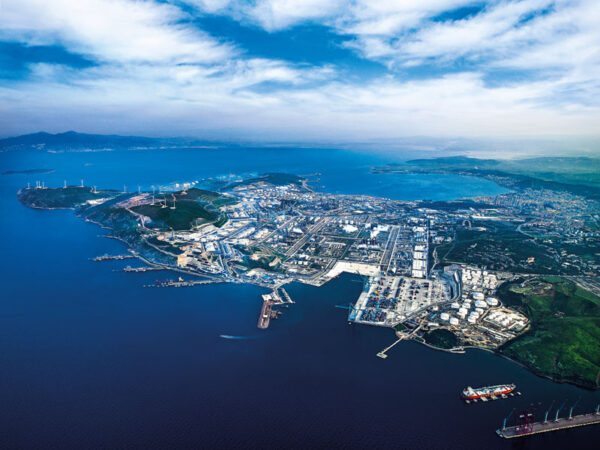
Ras Laffan Industrial City, located on Qatar’s northeastern coast, houses key LNG processing facilities, storage units and export terminals. Operated in partnership with major international energy firms, the complex underpins long-term supply contracts that many countries rely on for energy security. Analysts note that even limited damage or perceived risk can push prices higher, as markets respond quickly to uncertainty in supply chains.
Energy economists have pointed to the growing vulnerability of hydrocarbon infrastructure across the Gulf, particularly as geopolitical rivalries intensify. The targeting of such facilities, whether symbolic or strategic, carries implications that extend beyond immediate physical damage. It can influence insurance costs, shipping routes and investor confidence in the region’s energy sector.
Qatar has not publicly detailed the full extent of any damage, but officials have reiterated that production continuity remains a priority. The country has invested heavily in redundancy systems and rapid-response mechanisms designed to minimise operational disruptions. Industry sources suggest that contingency planning has improved significantly following earlier regional crises, including attacks on oil installations in neighbouring states.
The GCC’s response underscores broader concerns among Gulf governments about the potential for escalation involving energy assets. Over the past decade, incidents involving pipelines, tankers and processing facilities have heightened awareness of the strategic importance of protecting infrastructure that supports both regional economies and global supply chains.
Diplomatic reactions have been measured but firm. Several Gulf states have echoed the GCC Secretariat’s condemnation, framing the incident as part of a pattern of behaviour that risks widening instability. At the same time, calls for restraint and de-escalation have continued, reflecting the delicate balance between deterrence and the need to avoid a broader conflict.
International stakeholders are closely monitoring developments, particularly given the central role of Gulf energy exports in global markets. Europe, which has increased reliance on LNG imports following shifts in pipeline supplies, remains sensitive to any disruptions originating from the region. Asian economies, including Japan, South Korea and India, also depend heavily on shipments from Qatar, making stability at Ras Laffan a matter of strategic importance.
Market responses have reflected these concerns. Traders have reported heightened volatility in LNG pricing, with futures contracts reacting to uncertainty over supply continuity. While no sustained disruption has been confirmed, the perception of risk alone has been enough to influence sentiment.
Security analysts argue that the incident highlights a broader trend in modern conflict, where economic infrastructure becomes a focal point. Rather than traditional military engagements, targeting energy assets can produce significant geopolitical leverage with comparatively limited direct confrontation. This approach raises complex questions about deterrence, retaliation and the protection of civilian-linked infrastructure.
Albudaiwi’s statement also emphasised the need for collective international action to uphold norms protecting such facilities. He warned that failure to respond decisively could embolden further attacks, increasing the likelihood of cascading effects across energy markets and regional security frameworks.
Qatar’s strategic role within the global LNG trade has grown steadily, supported by expansion projects aimed at increasing production capacity over the coming years. These developments have positioned the country as a cornerstone of energy transition strategies, particularly as nations seek flexible gas supplies to complement renewable energy sources. Any perceived threat to this supply chain carries implications far beyond the Gulf.
The article GCC condemns Iran strike on Qatar gas hub appeared first on Arabian Post.
What's Your Reaction?