



























Germany announces visa-free transit for Indian passport holders, signs trade deals
Germany announced on January 12 visa-free transit for Indian passport holders travelling through its airports, aiming to make international travel easier for Indian nationals and strengthen ties between the two countries.Under the new arrangement, Indian travellers will no longer need a Schengen Airport Transit visa, or Type A Schengen visa, when transiting through Germany's international airports to a non-Schengen destination within 24 hours.The exemption does not allow entry into Germany or any other Schengen country. Travellers who leave the airport, even briefly, must still hold the appropriate visa. The change simplifies travel for those connecting through Germany, removing a significant administrative requirement for transit passengers.Stay up to date with the latest news. Follow KT on WhatsApp Channels.According to Visa HQ, until recently, Indian travellers transiting through Germany en route to the Americas, Europe, Africa, or Latin America had to allow for additional processing time, typically five to seven days, and pay a €60 fee to obtain the required permit. Airlines, meanwhile, often faced last-minute offloads when passengers arrived without the document, leading to both operational disruptions and reputational strain.The announcement came in a joint statement issued on Monday, following German Chancellor Friedrich Merz’s official visit to India from January 12–13. This marks Merz’s first official visit to India since taking office.Indian Prime Minister Narendra Modi welcomed the visa-free transit facility, saying it "will not only facilitate and ease travel of Indian nationals but will further intensify people-to-people links” between India and Germany.Both leaders underlined that strong people-to-people connections are a key pillar of the Strategic Partnership, pointing to increasing exchanges of students, researchers, professionals, artists, and tourists.They stressed joint efforts to combat irregular migration, human trafficking, and visa or document fraud through full implementation of the Migration and Mobility Partnership Agreement (MMPA).The statement emphasised the value of enhanced cooperation in education, research, vocational training, culture, and youth exchanges to deepen mutual understanding.The two sides also pledged to boost legal mobility and enhance collaboration on returning individuals required to leave the country. The statement also highlighted the important role of the Indian community in Germany, noting its contributions to the country’s economy, innovation, and cultural life.German Chancellor Friedrich Merz and India's Prime Minister Narendra Modi fly kites during the inauguration of the International Kite Festival in Ahmedabad, India, January 12, 2026. German Chancellor Friedrich Merz and India's Prime Minister Narendra Modi watch as a woman spins cotton on a wheel during their visit to Gandhi Ashram in Ahmedabad, India, January 12, 2026. German Chancellor Friedrich Merz and India's Prime Minister Narendra Modi remove their shoes as they visit Gandhi Ashram in Ahmedabad, India, January 12, 2026. Economic dealsThe two leaders also finalised agreements across multiple sectors, further strengthening cooperation in areas such as renewable energy and defence.Under the Green and Sustainable Development Partnership (GSDP), Indo-German collaboration has supported several of the Government of India’s flagship initiatives, including the PM e-Bus Sewa, Solar Rooftop Programme, National Green Hydrogen Mission, metro rail projects in Ahmedabad, Surat, and Bangalore, and climate-resilient urban infrastructure in Tamil Nadu. The leaders also welcomed the signing of a Joint Declaration of Intent to develop a Defence Industrial Cooperation Roadmap, aimed at fostering long-term industry-level collaboration. This includes technology partnerships, co-development, and co-production of defence platforms and equipment.The leaders noted sustained growth in bilateral trade and investment. Bilateral trade in goods and services reached a record USD 50 billion in 2024, accounting for over 25% of India’s trade with the European Union, with the positive trend continuing through 2025.India expands visa-on-arrival for UAE nationals to 9 international airportsIndia announces free e-visa for Russian citizens, set to begin soon

Germany announced on January 12 visa-free transit for Indian passport holders travelling through its airports, aiming to make international travel easier for Indian nationals and strengthen ties between the two countries.
Under the new arrangement, Indian travellers will no longer need a Schengen Airport Transit visa, or Type A Schengen visa, when transiting through Germany's international airports to a non-Schengen destination within 24 hours.
The exemption does not allow entry into Germany or any other Schengen country. Travellers who leave the airport, even briefly, must still hold the appropriate visa. The change simplifies travel for those connecting through Germany, removing a significant administrative requirement for transit passengers.
Stay up to date with the latest news. Follow KT on WhatsApp Channels.
According to Visa HQ, until recently, Indian travellers transiting through Germany en route to the Americas, Europe, Africa, or Latin America had to allow for additional processing time, typically five to seven days, and pay a €60 fee to obtain the required permit. Airlines, meanwhile, often faced last-minute offloads when passengers arrived without the document, leading to both operational disruptions and reputational strain.
The announcement came in a joint statement issued on Monday, following German Chancellor Friedrich Merz’s official visit to India from January 12–13. This marks Merz’s first official visit to India since taking office.
Indian Prime Minister Narendra Modi welcomed the visa-free transit facility, saying it "will not only facilitate and ease travel of Indian nationals but will further intensify people-to-people links” between India and Germany.
Both leaders underlined that strong people-to-people connections are a key pillar of the Strategic Partnership, pointing to increasing exchanges of students, researchers, professionals, artists, and tourists.
They stressed joint efforts to combat irregular migration, human trafficking, and visa or document fraud through full implementation of the Migration and Mobility Partnership Agreement (MMPA).
The statement emphasised the value of enhanced cooperation in education, research, vocational training, culture, and youth exchanges to deepen mutual understanding.
The two sides also pledged to boost legal mobility and enhance collaboration on returning individuals required to leave the country.
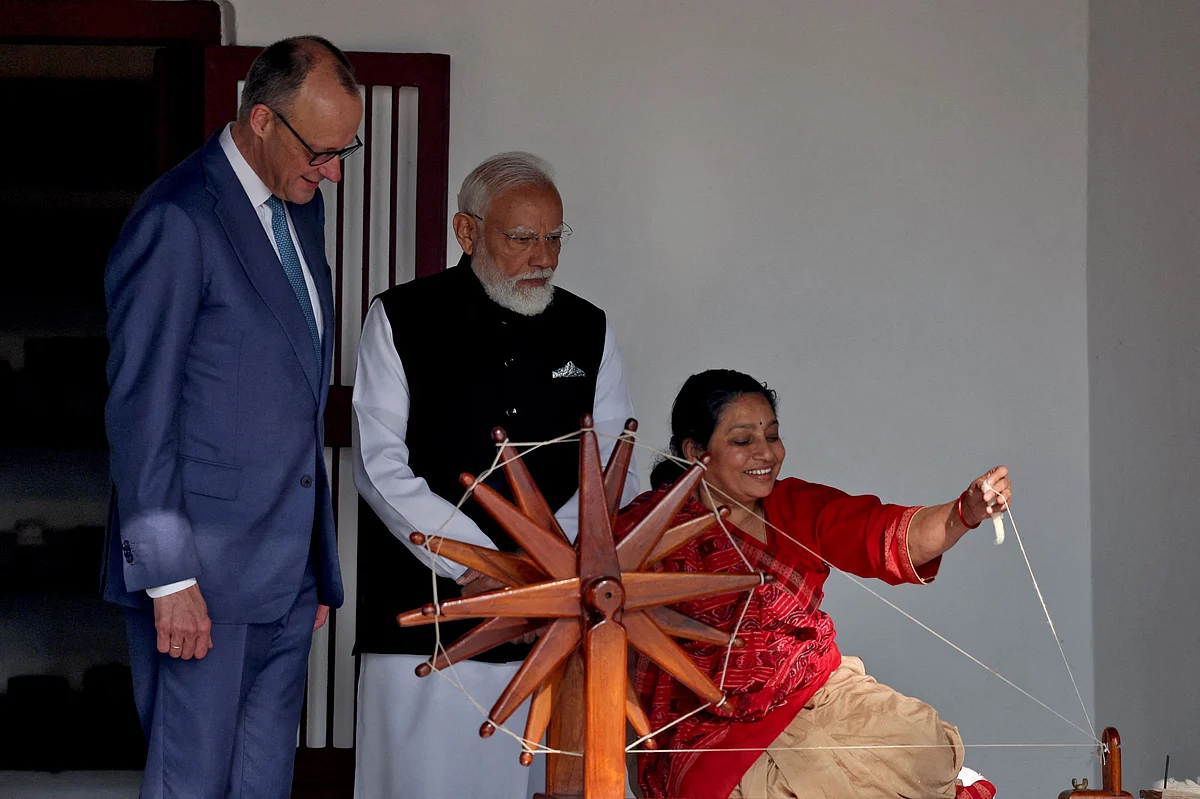
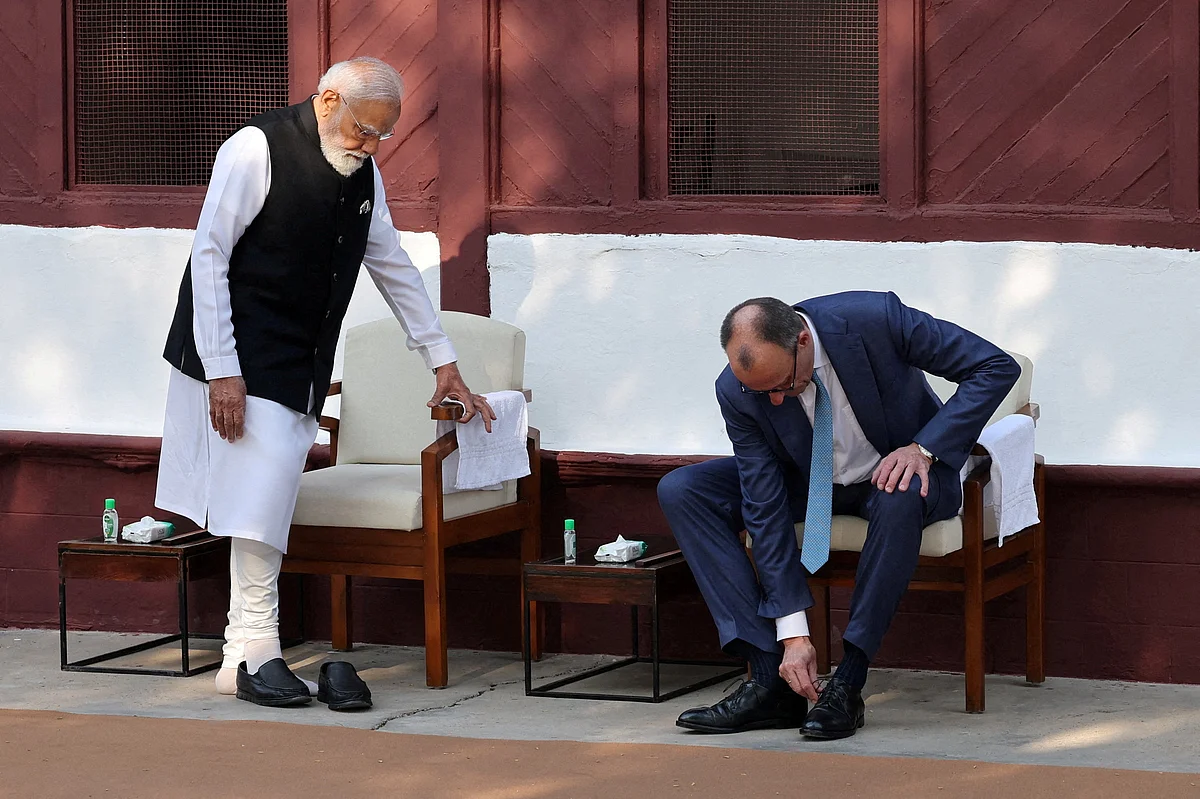
The statement also highlighted the important role of the Indian community in Germany, noting its contributions to the country’s economy, innovation, and cultural life. German Chancellor Friedrich Merz and India's Prime Minister Narendra Modi fly kites during the inauguration of the International Kite Festival in Ahmedabad, India, January 12, 2026. German Chancellor Friedrich Merz and India's Prime Minister Narendra Modi watch as a woman spins cotton on a wheel during their visit to Gandhi Ashram in Ahmedabad, India, January 12, 2026. German Chancellor Friedrich Merz and India's Prime Minister Narendra Modi remove their shoes as they visit Gandhi Ashram in Ahmedabad, India, January 12, 2026. 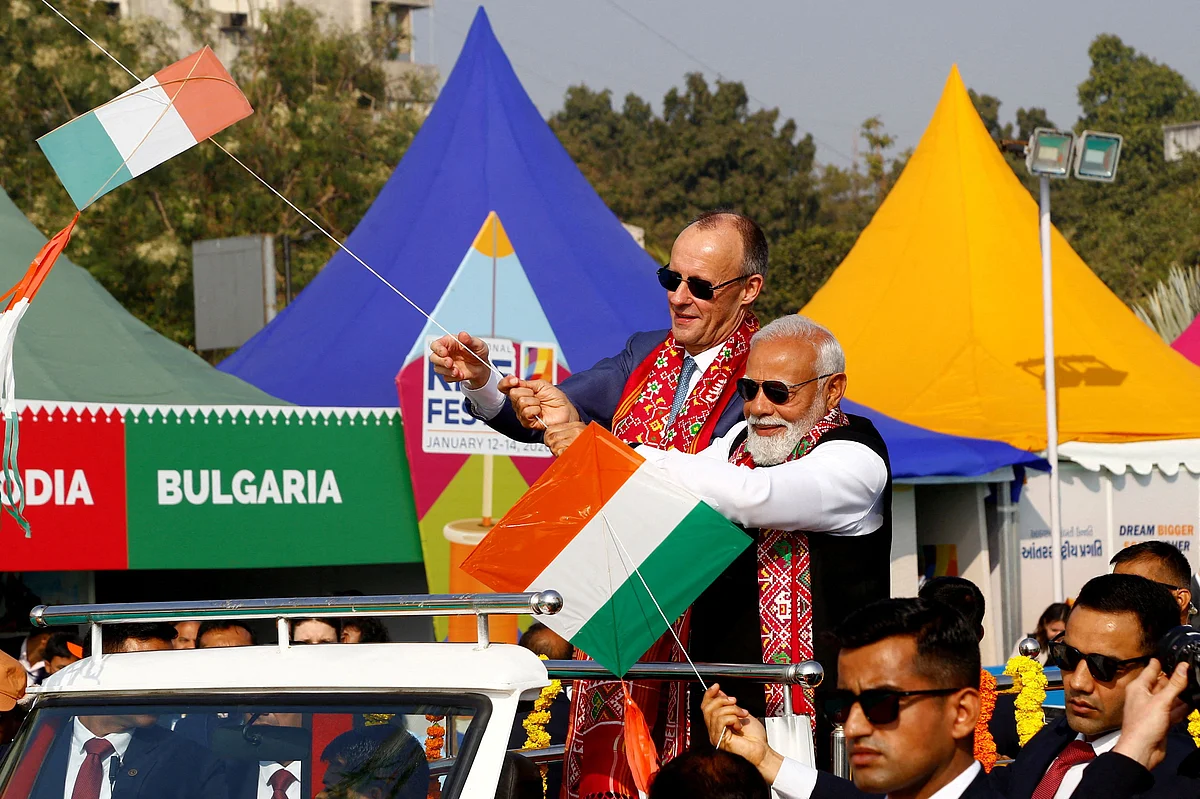
Economic deals
The two leaders also finalised agreements across multiple sectors, further strengthening cooperation in areas such as renewable energy and defence.
Under the Green and Sustainable Development Partnership (GSDP), Indo-German collaboration has supported several of the Government of India’s flagship initiatives, including the PM e-Bus Sewa, Solar Rooftop Programme, National Green Hydrogen Mission, metro rail projects in Ahmedabad, Surat, and Bangalore, and climate-resilient urban infrastructure in Tamil Nadu.
The leaders also welcomed the signing of a Joint Declaration of Intent to develop a Defence Industrial Cooperation Roadmap, aimed at fostering long-term industry-level collaboration. This includes technology partnerships, co-development, and co-production of defence platforms and equipment.
The leaders noted sustained growth in bilateral trade and investment.
Bilateral trade in goods and services reached a record USD 50 billion in 2024, accounting for over 25% of India’s trade with the European Union, with the positive trend continuing through 2025.
What's Your Reaction?