



























Minneapolis Parents and Educators Describe Terror of ICE Raids, Call for Help
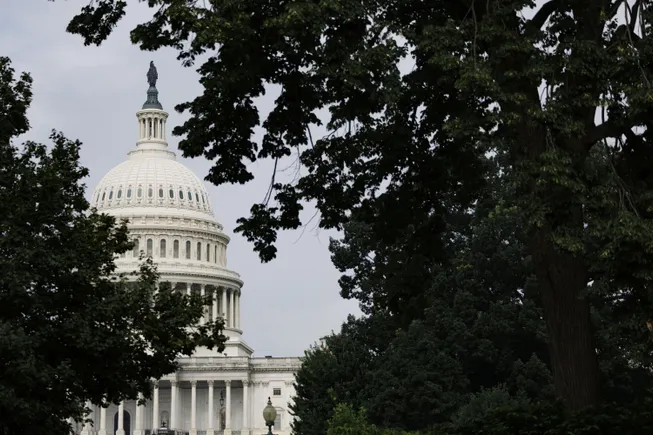
Their voices shaking with rage, fear and exhaustion, a cross-section of Minnesota educators and community members gathered at the state Capitol in St. Paul on Tuesday to tell local and national news media about the conditions they have endured in the month since convoys of federal Immigration and Customs Enforcement and Border Patrol agents started […]

Their voices shaking with rage, fear and exhaustion, a cross-section of Minnesota educators and community members gathered at the state Capitol in St. Paul on Tuesday to tell local and national news media about the conditions they have endured in the month since convoys of federal Immigration and Customs Enforcement and Border Patrol agents started targeting schools, bus stops and day care facilities in the Twin Cities.
For weeks, parents and teachers throughout Minnesota have been reluctant to share specifics about the steps they’re taking to protect their school communities. But the killing of an ICU nurse by federal agents over the weekend — the second shooting captured and shared worldwide on cellphone cameras — finally brought their reality to the attention of the outside world, speakers told reporters.
Get stories like this delivered straight to your inbox. Sign up for The 74 Newsletter
A crying mom described driving her kid’s terrified classmates to school in the Minneapolis neighborhood where agents killed another mother, Renee Good, three weeks ago. A school board member who publicly criticized ICE for detaining a preschooler said she woke up to find an ICE caravan idling outside her home. A superintendent detailed how she arranges transportation for at-risk school staffers’ — and then joins her school security workers on patrol.
The superintendent, Fridley Public Schools’ Brenda Lewis, said her suburban district has been “targeted”: “We need helpers. We need leaders, advocates and people of influence to step in and help end this.”
Educators narrated the fatigue of working a full day and then spending hours volunteering, delivering food and other essentials to families in hiding — only to find themselves tailed by caravans of heavily armed federal agents.
An American government teacher-turned-state lawmaker shouted as he described walking below an FDR quote chiseled into stone in the hall leading to the state Senate chambers: “Education is a better safeguard of liberty than a standing army.”
As the speakers took turns, a tiny pink origami rabbit sat on the rim of the podium. To one side was a poster of 5-year-old Liam Conejo Ramos, who was detained coming home from preschool Jan. 20. Conejo means rabbit. In a now-iconic photo of a federal agent grabbing Liam by his Spider-Man backpack, the boy is wearing a homemade knit bunny hat.

As she approached the podium, a woman identified only as Elizabeth broke down. “I practiced this and practiced,” she said, crying, before saying that as she feeds her kids breakfast, she keeps an eye trained on a closed group chat in her neighborhood, where Good was killed three weeks ago.
If the group says it’s okay to leave, she loads her kid in the car and then picks up classmates whose parents can’t leave home. At school, they’re greeted by people trying their best to make the citizen safety brigade that flanks the walkway from the street to the school entrance look like the fun squad: “Our neighbors with the amazing frog hats and the giant smiles. The dog walkers who have changed their routines to include the school. And the retired teachers — who cannot stop caring for our kids.”
Still, sometimes that’s not enough to reassure the most frightened pupils. “That is when my small child walks up and says hello, and offers to walk them into school,” she said.
The ride home? “I try to find a playlist and I imagine the parent who hasn’t left their home in seven or eight weeks, trusting me, a stranger, with their kids, who can barely communicate with them, making sure their kid gets home and walked to their door,” she continued. “All of this is racing through my mind as I am checking my mirrors for safety and still singing along to K Pop Demon Hunters.
“While I love that I have these experiences, it is their parents who should be in the car, singing along and hearing the stories of the day.”
Mary Granlund is a parent and school board chair in Columbia Heights Public Schools, where Liam is a student. She said she watched as agents pulled him from the car bringing him home and steered him up the steps to his house, where they told him to knock on the door to see whether adults would come out.
Liam and his father were taken and flown to a detention center in Texas, where a judge Tuesday ordered ICE not to deport them. Only one of the three other children detained the same day has been allowed to come home, Granlund said.
After Granlund publicly denounced the children’s detentions, she woke up to multiple vehicles parked outside her house, with men in tactical gear inside. She called the local police, who came and stayed — perhaps mindful that in June, not far away, a political extremist assassinated a lawmaker and her husband and nearly killed two others. “I don’t need to remind anybody in this room or watching this the fear that elected officials have related to unmarked vehicles outside your home with people wearing tactical gear,” she said.
Though the Trump administration earlier this week signaled a willingness to de-escalate tensions, federal agents were visible in the Capitol area, and legal observers and news outlets throughout the metro area reported no slowdown in raids and detentions.
Indeed, Granlund said the hours before the press conference were as chaotic as they have been for weeks: “Today, people across Columbia Heights woke up to cars still running, doors open, empty, left in the street” — a common occurrence when agents pull someone from their vehicle and leave it, abandoned.
Peg Nelson, a teacher in Granlund’s district for 33 years, said educators try to keep the school day as normal as possible. “But students and families look to their teachers for answers,” she said. “Children ask, ‘Can they take us?’ And we don’t know what to tell them…. We are doing everything we can. We will but we were not trained for this.”
Democratic State Sen. Steve Swazinski, who represents several western Minneapolis suburbs, taught American government for 33 years. “I don’t know how I would be teaching this right now,” he said. “I just don’t know how I would teach both sides to the story.”
Fridley’s Lewis said speaking out is particularly hard for educators, whose training and ethics are to empower students to take in a range of information and draw their own conclusions. “This is not abstract for me or for district leadership,” she said. “None of this is partisan. This is about children, predominantly children of color, being treated as less than human. And about the dehumanization of those who stand with them.”
Founding president of the National Parents Union, Keri Rodrigues traveled from Massachusetts to St. Paul to be present. “I’ve had so many conversations with people on the phone and on Zoom in the last few weeks who felt like they weren’t being heard, who felt like their experiences needed to get out there,” she told The 74. “Here’s a list of 10 things that are disrupted, and we can’t get anyone to pay attention.”
She said her next stop is Washington, D.C., where she said she plans to recount the stories she heard to members of Congress.
Near the end of the press conference, a reporter asked about the paper bunny. Liam’s teachers stepped forward to answer. There is a Japanese tradition in which folding 1,000 origami cranes can grant a wish or speed recovery.
For Liam, the teachers have already started on 1,000 pink rabbits.
What's Your Reaction?