































Mobility as an Asset Class: Why UAE Investors Are Building Global Residency Portfolios in 2026
Global mobility has quietly crossed a threshold. For high-net-worth individuals and entrepreneurs based in the UAE, securing a Schengen visa or a UK travel permit is no longer a logistical task filed under personal travel. It is a strategic investment — one that sits alongside real estate diversification, offshore banking, and corporate structuring in a well-managed portfolio. In 2026, the term “Mobility Portfolio” has entered the lexicon […]The article Mobility as an Asset Class: Why UAE Investors Are Building Global Residency Portfolios in 2026 appeared first on Arabian Post.


Global mobility has quietly crossed a threshold. For high-net-worth individuals and entrepreneurs based in the UAE, securing a Schengen visa or a UK travel permit is no longer a logistical task filed under personal travel. It is a strategic investment — one that sits alongside real estate diversification, offshore banking, and corporate structuring in a well-managed portfolio. In 2026, the term “Mobility Portfolio” has entered the lexicon of Dubai’s financial and business community, and the data supports the shift.
Inquiry volumes at Dubai-based Oki-Doki Pro Solutions FZCO (License #72623) reflect this evolution. The firm reports a 62% year-on-year increase in requests for multi-jurisdiction residency planning — cases where clients are not simply applying for a single visa, but constructing layered access across the UAE, Europe, and the United Kingdom simultaneously. The Spain Digital Nomad Visa has emerged as a particularly high-demand product for entrepreneurs seeking a legal foothold in the EU without relinquishing their Emirates base. Meanwhile, the UAE Golden Visa continues to serve as the foundational layer — a 10-year local anchor that makes international mobility strategies viable in the first place.
Why Technology Is Now the Deciding Factor
What distinguishes the 2026 mobility landscape from previous years is not the demand — it is the infrastructure on the consular side. Embassies and immigration authorities across Europe, the UK, and the United States have moved to automated screening systems that process applications digitally before a human officer reviews them. The EU’s Entry/Exit System (EES) and ETIAS pre-authorization are now fully operational, and the UK has tightened its own digital processing pipeline in parallel.
The practical consequence is that the margin for clerical error has collapsed to near zero. A mismatched date on a bank statement, an employer name that differs by a single character between two supporting documents, a travel insurance certificate that covers 89 days instead of the required 90 — any of these will trigger an automated flag and, in many cases, an outright rejection. These are not substantive compliance failures. They are filing errors, and in a digitised consular environment, they carry the same penalty.
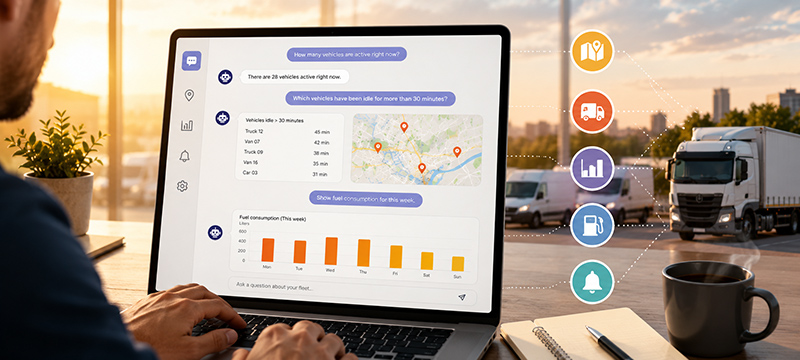
Oki-Doki has positioned itself at this intersection of technology and regulatory precision. The firm’s AI-powered document auditing engine cross-references every field in an application — financial proofs, identification records, insurance certificates, employment verification, and address documentation — against both internal consistency standards and the specific requirements of each consular authority. Discrepancies are flagged and corrected before any file is submitted. According to the firm, this pre-submission verification layer has reduced processing-related delays by approximately 40 hours per case — a figure that, for time-sensitive executive applications, translates directly into strategic value.
Key Mobility Trends Shaping Mid-2026
Several patterns are now clearly established. Multi-entry Schengen applications have surged among frequent business travellers who need repeated access to EU markets within a single calendar year. The Spain Digital Nomad route is attracting a growing cohort of remote workers and founders who want EU freedom of movement as a complement to their UAE operations. Golden Visa holders are increasingly layering European or UK residency applications on top of their Emirates base, treating geographic optionality as a form of portfolio insurance.
At the same time, regulatory complexity is accelerating. ETIAS requirements differ from standard Schengen filings. UK Innovator Founder visa documentation is distinct from general visitor permits. Each jurisdiction has its own standards, its own timelines, and its own automated rejection thresholds. Managing multiple applications in parallel — across different consular systems, in different regulatory frameworks — demands a level of precision that manual processing consistently fails to deliver.
The Investment Case for Precision
For investors, the calculus is straightforward: mobility creates optionality, and optionality protects capital. A second residency in the EU provides fallback access to European markets, healthcare systems, and financial infrastructure. A multi-entry UK visa enables deal flow that would otherwise require weeks of lead time. A Golden Visa eliminates the renewal cycle that introduces periodic uncertainty into long-term UAE planning.
The firms that are capturing this market are the ones that treat mobility with the same rigour investors apply to any other asset class. Working with a licensed, technology-driven partner like Oki-Doki removes the operational friction that sits between strategy and execution — bilingual support in English and Russian, a two-minute initial response guarantee, full regulatory transparency, and an AI layer that ensures every application meets the “zero-error” standard before it reaches a consulate.
In a regulatory environment where rules shift quarter to quarter and consular systems grow more automated by the month, precision is not a service feature. It is the only defensible advantage. For Dubai’s investor community, global residency in 2026 is no longer aspirational. It is operational — and the partners who deliver it with technological certainty are the ones earning long-term trust.
The article Mobility as an Asset Class: Why UAE Investors Are Building Global Residency Portfolios in 2026 appeared first on Arabian Post.
What's Your Reaction?