
































Opinion: Moving Special Ed to HHS Will Treat It Like a Medical Problem. It’s Not
The Trump administration’s ongoing attempts to close the Department of Education, including reducing special education staff and moving the entire special education office and programs to the Department of Health and Human Services, could have serious consequences for children with disabilities. These moves raise significant concerns that the federal government won’t be able to meet […]

The Trump administration’s ongoing attempts to close the Department of Education, including reducing special education staff and moving the entire special education office and programs to the Department of Health and Human Services, could have serious consequences for children with disabilities.
These moves raise significant concerns that the federal government won’t be able to meet its legal obligations to students with disabilities under the Individuals with Disabilities Education Act (IDEA).
Education Secretary Linda McMahon has stated numerous times that federal special education funding will continue flowing, no matter where the office and programs land within the government. But what she has not acknowledged — and what is troubling — is how moving the program to an agency like HHS inevitably shifts the focus of special ed from education to health care, thus pathologizing disabled students.
Get stories like this delivered straight to your inbox. Sign up for The 74 Newsletter
This is especially true considering disturbing comments HHS Secretary Robert F. Kennedy Jr. has made about children with autism, calling them tragic and doubting their ability to lead full and meaningful lives. His statements indicate a belief that a medical diagnosis absolutely leads to tragic outcomes — which is simply untrue.
Framing students with disabilities solely in medical terms hinders their potential for growth by narrowly confining them to a diagnosis and perceived limitations — resulting in low expectations in school. As recently as the 1990s, this allowed most states to exclude disabled students from academic assessments. Many schools encouraged their parents to keep their children at home on testing days.
Since then, the country has steadily moved away from low expectations for students with disabilities. Under the Biden administration, the Office of Special Education and Rehabilitative Services issued guidance specifically focused on setting a high bar for these children. The guidance included a focus on inclusive education practices to ensure students with disabilities have access to high-quality education with the opportunity to meet challenging goals. It also offered details about how states and districts could leverage federal funding to achieve those ends.
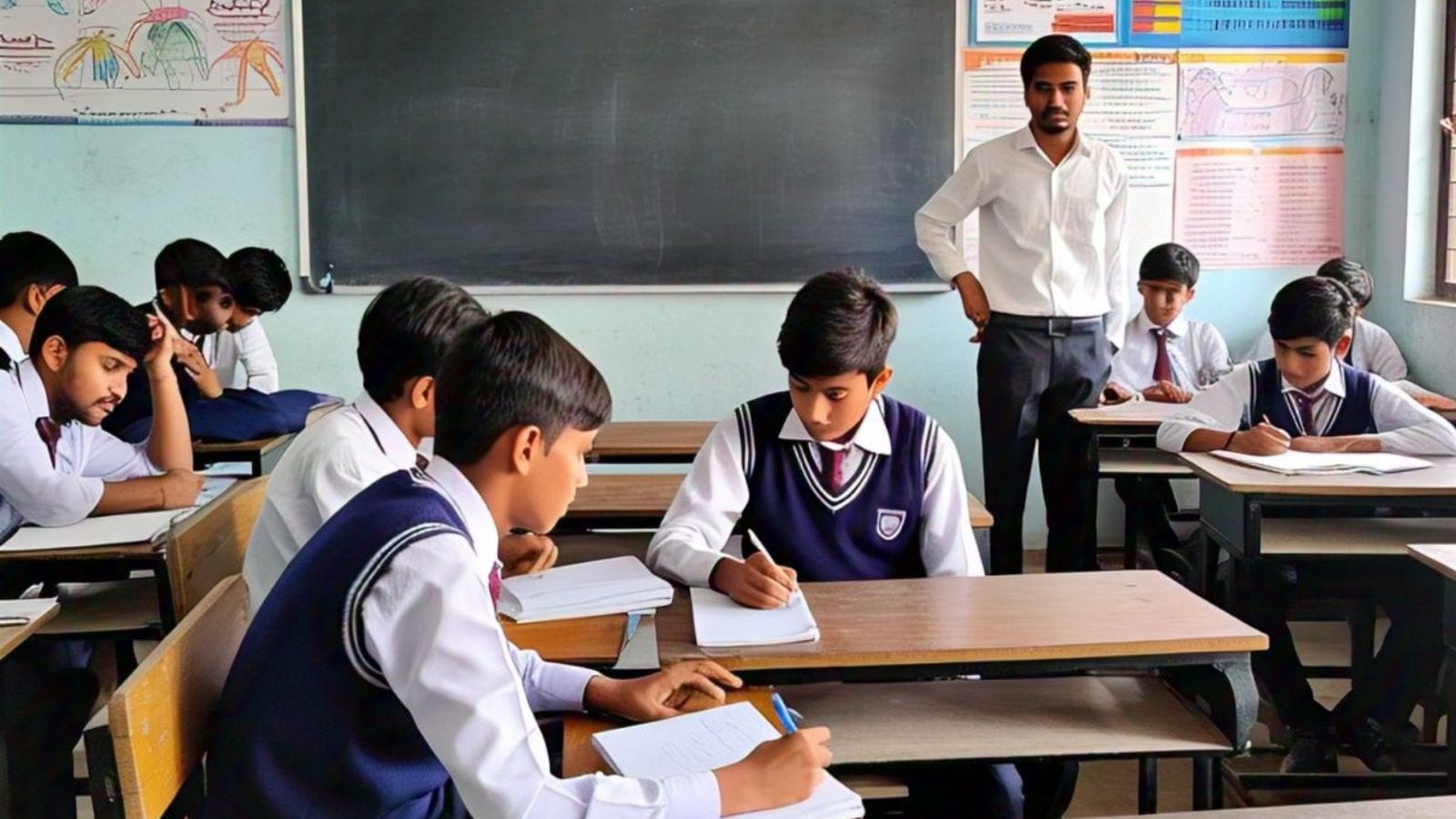
Inclusive education practices are flexible and creative. Using such an approach, a team determining appropriate classroom settings during an Individualized Education Program meeting might decide that instead of placing a student in need of behavioral support in a segregated class of peers with disabilities, the student could be put in a general-education classroom, assisted by a paraprofessional or special education teacher. New York City’s District 75 Inclusion Program operates this way. Teachers or paraprofessionals accompany students with disabilities to general-education classes, providing behavioral and academic support in real time, innovatively and effectively meeting a child’s unique education needs. Instead of limiting children with disabilities, guidance and practices like these help students look to an expansive future.
But between moving special education to HHS and the longer-term plan to convert IDEA grants into formula block grants, it will fall to the states to ensure that their special education laws and regulations are robust. IDEA includes minimum requirements for supporting disabled students. States can and should do more, including developing their own laws and guidance on issues like inclusion, challenging academic standards, teacher and service provider support and training, and requirements to provide services in an equitable manner to all students.
Families and advocates can work to hold states and districts accountable by, for example, pushing for state-level disaggregated reporting on timely provision of services, restrictive class and school placements, and disproportionate disciplinary practices. Additionally, states must work toward timely resolutions of due process and state complaints for any violations of disabled students’ civil rights.
Leaving schools without timely access to federal funding to provide legally mandated services means students will unnecessarily struggle, and their lack of progress will be used as an indication of the failures of the current program. There have already been reports that shifts of education programs to other federal agencies have tied up resources in even more layers of bureaucracy.
Shifting responsibility for specific IDEA and special education programs to HHS means that when states come looking for guidance, the staff with deep understanding of the interplay among civil rights, disability and education will no longer be available to help them. What guidance they do receive could be limited and unsupportive of students’ true intellectual, cognitive or physical capabilities.
Burying special education deep in the huge HHS bureaucracy can only make things more difficult for children with disabilities. Finding essential services that families are desperate to reach will be like looking for a needle in a haystack.
Last year marked the 50th anniversary of IDEA. What should be a time for celebrating milestones in increasing inclusivity and accessibility in America’s public schools has instead been fraught with fear and fights to retain the unique supports provided to disabled children through the Department of Education. It doesn’t have to be this way, and it shouldn’t.
Harold Hinds, is a civil rights attorney and Ph.D. student at the New School’s School for Public Engagement, also contributed to this essay.
What's Your Reaction?