


















Pakistan raises fuel prices due to Middle East tension
Pakistan on Friday night raised consumer prices for diesel and petrol about 20%, citing higher oil prices driven by conflict in Iran.In a televised video message, Petroleum Minister Ali Pervaiz Malik announced a historically large Rs55 ($0.20 a liter) increase to Rs321.17 for petrol and Rs335.86 for diesel.“We have taken this decision under compulsion because of a sharp surge in petroleum prices globally,” the minister said.The decision is likely to ripple through to higher inflation and hit Pakistan’s impoverished population.Before the announcement, fuel stations in major cities like Lahore and Karachi had long lines of people waiting to fill up.Queuing at a Lahore station, business owner Imran Hussain said he wanted to be prepared in case of a shortage. “I have been waiting for my turn for the last 70 minutes,” he said.PUNISH HOARDERS: PMEarlier, Prime Minister Shahbaz Sharif warned against fuel hoarding and said hoarders would be punished. Shahbaz has directed provincial governments to take strict legal action against hoarders of petroleum products.“We have sufficient petrol reserves. But we are planning to stretch them because we don’t know when the Middle East crises will end,” said the minister.Pakistan imports oil mainly from Saudi Arabia and the UAE through the Strait of Hormuz. The government will reassess prices weekly, the oil minister said.PUBLIC TRANSPORT FARES RAISE BY 25%Soon after the increase in petroleum product prices, public transporters followed goods transporters in raising fares by 25 per cent on Saturday. According to details, public transport operators have increased fares ranging from Rs300 to Rs600 on various routes.OPPOSITION SLAMS PRICE HIKEMeanwhile, opposition leaders have strongly criticised the federal government over the massive increase in petroleum prices, warning that the move will further increase poverty and inflation in the country.A petition has been filed in the Lahore High Court challenging the hike in petroleum prices by the government. Azhar Siddiq advocate on behalf of Judicial Activism Panel of lawyers have filed a miscellaneous petition in the high court pointing out Rs55 per litre hike by the government in the petroleum products. Petitioner apprehended that the staggering hike in fuel price will be resulted in increase in transport fares, prices of electricity, agriculture and edible items.The petitioner pointed out that the Oil Marketing Companies have 15 days’ fuel stocks available and argued that there is no reason to hike fuel prices. “It will generate a storm of inflation and price hike,” petition argued.'WORK-FROM-HOME'The government has decided in principle to implement measures such as distance learning and work-from-home for conservation of fuel amid possible oil supply disruptions due to the ongoing conflict in the Middle East, officials said.The national action plan was crystallised in consultation with the provinces at a meeting of the cabinet committee formed by Prime Minister Shahbaz Sharif for monitoring petrol prices due to the regional situation.Subject to the premier’s clearance and fine-tuning, it will then be taken up by the Economic Coordination Committee (ECC) of the federal cabinet for formal approval and implementation.Back-to-back meetings of the three forums are scheduled, given the urgency of the matter. The contingency measures have also been discussed with the International Monetary Fund (IMF), officials said.During the meeting of the cabinet committee for monitoring petrol prices, chaired by Finance Minister Muhammad Aurangzeb, federal ministries and provincial governments emphasised that they had faced a similar situation during the Covid-19 pandemic. Barring health-related precautions, almost all the contingency actions, including work-from-home, distance learning, and car-pooling, could be revived from next week to save fuel, energy and foreign exchange and minimise financial pressure on the budget and public purses.The meeting also reviewed developments in the energy sector and assessed national preparedness measures amidst the evolving regional and global energy situation, undertaking a detailed review of petroleum product stock positions across the country.“In line with broader preparedness planning, the committee examined a phased menu of fuel conservation measures drawing on institutional protocols implemented during prior national emergencies to support demand management if needed, while carefully calibrating communications to avoid any perception of undue alarm”, officials said.
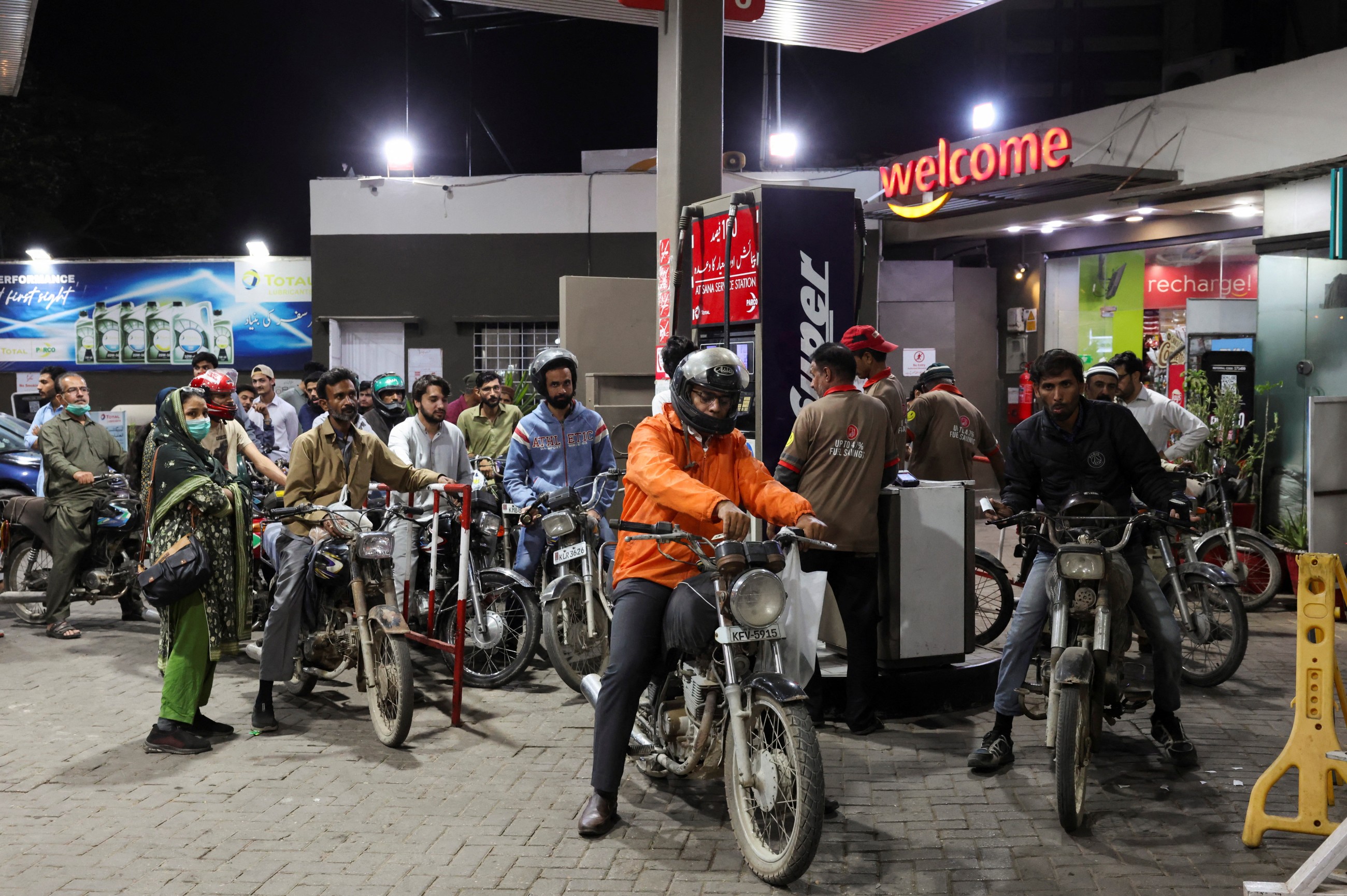
Pakistan on Friday night raised consumer prices for diesel and petrol about 20%, citing higher oil prices driven by conflict in Iran.In a televised video message, Petroleum Minister Ali Pervaiz Malik announced a historically large Rs55 ($0.20 a liter) increase to Rs321.17 for petrol and Rs335.86 for diesel.“We have taken this decision under compulsion because of a sharp surge in petroleum prices globally,” the minister said.The decision is likely to ripple through to higher inflation and hit Pakistan’s impoverished population.Before the announcement, fuel stations in major cities like Lahore and Karachi had long lines of people waiting to fill up.Queuing at a Lahore station, business owner Imran Hussain said he wanted to be prepared in case of a shortage. “I have been waiting for my turn for the last 70 minutes,” he said.PUNISH HOARDERS: PMEarlier, Prime Minister Shahbaz Sharif warned against fuel hoarding and said hoarders would be punished. Shahbaz has directed provincial governments to take strict legal action against hoarders of petroleum products.“We have sufficient petrol reserves. But we are planning to stretch them because we don’t know when the Middle East crises will end,” said the minister.Pakistan imports oil mainly from Saudi Arabia and the UAE through the Strait of Hormuz. The government will reassess prices weekly, the oil minister said.PUBLIC TRANSPORT FARES RAISE BY 25%Soon after the increase in petroleum product prices, public transporters followed goods transporters in raising fares by 25 per cent on Saturday. According to details, public transport operators have increased fares ranging from Rs300 to Rs600 on various routes.OPPOSITION SLAMS PRICE HIKEMeanwhile, opposition leaders have strongly criticised the federal government over the massive increase in petroleum prices, warning that the move will further increase poverty and inflation in the country.A petition has been filed in the Lahore High Court challenging the hike in petroleum prices by the government. Azhar Siddiq advocate on behalf of Judicial Activism Panel of lawyers have filed a miscellaneous petition in the high court pointing out Rs55 per litre hike by the government in the petroleum products. Petitioner apprehended that the staggering hike in fuel price will be resulted in increase in transport fares, prices of electricity, agriculture and edible items.The petitioner pointed out that the Oil Marketing Companies have 15 days’ fuel stocks available and argued that there is no reason to hike fuel prices. “It will generate a storm of inflation and price hike,” petition argued.'WORK-FROM-HOME'The government has decided in principle to implement measures such as distance learning and work-from-home for conservation of fuel amid possible oil supply disruptions due to the ongoing conflict in the Middle East, officials said.The national action plan was crystallised in consultation with the provinces at a meeting of the cabinet committee formed by Prime Minister Shahbaz Sharif for monitoring petrol prices due to the regional situation.Subject to the premier’s clearance and fine-tuning, it will then be taken up by the Economic Coordination Committee (ECC) of the federal cabinet for formal approval and implementation.Back-to-back meetings of the three forums are scheduled, given the urgency of the matter. The contingency measures have also been discussed with the International Monetary Fund (IMF), officials said.During the meeting of the cabinet committee for monitoring petrol prices, chaired by Finance Minister Muhammad Aurangzeb, federal ministries and provincial governments emphasised that they had faced a similar situation during the Covid-19 pandemic. Barring health-related precautions, almost all the contingency actions, including work-from-home, distance learning, and car-pooling, could be revived from next week to save fuel, energy and foreign exchange and minimise financial pressure on the budget and public purses.The meeting also reviewed developments in the energy sector and assessed national preparedness measures amidst the evolving regional and global energy situation, undertaking a detailed review of petroleum product stock positions across the country.“In line with broader preparedness planning, the committee examined a phased menu of fuel conservation measures drawing on institutional protocols implemented during prior national emergencies to support demand management if needed, while carefully calibrating communications to avoid any perception of undue alarm”, officials said.
What's Your Reaction?








Economist Admin
Admin managing news updates, RSS feed curation, and PR content publishing. Focused on timely, accurate, and impactful information delivery.