

















Petrol prices up by 177%, Philippines hardest hit by Middle East crisis in Southeast Asia
[Editor's Note: Follow Khaleej Times live blog amid US-Israel-Iran war for the latest regional developments.]There is a drastic difference in how diesel prices currently behave in Southeast Asia, as divergent as their petroleum resources are and how their respective governments are responding to the crisis in the Middle East. Some countries are unaffected by the closure of the Strait of Hormuz while others are experiencing unprecedented pump price increases.The Philippines, with a shocking range of 100 to 177 per cent, has the most runaway diesel price increase since the start if the US-Israel-Iran war. From P55/litre before US and Israel attacked Iran on February 28, diesel now costs as much as P126/litre in some provinces of the archipelago.The country has no domestic oil production and imports its refined petroleum products from China, South Korea and Japan that have all announced cutting back on exports until Middle East supply stabilises.Compounding the problem is the deregulated nature of the oil industry in the Philippines where global and domestic market forces as well undisclosed profit margins of oil companies are the rules. Philippine President Ferdinand Marcos Jr. is thus far refusing to utilise emergency powers being offered him to suspend taxes on oil products to significantly reduce pump prices.Stay up to date with the latest news. Follow KT on WhatsApp channels.Brunei Darussalam, a major oil exporter, expectedly registers a zero increase in diesel prices largely because of its domestic production and government control.Surprisingly, even oil-rich Malaysia is being affected by the Middle East crisis, registering a 55.26 per cent increase in diesel prices since February 28, 2026. The increase is sharper in Peninsular Malaysia while prices in oil-rich East Malaysia remain stable.Vietnam and Cambodia registers a nearly identical price surge of 73 per cent and 74 per cent, respectively.To mitigate the impact of the geopolitical conflict in the Middle East, Vietnam issued a resolution allowing for more flexible, daily price adjustments rather than the standard weekly review. Like the Philippines, Vietnam is heavily dependent on petroleum product importations.The Cambodian government meanwhile has reduced import duties and Value Added Tax (VAT) on diesel to 0%. It has also eliminated the 4 per cent special tax on diesel and maintained a fuel price reduction via direct subsidy of 6.5 cents per liter.While actual market increase in Thailand had been implemented in phases, its government has raised the official price ceiling to 33.00 baht to manage a growing deficit in the Kingdom’s Oil Fuel Fund.Myanmar and Laos have maintained a moderate diesel price increase of 37 per cent and 33 per cent, respectively. In Myanmar, the military junta has set official price ceilings and strict purchase quotas but black market prices are estimated to be significantly higher. Laos’ diesel price increase is attributed to its weakened currency against the US dollar.Singapore, the richest country in Southeast Asia, registered a 29 per cent increase in diesel prices in the past three weeks. While demand for the fuel type is low in the island-country because of its strict motoring regulations, its diesel has reached a historic S$3.73/litre because of the Middle East conflict.Indonesia’s subsidised diesel has had no increase since the closure of the Strait of Hormuz. Its unsubsidized diesel, however, has an increased pump price of 9 per cent.Thailand ordered a strict price freeze on standard diesel as soon to shield consumers from global volatility, leading to a low percentage increase of 4.01 per cent at the pump.There is no available data for Timor Leste.A Filipina protester holds a banner during a rally in Manila against the series of oil price hikes brought by US-Israel-Iran warTime to remit? Philippine peso slides 16.25 against UAE dirham amid US-Israel-Iran war Philippines transport groups launch nationwide strike to protest soaring fuel costsFuel price surge keeps Filipinos home on Eid, tourism affected
[Editor's Note: Follow Khaleej Times live blog amid US-Israel-Iran war for the latest regional developments.]
There is a drastic difference in how diesel prices currently behave in Southeast Asia, as divergent as their petroleum resources are and how their respective governments are responding to the crisis in the Middle East. Some countries are unaffected by the closure of the Strait of Hormuz while others are experiencing unprecedented pump price increases.
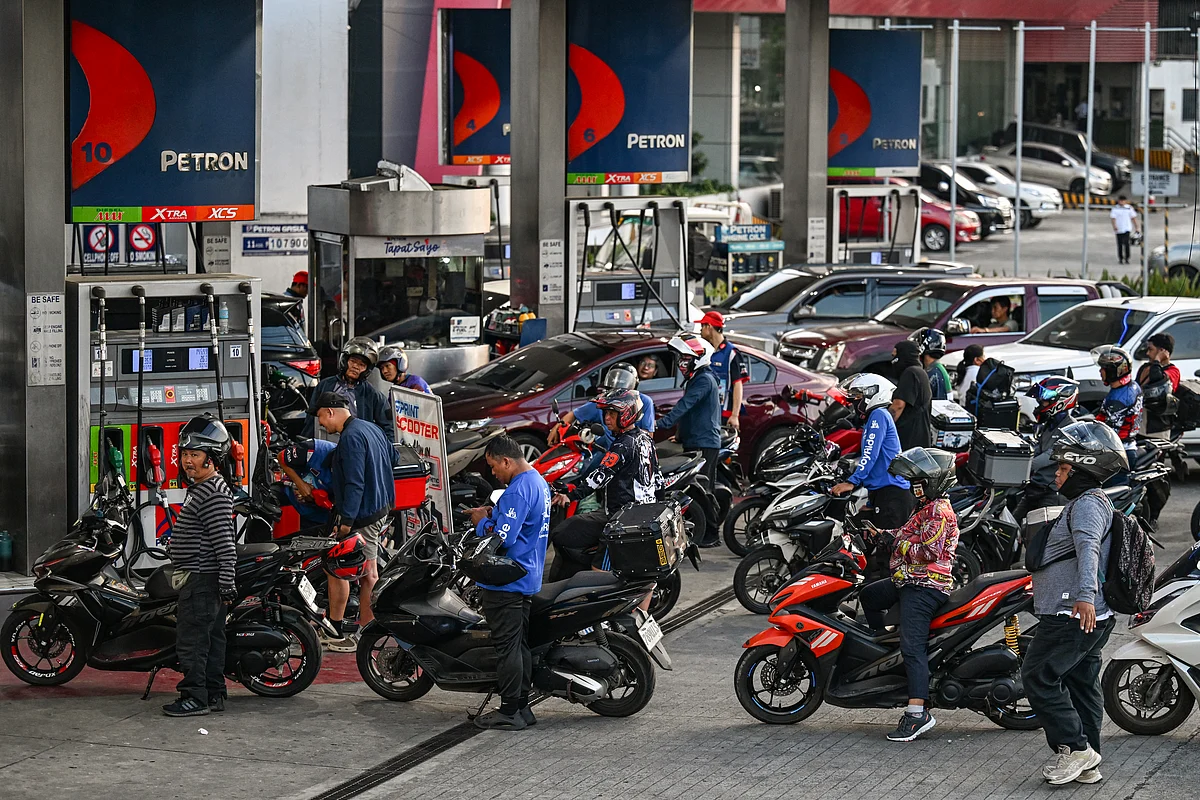
The Philippines, with a shocking range of 100 to 177 per cent, has the most runaway diesel price increase since the start if the US-Israel-Iran war. From P55/litre before US and Israel attacked Iran on February 28, diesel now costs as much as P126/litre in some provinces of the archipelago.
The country has no domestic oil production and imports its refined petroleum products from China, South Korea and Japan that have all announced cutting back on exports until Middle East supply stabilises.
Compounding the problem is the deregulated nature of the oil industry in the Philippines where global and domestic market forces as well undisclosed profit margins of oil companies are the rules.
Philippine President Ferdinand Marcos Jr. is thus far refusing to utilise emergency powers being offered him to suspend taxes on oil products to significantly reduce pump prices.
Stay up to date with the latest news. Follow KT on WhatsApp channels.
Brunei Darussalam, a major oil exporter, expectedly registers a zero increase in diesel prices largely because of its domestic production and government control.
Surprisingly, even oil-rich Malaysia is being affected by the Middle East crisis, registering a 55.26 per cent increase in diesel prices since February 28, 2026. The increase is sharper in Peninsular Malaysia while prices in oil-rich East Malaysia remain stable.
Vietnam and Cambodia registers a nearly identical price surge of 73 per cent and 74 per cent, respectively.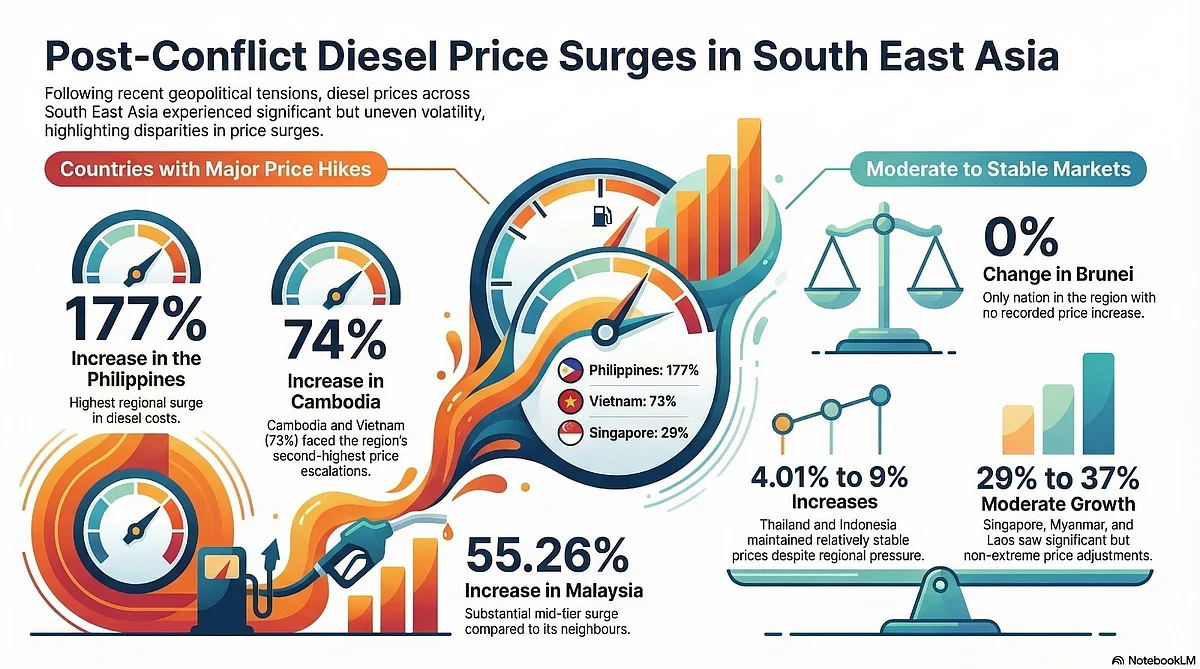
To mitigate the impact of the geopolitical conflict in the Middle East, Vietnam issued a resolution allowing for more flexible, daily price adjustments rather than the standard weekly review. Like the Philippines, Vietnam is heavily dependent on petroleum product importations.
The Cambodian government meanwhile has reduced import duties and Value Added Tax (VAT) on diesel to 0%. It has also eliminated the 4 per cent special tax on diesel and maintained a fuel price reduction via direct subsidy of 6.5 cents per liter.
While actual market increase in Thailand had been implemented in phases, its government has raised the official price ceiling to 33.00 baht to manage a growing deficit in the Kingdom’s Oil Fuel Fund.
Myanmar and Laos have maintained a moderate diesel price increase of 37 per cent and 33 per cent, respectively. In Myanmar, the military junta has set official price ceilings and strict purchase quotas but black market prices are estimated to be significantly higher. Laos’ diesel price increase is attributed to its weakened currency against the US dollar.
Singapore, the richest country in Southeast Asia, registered a 29 per cent increase in diesel prices in the past three weeks. While demand for the fuel type is low in the island-country because of its strict motoring regulations, its diesel has reached a historic S$3.73/litre because of the Middle East conflict.
Indonesia’s subsidised diesel has had no increase since the closure of the Strait of Hormuz. Its unsubsidized diesel, however, has an increased pump price of 9 per cent.
Thailand ordered a strict price freeze on standard diesel as soon to shield consumers from global volatility, leading to a low percentage increase of 4.01 per cent at the pump.
There is no available data for Timor Leste. A Filipina protester holds a banner during a rally in Manila against the series of oil price hikes brought by US-Israel-Iran war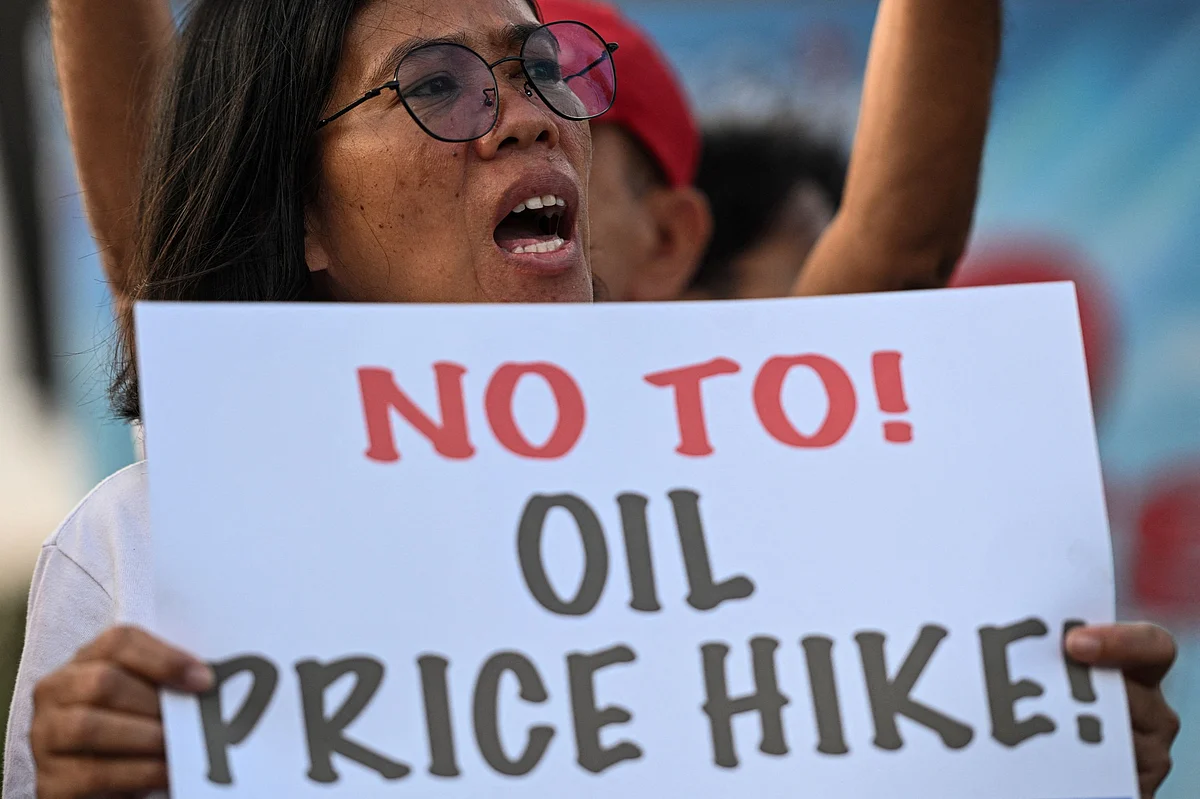
What's Your Reaction?