
























Qatar power venture clinches $990m Japan financing
Arabian Post Staff -Dubai Ras Abu Fontas Power, the company behind one of Qatar’s key power and water infrastructure projects, has secured a financing agreement worth about $990 million with the Japan Bank for International Cooperation, strengthening the long-term funding base for the Facility E power and desalination project south of Doha. The JBIC funding represents part of a larger co-financing package totalling approximately $2.97 billion, assembled […] The article Qatar power venture clinches $990m Japan financing appeared first on Arabian Post.

Arabian Post Staff -Dubai
Ras Abu Fontas Power, the company behind one of Qatar’s key power and water infrastructure projects, has secured a financing agreement worth about $990 million with the Japan Bank for International Cooperation, strengthening the long-term funding base for the Facility E power and desalination project south of Doha. The JBIC funding represents part of a larger co-financing package totalling approximately $2.97 billion, assembled with support from a mix of private banks and export credit agencies, underscoring robust investor confidence in Gulf utilities infrastructure.
Under the agreement signed on January 15, JBIC will provide project financing for a combined-cycle natural gas-fired power plant with capacity of about 2,400 MW and an accompanying desalination facility capable of producing around 110 million imperial gallons per day, according to JBIC’s official release. The electricity and water generated are contracted for sale under a 25-year off-take agreement with Qatar General Electricity and Water Corporation, a structure that offers predictable cash flow and risk mitigation sought by lenders in project finance.
The Ras Abu Fontas project company is a consortium blending local and international stakeholders, with Qatar Electricity & Water Company holding a majority 55 per cent stake, and Asian investors including Sumitomo Corporation and Shikoku Electric Power among other partners. Such diversified ownership aligns with broader trends in the Gulf’s utilities sector, where strategic alliances with foreign technical partners aim to balance capital requirements, technology access, and operational expertise.
JBIC’s participation reflects its mandate to support Japanese industry engagement in overseas infrastructure projects and foster economic cooperation, particularly where Japanese firms have equity or technology exposure. Alongside JBIC, other members of the financing syndicate include the Export-Import Bank of Korea, Korea Development Bank, and KEXIM Global Singapore, bringing together export credit agencies with complementary strategic interests in the energy and water sectors.
Project finance structures like this one are typically designed so that debt repayment is sourced solely from the project’s revenue stream, shielding sponsors from broader corporate risk while aligning investor returns with operational performance. Analyst commentary on Gulf infrastructure deals highlights that long-term off-take contracts and stable regulatory environments are key determinants in attracting multibillion-dollar commitments from international lenders, especially amid a backdrop of tighter global liquidity and heightened scrutiny of risk profiles.
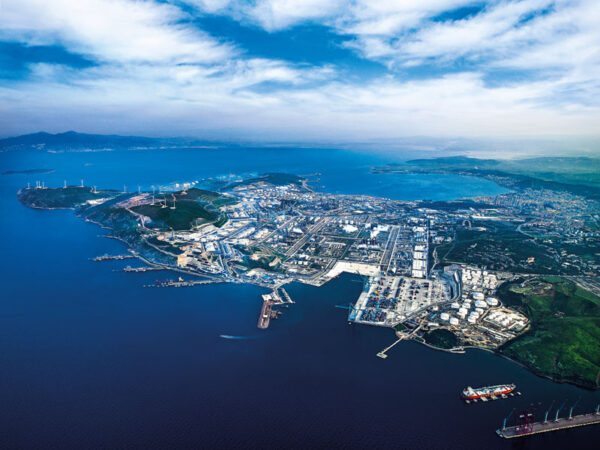
For Qatar, ensuring reliable power and water provision has been an ongoing priority, given the country’s rapid urban and economic growth. Ras Abu Fontas has evolved as a strategic industrial zone, housing a cluster of power and desalination plants that contribute significantly to national utility capacity. The Facility E expansion is expected to not only meet surging demand but also reinforce the resilience of supply chains that are vital to economic activity across sectors.
Beyond domestic considerations, the deal also carries implications for international energy and economic relations. Qatar is a major global exporter of liquefied natural gas, with energy ties to Japan that span decades. JBIC’s backing of the financing is seen as a mechanism to reinforce these links, supporting infrastructure that utilises highly efficient natural gas technologies while promoting Japanese industrial participation in long-term asset management.
The broader financing package — nearly three times the size of the JBIC tranche — points to sustained appetite among global capital providers for infrastructure deals in the Middle East, even as worldwide borrowing costs remain elevated and geopolitical uncertainties persist. Export credit agencies from Korea and Japan are increasingly active in such deals, spreading risk across multiple institutions and enhancing project resilience.
Industry experts note that the contractual and financial frameworks underpinning projects like Ras Abu Fontas’s Facility E are designed to balance investor safeguards with long-term development goals. Stable off-take agreements, diversified ownership, and multilateral lender participation are all elements that contribute to an investment profile capable of attracting institutional capital in a competitive environment.
The article Qatar power venture clinches $990m Japan financing appeared first on Arabian Post.
What's Your Reaction?