Real food belongs at the base of the food pyramid
Those battling chronic illness know what a long, difficult battle it is to get well again, understanding all too well that old sentiment, You don’t realise how important your health is until you lose it.Today, too many Americans live sick. They’re fighting rheumatoid arthritis, lupus, multiple sclerosis, diabetes. Many are battling cancer and heart disease. Their days are filled with doctor’s visits and pill bottles, aches and pains, according to the Tribune News Service.Chronic illness has become the norm rather than the exception in American life. Roughly 194 million adults report living with at least one chronic condition, including 6 in 10 young adults, 8 in 10 middle-aged adults and 9 in 10 older Americans, according to a Centers for Disease Control and Prevention analysis published in 2025. The share of young adults with chronic conditions rose significantly over the past decade, a sign that poor health is no longer confined to old age.Patients need to receive clear guidance on how diet and lifestyle changes can help. The US Department of Health and Human Services Wednesday released a new food pyramid that flips the original on its head — quite literally. Gone is the grain-heavy emphasis that defined earlier guidance, and in its place is guidance to prioritise “whole, nutrient-dense foods.”Specifically, new recommendations elevate the role of protein from both animal and plant sources, while scaling back the centrality of grains and advising against consumption of refined carbohydrates such as white bread. Plenty of people are grumbling about the advice on alcohol, which can be summarised as: Limit it.The USDA Food Guide Pyramid debuted in 1992, and for years was the gold standard on how Americans viewed diet, pushing an anti-fat, pro-carb worldview. For example, guidance included six to 11 servings per day of grains such as bread, cereal, rice and pasta versus just two to three servings of protein, such as meat.Federal dietary guidance has steadily retreated from the grain-heavy 1990s food pyramid, first shifting toward individualised recommendations in 2005 and then, in 2011, embracing a simpler, whole-food-focused approach. These latest recommendations are refreshingly straightforward, and they mirror much of what plenty of physicians and health professionals have long recommended for patients dealing with chronic illness or who want to get in better shape. Of course, we all enjoy a bit of fried food and some pastry, but we know we feel better when we opt for fruits, vegetables and healthy proteins. More than that, things like inflammation, blood pressure and blood sugar can respond positively when you eat right, leading to improvement in autoimmune, heart and diabetic symptoms. That’s precisely why clear, credible dietary guidance matters.The food pyramid is important because it sets the standard for the American diet, serving as official guidance. Of course, the rest is left to individuals, who are free to decide what to eat. Now, they’re at least getting better advice. Predictably, the updated guidance will be greeted with skepticism by some and embraced too rigidly by others. That misses the point. Federal dietary guidelines are not mandates or moral judgments, they are guardrails meant to steer people toward better health while leaving room for personal choice. No one is being ordered to give up bread, meat or the occasional indulgence, just as no one should treat a diagram as a rigid prescription. The message is simpler than the debate around it: Most people feel better when they eat mostly whole foods, and that principle allows for wide variation based on culture, preference and individual needs.Before we turn dietary guidance into another all-or-nothing debate, it’s worth remembering that food is only one piece of a much larger health puzzle. Dr. Ezekiel Emanuel, brother of former Chicago Mayor Rahm Emanuel, points out in his new book “Eat Your Ice Cream” that overall health isn’t best attained through complicated regimens and optimisation, it’s found through things like strong relationships, healthy habits, physical exercise, mental engagement and joy.
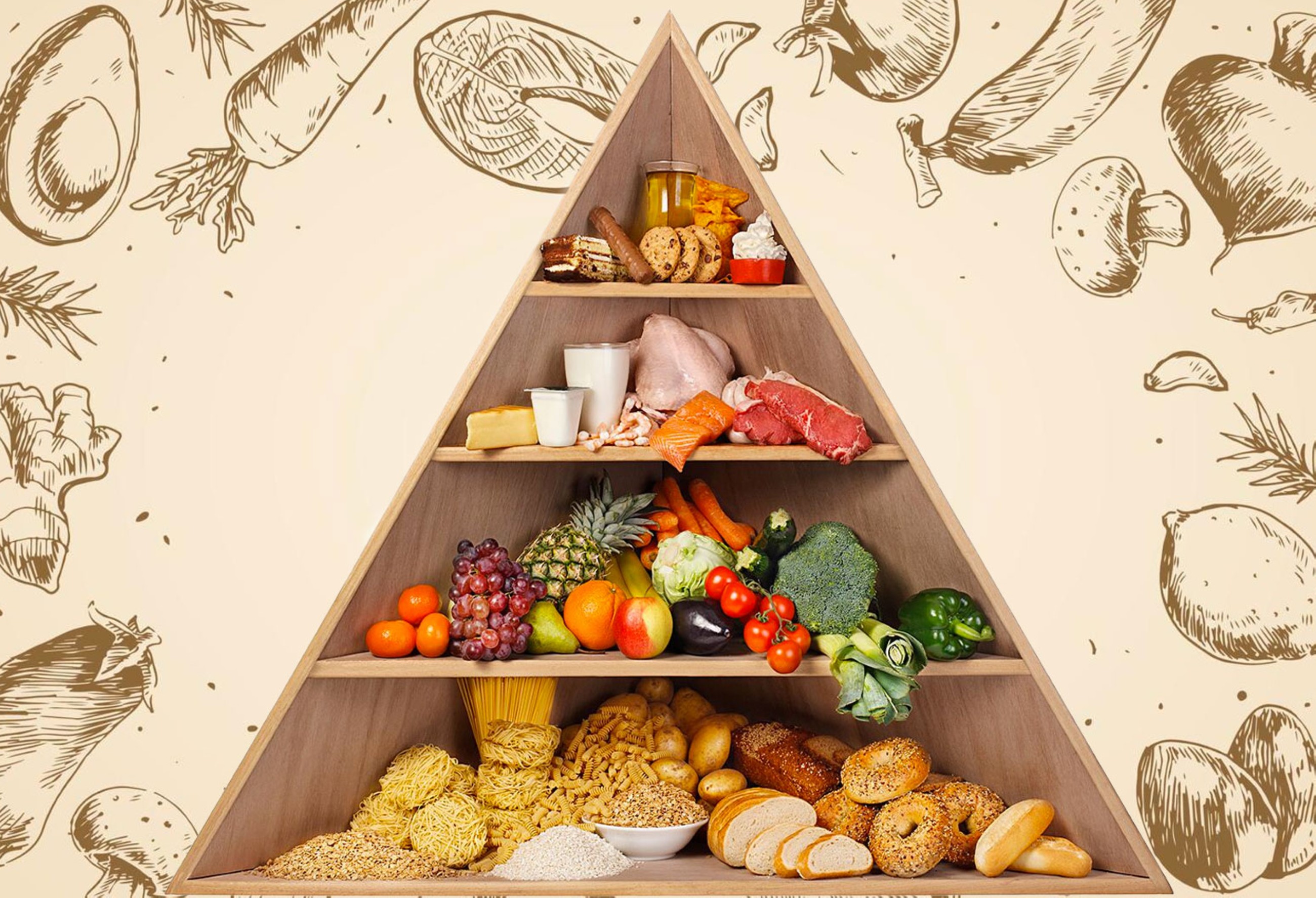
Those battling chronic illness know what a long, difficult battle it is to get well again, understanding all too well that old sentiment, You don’t realise how important your health is until you lose it.Today, too many Americans live sick. They’re fighting rheumatoid arthritis, lupus, multiple sclerosis, diabetes. Many are battling cancer and heart disease. Their days are filled with doctor’s visits and pill bottles, aches and pains, according to the Tribune News Service.Chronic illness has become the norm rather than the exception in American life. Roughly 194 million adults report living with at least one chronic condition, including 6 in 10 young adults, 8 in 10 middle-aged adults and 9 in 10 older Americans, according to a Centers for Disease Control and Prevention analysis published in 2025. The share of young adults with chronic conditions rose significantly over the past decade, a sign that poor health is no longer confined to old age.Patients need to receive clear guidance on how diet and lifestyle changes can help. The US Department of Health and Human Services Wednesday released a new food pyramid that flips the original on its head — quite literally. Gone is the grain-heavy emphasis that defined earlier guidance, and in its place is guidance to prioritise “whole, nutrient-dense foods.”Specifically, new recommendations elevate the role of protein from both animal and plant sources, while scaling back the centrality of grains and advising against consumption of refined carbohydrates such as white bread. Plenty of people are grumbling about the advice on alcohol, which can be summarised as: Limit it.The USDA Food Guide Pyramid debuted in 1992, and for years was the gold standard on how Americans viewed diet, pushing an anti-fat, pro-carb worldview. For example, guidance included six to 11 servings per day of grains such as bread, cereal, rice and pasta versus just two to three servings of protein, such as meat.Federal dietary guidance has steadily retreated from the grain-heavy 1990s food pyramid, first shifting toward individualised recommendations in 2005 and then, in 2011, embracing a simpler, whole-food-focused approach. These latest recommendations are refreshingly straightforward, and they mirror much of what plenty of physicians and health professionals have long recommended for patients dealing with chronic illness or who want to get in better shape. Of course, we all enjoy a bit of fried food and some pastry, but we know we feel better when we opt for fruits, vegetables and healthy proteins. More than that, things like inflammation, blood pressure and blood sugar can respond positively when you eat right, leading to improvement in autoimmune, heart and diabetic symptoms. That’s precisely why clear, credible dietary guidance matters.The food pyramid is important because it sets the standard for the American diet, serving as official guidance. Of course, the rest is left to individuals, who are free to decide what to eat. Now, they’re at least getting better advice. Predictably, the updated guidance will be greeted with skepticism by some and embraced too rigidly by others. That misses the point. Federal dietary guidelines are not mandates or moral judgments, they are guardrails meant to steer people toward better health while leaving room for personal choice. No one is being ordered to give up bread, meat or the occasional indulgence, just as no one should treat a diagram as a rigid prescription. The message is simpler than the debate around it: Most people feel better when they eat mostly whole foods, and that principle allows for wide variation based on culture, preference and individual needs.Before we turn dietary guidance into another all-or-nothing debate, it’s worth remembering that food is only one piece of a much larger health puzzle. Dr. Ezekiel Emanuel, brother of former Chicago Mayor Rahm Emanuel, points out in his new book “Eat Your Ice Cream” that overall health isn’t best attained through complicated regimens and optimisation, it’s found through things like strong relationships, healthy habits, physical exercise, mental engagement and joy.
What's Your Reaction?








Economist Admin
Admin managing news updates, RSS feed curation, and PR content publishing. Focused on timely, accurate, and impactful information delivery.