


























Saudi IPO pipeline gathers pace
Several Saudi Arabian companies are moving ahead with plans to list shares in Riyadh, testing investor appetite at a time when volatile crude prices and regional tensions have weighed on the Tadawul All Share Index. Bankers and market participants say firms from oilfield services, manufacturing, telecommunications and contracting are preparing prospectuses or holding early talks with advisers, signalling a revival in primary market activity after a subdued […] The article Saudi IPO pipeline gathers pace appeared first on Arabian Post.
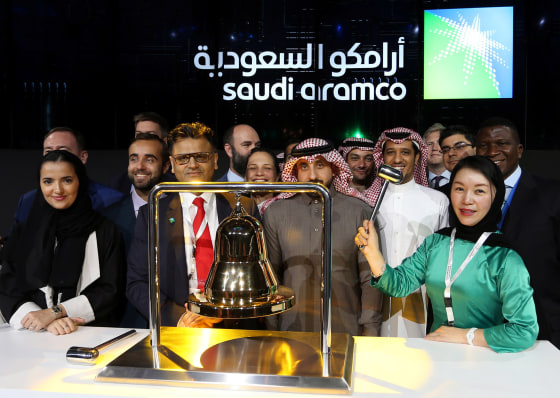
Several Saudi Arabian companies are moving ahead with plans to list shares in Riyadh, testing investor appetite at a time when volatile crude prices and regional tensions have weighed on the Tadawul All Share Index.
Bankers and market participants say firms from oilfield services, manufacturing, telecommunications and contracting are preparing prospectuses or holding early talks with advisers, signalling a revival in primary market activity after a subdued start to 2026. By this stage last year, at least three sizeable flotations had reached the market; so far this year, no comparable offerings have been completed.
Among those advancing plans are service providers linked to the energy sector, seeking to capitalise on steady domestic spending by Saudi Aramco and government-backed infrastructure programmes. Industrial groups, including manufacturers aligned with the kingdom’s push to localise supply chains, are also evaluating share sales. A telecommunications company and a contractor tied to large-scale development projects are understood to be assessing investor demand.
The renewed push comes against a more complex backdrop for equities in the Gulf’s largest economy. Brent crude has traded in a broad range, reflecting concerns over global demand and supply management by OPEC+, of which Saudi Arabia is the de facto leader. While state spending linked to Vision 2030 has continued to underpin non-oil growth, swings in oil prices have fed through to sentiment on the exchange.
Riyadh’s benchmark index has faced bouts of pressure this year amid geopolitical uncertainty in the wider Middle East and caution among foreign portfolio investors. Market volatility has prompted some issuers to recalibrate valuation expectations, according to people familiar with listing preparations. Investment banks say pricing discipline and clearer earnings visibility will be crucial to ensure successful debuts.
Despite near-term headwinds, Saudi Arabia remains one of the most active equity capital markets in the region. The Tadawul exchange has benefited over the past few years from reforms designed to deepen liquidity, broaden sector representation and attract international capital. Inclusion in major emerging market indices earlier in the decade drew foreign institutional investors, even if participation levels have fluctuated.
Analysts note that the pipeline reflects structural factors rather than purely cyclical ones. Vision 2030, the economic diversification programme spearheaded by Crown Prince Mohammed bin Salman, has encouraged state-owned enterprises and private groups to tap public markets to fund expansion and improve governance. Large privatisations and secondary offerings, including those linked to Aramco and utility and healthcare assets, have reshaped the exchange.
Energy-related service firms now eyeing listings are positioning themselves as beneficiaries of sustained capital expenditure in upstream and downstream projects. Aramco has signalled continued investment in gas development, petrochemicals and capacity maintenance, even as it adjusts output in line with OPEC+ agreements. Contractors tied to giga-projects such as NEOM, Diriyah Gate and the Red Sea development are seeking capital to support order books stretching years ahead.
Manufacturers considering flotations are aligned with efforts to boost domestic production of components, equipment and consumer goods, reducing reliance on imports. Telecommunications and technology-linked groups, meanwhile, are attempting to capture investor interest in digital infrastructure, data centres and 5G-related services as the kingdom pushes to become a regional technology hub.
Market specialists caution that execution risk remains. Global equity issuance has been uneven, with investors demanding stronger balance sheets and clearer profitability pathways. Higher interest rates over the past two years have altered valuation frameworks, though expectations of monetary easing in major economies could provide support if realised.
Local institutional investors, including pension funds and asset managers, continue to play a pivotal role in anchoring Saudi IPOs. Retail participation has historically been robust, particularly when offerings are priced attractively. However, market participants say retail investors have become more selective after periods of post-listing volatility in smaller-cap names.
Regulatory authorities have maintained a steady pipeline of approvals, seeking to balance market depth with investor protection. Disclosure standards and corporate governance requirements have been tightened over time, aligning the exchange more closely with international norms. The Capital Market Authority has also encouraged listings on Nomu, the parallel market, as a stepping stone for growth companies.
Foreign investor ownership has risen over the past five years, though it remains sensitive to global risk appetite. Geopolitical developments in the region, as well as shifts in energy markets, have influenced capital flows. Fund managers tracking emerging markets weigh Saudi exposure alongside other large constituents such as China and India, adjusting allocations in response to macroeconomic signals.
The article Saudi IPO pipeline gathers pace appeared first on Arabian Post.
What's Your Reaction?