





















SEBI Chief Tuhin Kanta Pandey Urges Patience: ‘Market Volatility Doesn’t Last Forever’
The “Year of Uncertainty” has arrived on Dalal Street, but India’s top market regulator is asking investors to look past the red screens. Speaking at the Moneycontrol Global Wealth Summit 2026 on Saturday, March 14, SEBI Chairman Tuhin Kanta Pandey delivered a message of historical perspective to a market reeling from the US-Iran war. Acknowledging […] The post SEBI Chief Tuhin Kanta Pandey Urges Patience: ‘Market Volatility Doesn’t Last Forever’ first appeared on Business League.

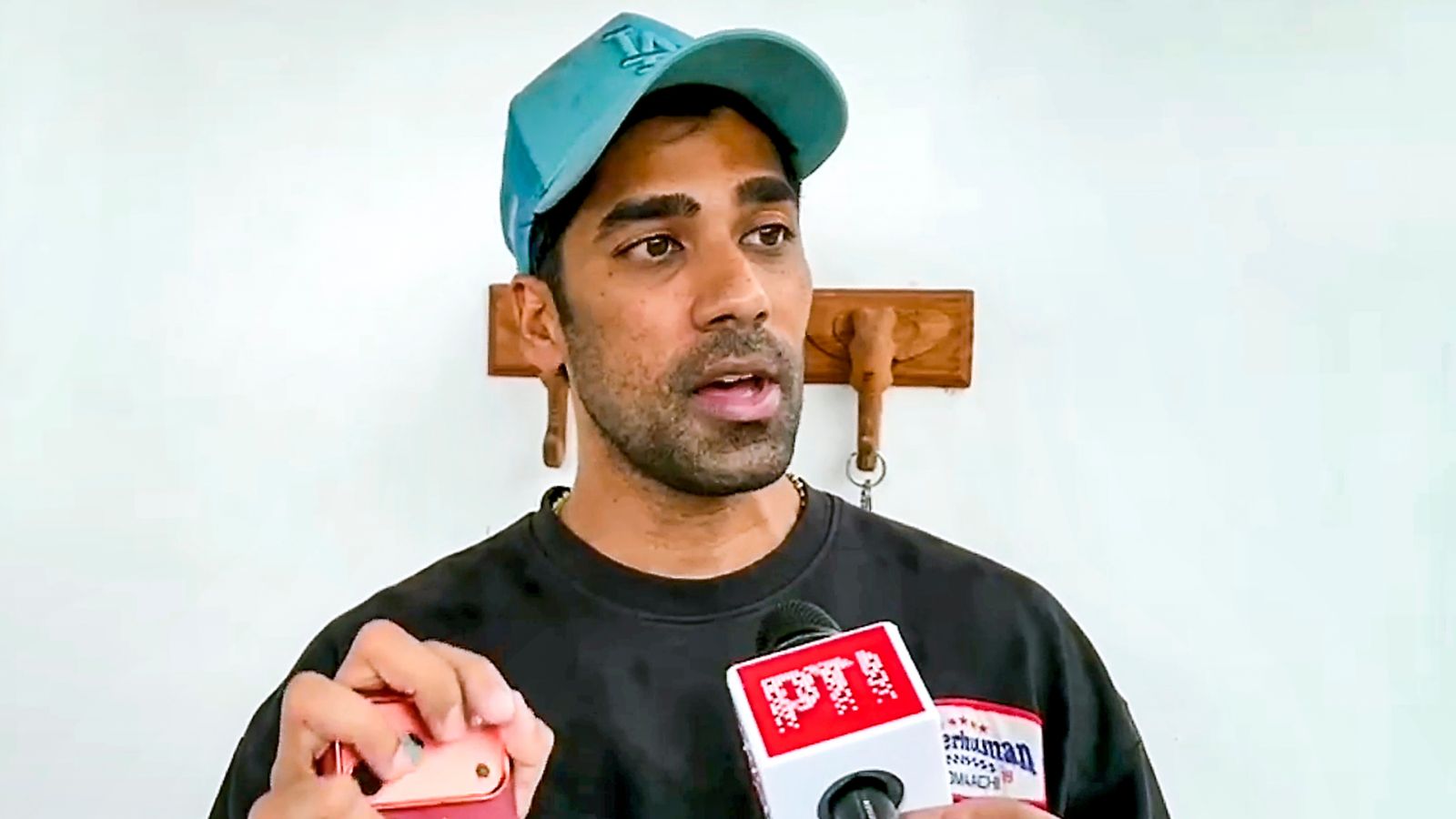
The “Year of Uncertainty” has arrived on Dalal Street, but India’s top market regulator is asking investors to look past the red screens. Speaking at the Moneycontrol Global Wealth Summit 2026 on Saturday, March 14, SEBI Chairman Tuhin Kanta Pandey delivered a message of historical perspective to a market reeling from the US-Iran war.
Acknowledging that the “Middle East conflict has massively disrupted energy supplies,” Pandey admitted that capital markets have been “severely impacted.” However, his primary message was one of restraint: for the millions of retail investors who have entered the market since 2021, the current crash is a test of temperament, not just a financial loss.
Also Read |Tamil Nadu Voter List Purge: 97 Lakh Names Deleted in SIR Phase 1
The “Impulsive” Warning: Why Patience is the Best Strategy
Pandey cautioned that the velocity of information in 2026—driven by AI and social media—makes volatility sharper than in the past.
-
Instant Reactions: “News travels fast, opinions travel even faster, and markets today react almost instantly to narratives,” Pandey noted.
-
Historical Recovery: He cited the Covid-19 pandemic and the Russia-Ukraine conflict as proof that markets eventually stabilize once the initial geopolitical shock is digested.
Geopolitics and Energy: The $100 Oil Pressure
The Chairman was candid about the “triple threat” facing the 2026 economy:
-
Energy Shocks: With crude oil remaining near $100/barrel, corporate earnings are under immediate threat from rising logistics costs.
-
Hormuz Choke: The shortage of LPG and LNG across India (due to the Strait of Hormuz blockade) has created a “macroeconomic jitter” that is feeding into equity valuations.
-
Capital Flows: Global liquidity is currently “episodic,” with foreign funds exiting emerging markets in favor of “safe havens.”
Structural Resilience: Deepening of Indian Markets
Despite the 9.3% drop in indices, Pandey highlighted that the “pipes” of the Indian financial system are stronger than ever.
-
Market Cap Growth: India’s market cap has grown at a 15% CAGR since FY15.
-
Bond Markets: The corporate bond market is expanding at 12% CAGR, providing a vital alternative to equity funding.
-
Investor Base: Household participation continues to rise, providing a “domestic cushion” against foreign fund sell-offs.
Also Read |Tamil Nadu Voter List Purge: 97 Lakh Names Deleted in SIR Phase 1
Investor Protection: Monitoring Narratives and PaRRVA
To combat the “misinformation war” that often accompanies market crashes, SEBI is deploying high-tech surveillance.
-
PaRRVA System: The Past Risk and Return Verification Agency, launched recently, is being used to verify performance claims and stop “finfluencers” from exploiting investor panic with fake “short-selling” advice.
-
Surveillance: SEBI is actively monitoring social media for misleading content that could trigger “unnatural” selling pressure.
Reality Check
The SEBI Chairman’s call for patience is a standard regulatory response to a crash. Still, the 9.3% fall is more than just “volatility”—it’s a significant erosion of wealth for those who entered at the market peak in early February. Therefore, while “volatility doesn’t last forever,” the impact on household savings is very real. In fact, if oil stays at $100 for more than 30 days, the “earnings recovery” Pandey predicts may take until 2027 to fully materialize.
The Loopholes
The Chairman says markets “historically recover.” In fact, this is a “Timing Loophole”—while the indices (Sensex/Nifty) recover, many individual small and mid-cap stocks may never return to their pre-war highs. Therefore, a “patient” investor holding the wrong stocks could still face permanent capital loss. Still, the “Stability Loophole” remains; by focusing on “transparent price discovery,” SEBI is effectively saying they will not intervene to stop the fall, as long as the fall is “efficient” and based on real-world news.
Also Read |Tamil Nadu Voter List Purge: 97 Lakh Names Deleted in SIR Phase 1
What This Means for You
If you are a retail investor, do not log in to your brokerage app every hour. First, realize that “narrative-driven” selling often leads to the worst prices. Then, if you have surplus cash, understand that SEBI views the deepening market as a sign of strength; look for quality stocks that have “oversold” relative to their actual earnings.
Finally, understand that PaRRVA is your shield. You should check the official PaRRVA portal before following any “emergency market strategies” shared on YouTube or Telegram. Before you sell your long-term SIPs, remember that Tuhin Kanta Pandey’s three-year term (which started March 2025) is focused on building a “resilient” system that can handle exactly this kind of shock.
What’s Next
Expect SEBI to issue a fresh circular on “algorithmic trading safety” in the next few days to prevent “flash crashes” during peak war headlines. Then, look for market stabilization around the 23,000 Nifty support level, which many technical analysts are watching as a “value zone.” Finally, expect the RBI to coordinate with SEBI on liquidity measures if the bond market shows signs of “episodic” freezing.
Also Read |Tamil Nadu Voter List Purge: 97 Lakh Names Deleted in SIR Phase 1
End…..
The post SEBI Chief Tuhin Kanta Pandey Urges Patience: ‘Market Volatility Doesn’t Last Forever’ first appeared on Business League.
What's Your Reaction?