

















The Gulf’s Shift Toward AI-Driven Safety Systems
Artificial intelligence isn’t only taking over our smartphones, office SaaS applications and smart factories. AI has been a small but significant feature in smart cities in recent years, for example, the rise of AI parking, environmental sensing and public safety These efforts see AI taking over more aspects of our work and daily lives.We now see AI used in all areas, including the recent drive to the strategic regional transformation and infrastructure leadership. While many leaders concern themselves with the technical infrastructure (power and silicon), the political motivation and use of AI, and the need for public trust in AI services, the technology containing AI is adopted by businesses in many areas, including safety.Safety Powered by AI in the GulfFrom offices to national and public infrastructure, the Gulf Region has been a keen adopter of smart technology like AI cameras https://www.avigilon.com/blog/ai-security-cameras, intelligent sensors, cloud security management systems and integrated security systems that link data from one source to another. From offices to national and public infrastructure, the Gulf Region has been a keen adopter of smart technology like AI cameras, intelligent sensors, cloud security management systems and integrated security systems that link data from one source to another. They link up to provide real-time threat detection, integrating with biometric security at airports for ID verification, and cybersecurity networks to protect critical infrastructure. The UAE is a leader in ethical AI development and frameworks that balance innovation with public and corporate privacy. How AI Improves Business Security AI is already well adopted and accepted within security systems. AI can scan the footage from large numbers of cameras, highlighting suspicious or unusual activities to staff or authorities. Security personnel already know what and where an issue is taking place, but smarter AI can provide identification of people involved and suggest actions for safe decision-making and the most positive outcome. Features such as object recognition can identify weapons or unusual objects (or items that have been stolen from a store). Facial recognition can track people across multiple security systems, and behavioural analysis can monitor people’s activity that may be a precursor to an incident. And in the longer term, crowd analysis can help protect public order, and help support improved designs for entrances and exits for safety and efficient movement.AI Security Can Handle Outlier SituationsWhile most security reports are largely about the same few issues, smart security can deal with rare or highly fluid situations. Consider the recent unstable weather in the UAE, AI security systems can interpret the topographical and prevailing risk of floods, snow or wind and direct staff or make announcements to get the public or workers to the safest places. With the UAE and local governments pushing the use of AI across all areas of society through national strategies like Smart Dubai, and enforcing ethics guidelines. And by the end of the decade, physical security, powered by AI, will mix drones and other surveillance technologies to provide a fully integrated method to support staff off and on-site, creating safer pursuits, handing live information and video on suspects over to authorities, while helping to ensure public and worker safety, whatever the situation.
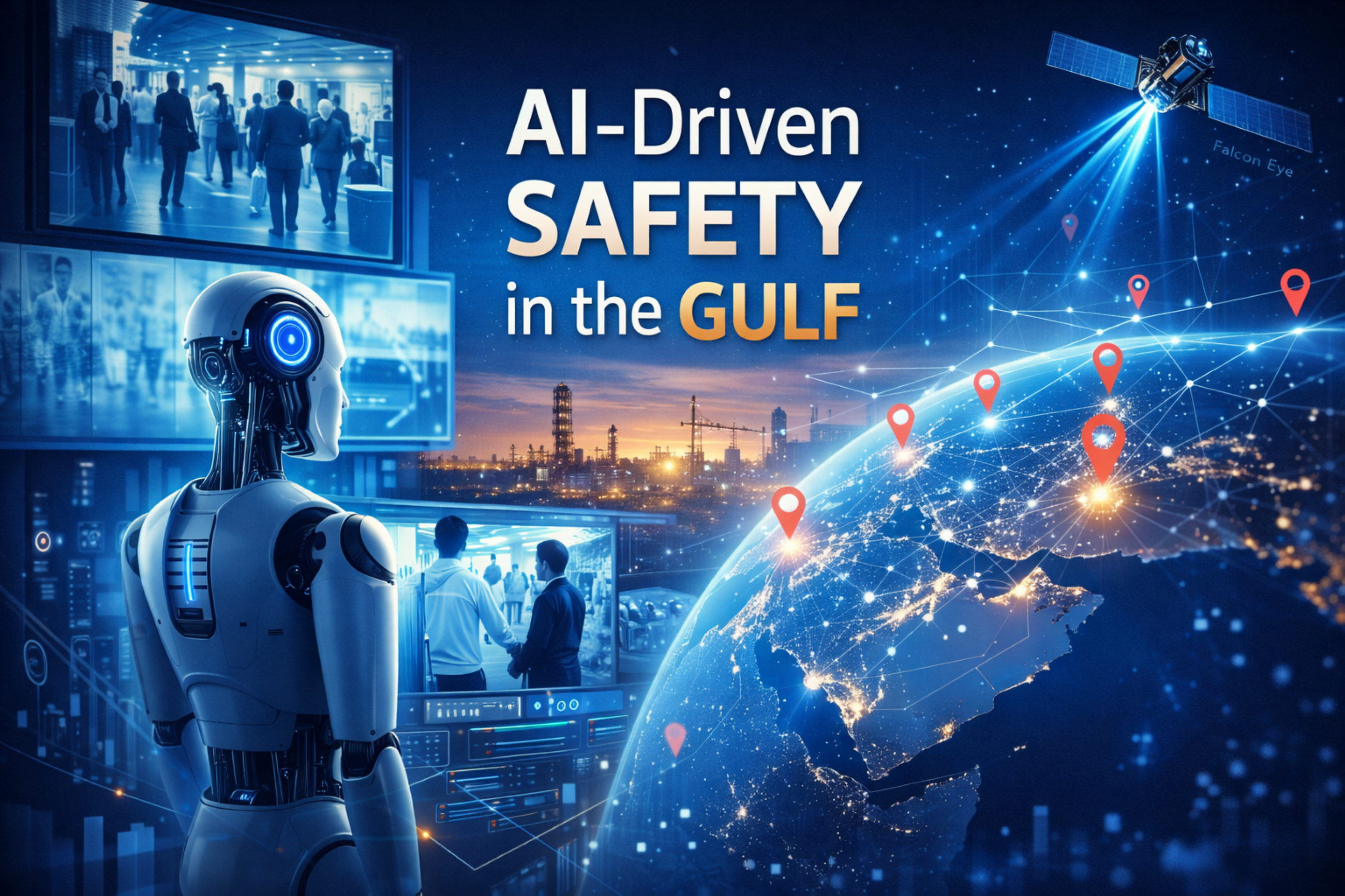
Artificial intelligence isn’t only taking over our smartphones, office SaaS applications and smart factories. AI has been a small but significant feature in smart cities in recent years, for example, the rise of AI parking, environmental sensing and public safety These efforts see AI taking over more aspects of our work and daily lives.We now see AI used in all areas, including the recent drive to the strategic regional transformation and infrastructure leadership. While many leaders concern themselves with the technical infrastructure (power and silicon), the political motivation and use of AI, and the need for public trust in AI services, the technology containing AI is adopted by businesses in many areas, including safety.Safety Powered by AI in the GulfFrom offices to national and public infrastructure, the Gulf Region has been a keen adopter of smart technology like AI cameras https://www.avigilon.com/blog/ai-security-cameras, intelligent sensors, cloud security management systems and integrated security systems that link data from one source to another. From offices to national and public infrastructure, the Gulf Region has been a keen adopter of smart technology like AI cameras, intelligent sensors, cloud security management systems and integrated security systems that link data from one source to another. They link up to provide real-time threat detection, integrating with biometric security at airports for ID verification, and cybersecurity networks to protect critical infrastructure. The UAE is a leader in ethical AI development and frameworks that balance innovation with public and corporate privacy. How AI Improves Business Security AI is already well adopted and accepted within security systems. AI can scan the footage from large numbers of cameras, highlighting suspicious or unusual activities to staff or authorities. Security personnel already know what and where an issue is taking place, but smarter AI can provide identification of people involved and suggest actions for safe decision-making and the most positive outcome. Features such as object recognition can identify weapons or unusual objects (or items that have been stolen from a store). Facial recognition can track people across multiple security systems, and behavioural analysis can monitor people’s activity that may be a precursor to an incident. And in the longer term, crowd analysis can help protect public order, and help support improved designs for entrances and exits for safety and efficient movement.AI Security Can Handle Outlier SituationsWhile most security reports are largely about the same few issues, smart security can deal with rare or highly fluid situations. Consider the recent unstable weather in the UAE, AI security systems can interpret the topographical and prevailing risk of floods, snow or wind and direct staff or make announcements to get the public or workers to the safest places. With the UAE and local governments pushing the use of AI across all areas of society through national strategies like Smart Dubai, and enforcing ethics guidelines. And by the end of the decade, physical security, powered by AI, will mix drones and other surveillance technologies to provide a fully integrated method to support staff off and on-site, creating safer pursuits, handing live information and video on suspects over to authorities, while helping to ensure public and worker safety, whatever the situation.
What's Your Reaction?








Economist Admin
Admin managing news updates, RSS feed curation, and PR content publishing. Focused on timely, accurate, and impactful information delivery.