


































Ubisoft doubles down on generative AI amid production strain
Ubisoft is expanding its investment in generative artificial intelligence as project delays, cancellations and workforce reductions continue to weigh on one of the industry’s largest publishers, signalling a strategic bet that automation can stabilise pipelines and control costs while reshaping how blockbuster games are built. The company has been grappling with uneven release schedules and rising development budgets across its global studios, prompting leadership to prioritise tools […] The article Ubisoft doubles down on generative AI amid production strain appeared first on Arabian Post.
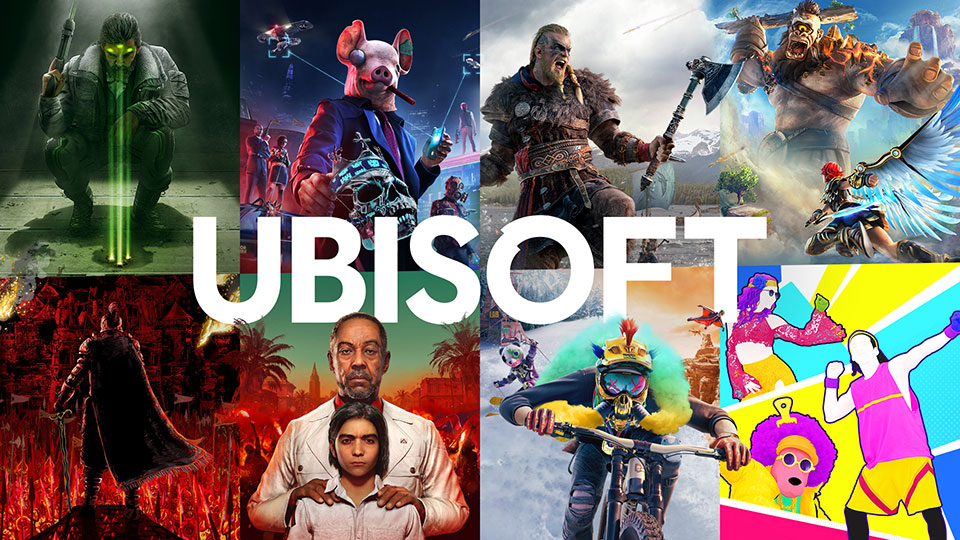
Ubisoft is expanding its investment in generative artificial intelligence as project delays, cancellations and workforce reductions continue to weigh on one of the industry’s largest publishers, signalling a strategic bet that automation can stabilise pipelines and control costs while reshaping how blockbuster games are built.
The company has been grappling with uneven release schedules and rising development budgets across its global studios, prompting leadership to prioritise tools that accelerate content creation without undermining creative control. Executives have framed generative AI as a way to shorten iteration cycles, reduce repetitive work and help teams deliver complex open-world titles on tighter timelines, even as headcount has been trimmed in several regions.
Within Ubisoft, AI development is being coordinated through its long-running internal research arm, La Forge, which has shifted from academic experimentation toward production-ready systems. The publisher has already deployed text-generation tools to assist non-player character dialogue drafting and quest barks, and is testing image, animation and audio generation to support environment art, localisation and quality assurance. Management maintains that these systems are designed to augment designers and writers rather than replace them, a message sharpened by labour sensitivities following layoffs.
The push comes against a backdrop of cancellations and extended development cycles that have disrupted revenue predictability. Several live-service and experimental projects were shelved after internal reviews questioned their commercial viability, while marquee franchises have faced repeated delays as teams recalibrated scope. Even when launches land, post-release support has demanded larger teams for longer periods, pushing costs higher across the portfolio.
Against that pressure, Ubisoft’s leadership argues that generative AI offers leverage at scale. Automating early drafts of dialogue, background assets and test cases can free senior talent to focus on narrative, mechanics and polish. In investor briefings, the company has highlighted productivity gains from prototype tools that generate multiple variants of assets for rapid evaluation, cutting weeks from pre-production phases.
Industry analysts note that Ubisoft is hardly alone. Major publishers and engine makers are racing to embed generative systems across workflows, from code assistance to procedural world-building. What distinguishes Ubisoft is the breadth of its experimentation across dozens of studios and a willingness to integrate tools directly into production pipelines rather than keep them confined to labs. That ambition, however, carries reputational risk if creators or players perceive AI as diluting authorship or quality.
Employee sentiment has been mixed. Some developers welcome relief from rote tasks such as placeholder dialogue or bug reproduction, while others worry about job security and creative homogenisation. Ubisoft has sought to address those concerns by publishing internal guidelines on ethical AI use, emphasising transparency, human oversight and respect for intellectual property. The company says training data is curated to avoid unauthorised use of third-party works, a flashpoint across the wider entertainment sector.
Players, too, are watching closely. Ubisoft’s franchises rely on distinctive worlds and storytelling, and missteps can quickly erode trust. The publisher insists AI-generated content will not ship unreviewed, and that final creative decisions remain with human teams. Early implementations have focused on behind-the-scenes efficiencies rather than visible, player-facing features.
Financially, the stakes are high. Development inflation has squeezed margins, and inconsistent release cadence has complicated forecasting. By embedding generative AI, Ubisoft aims to smooth production flow and improve return on investment without retreating from the scale that defines series such as Assassin’s Creed. Executives have hinted that future instalments will benefit from AI-assisted world construction and testing, though core narrative and gameplay will remain handcrafted.
Regulators and unions across Europe and North America are also shaping the landscape. Calls for clearer disclosure of AI use and protections for creative labour are gaining traction, adding compliance considerations to technical ones. Ubisoft has publicly supported dialogue with policymakers, positioning its approach as a model for responsible adoption in interactive entertainment.
The article Ubisoft doubles down on generative AI amid production strain appeared first on Arabian Post.
What's Your Reaction?