
















Ursula von der Leyen Wears Brocade For R-Day: Know About This Unique Style From India
As India marked its 77th Republic Day with ceremonial grandeur at Kartavya Path, one moment quietly captured global attention beyond the marching contingents and military displays. Ursula von der Leyen, President of the European Commission and the chief guest for Republic Day 2026, made a striking sartorial choice that blended diplomatic intent with cultural reverence. Draped in a maroon-and-gold brocade bandhgala jacket paired with off-white trousers, her appearance became a subtle yet powerful tribute to India’s textile legacy. ALSO READ: Galwan And Nubra, The Bactrian Camels From Ladakh, Debut At Republic Day Parade: Watch A Thoughtful Shift From Power Suits To Indian Elegance Ursula von der Leyen is the chief guest at India’s Republic Day parade.She greets Modi and is hoping to sign the “mother of all trade deals” tomorrow. pic.twitter.com/2b49dFh1UY — S.L. Kanthan (@Kanthan2030) January 26, 2026 Widely recognised for her sharply tailored pantsuits at international summits and diplomatic engagements, von der Leyen’s Republic Day attire marked a notable departure from her usual style. Choosing a traditional Indian silhouette for the parade signalled more than fashion experimentation, it reflected cultural respect and an understanding of the occasion’s historical weight. The structured bandhgala, with its regal undertones, aligned seamlessly with the ceremonial setting, while the restrained colour palette ensured elegance without excess. The look stood out for its balance: formal yet rooted, global yet unmistakably Indian. What Makes Brocade Fabric So Special? Brocade is a richly patterned woven fabric where motifs are created directly on the loom rather than added later through embroidery. Traditionally associated with ceremonial and ornamental clothing, brocade carries an inherent sense of luxury and craftsmanship. While silk has long been the preferred base for brocade due to its sheen and strength, modern versions are also woven using cotton, wool, and even synthetic fibres. Regardless of material, brocade retains a distinctive visual depth that conveys refinement and heritage. A Fabric With Ancient Global Roots The earliest records of brocade trace back to China’s Warring States period between 475 and 221 BC. For centuries, production remained concentrated in China, closely tied to the flourishing silk trade. This exclusivity began to change in the early centuries AD as cultural stability enabled broader exchange across Eurasia. A turning point arrived in the 6th century AD, when Byzantine monks reportedly smuggled the secrets of silk production out of China. This breakthrough allowed Byzantium to emerge as a major silk and brocade, producer, eventually becoming the region most associated with the fabric throughout the Middle Ages. Different Types Of Brocade You Should Know Over time, brocade evolved into multiple forms across global textile traditions: Silk Brocade: The most traditional and luxurious variant, prized for its lustre, smoothness, and durability. Cotton Brocade: Simpler and more affordable, often used for less formal garments with lighter patterning. Himru (Himroo) Brocade: A silk-cotton blend primarily produced in India, offering softness, breathability, and subtle sheen. Synthetic Brocade: Cost-effective but less breathable, often criticised for environmental and worker safety concerns. Continuous Brocade: Features surplus threads left hanging or trimmed at the back of the fabric. Discontinuous Brocade: Uses leftover threads woven back into the fabric to create additional decorative patterns. Zari Brocade: Traditionally woven with real gold, silver, or copper threads, now more commonly produced using metallic-look synthetic yarns. How Brocade Is Woven (Image Source: Pinterest/rhanauerbowties) Brocade construction involves three yarn systems: warp, weft, and a supplementary weft that forms the decorative motifs. Historically, weaving brocade demanded immense skill and time, with artisans working on manual looms. The advent of the Jacquard loom revolutionised the process, enabling complex designs through mechanised and later computerised systems. Today, most brocade fabrics are produced using advanced Jacquard technology while still echoing centuries-old craftsmanship. Why Von der Leyen’s Outfit Resonated Beyond Fashion Against the backdrop of Republic Day celebrations, von der Leyen’s choice of brocade carried symbolic weight. It reflected not only an appreciation for Indian artistry but also a diplomatic gesture, acknowledging heritage through attire rather than words. In a moment where global leadership often communicates through optics as much as policy, her ensemble quietly underscored the cultural bridges that diplomacy can build. At a parade defined by tradition, discipline, and national pride, Ursula von der Leyen’s brocade bandhgala stood as a reminder that clothing, w

As India marked its 77th Republic Day with ceremonial grandeur at Kartavya Path, one moment quietly captured global attention beyond the marching contingents and military displays. Ursula von der Leyen, President of the European Commission and the chief guest for Republic Day 2026, made a striking sartorial choice that blended diplomatic intent with cultural reverence. Draped in a maroon-and-gold brocade bandhgala jacket paired with off-white trousers, her appearance became a subtle yet powerful tribute to India’s textile legacy.
ALSO READ: Galwan And Nubra, The Bactrian Camels From Ladakh, Debut At Republic Day Parade: Watch
A Thoughtful Shift From Power Suits To Indian Elegance
Ursula von der Leyen is the chief guest at India’s Republic Day parade.
She greets Modi and is hoping to sign the “mother of all trade deals” tomorrow. pic.twitter.com/2b49dFh1UY — S.L. Kanthan (@Kanthan2030) January 26, 2026
Widely recognised for her sharply tailored pantsuits at international summits and diplomatic engagements, von der Leyen’s Republic Day attire marked a notable departure from her usual style. Choosing a traditional Indian silhouette for the parade signalled more than fashion experimentation, it reflected cultural respect and an understanding of the occasion’s historical weight.
The structured bandhgala, with its regal undertones, aligned seamlessly with the ceremonial setting, while the restrained colour palette ensured elegance without excess. The look stood out for its balance: formal yet rooted, global yet unmistakably Indian.
What Makes Brocade Fabric So Special?
Brocade is a richly patterned woven fabric where motifs are created directly on the loom rather than added later through embroidery. Traditionally associated with ceremonial and ornamental clothing, brocade carries an inherent sense of luxury and craftsmanship.
While silk has long been the preferred base for brocade due to its sheen and strength, modern versions are also woven using cotton, wool, and even synthetic fibres. Regardless of material, brocade retains a distinctive visual depth that conveys refinement and heritage.
A Fabric With Ancient Global Roots
The earliest records of brocade trace back to China’s Warring States period between 475 and 221 BC. For centuries, production remained concentrated in China, closely tied to the flourishing silk trade. This exclusivity began to change in the early centuries AD as cultural stability enabled broader exchange across Eurasia.
A turning point arrived in the 6th century AD, when Byzantine monks reportedly smuggled the secrets of silk production out of China. This breakthrough allowed Byzantium to emerge as a major silk and brocade, producer, eventually becoming the region most associated with the fabric throughout the Middle Ages.
Different Types Of Brocade You Should Know
Over time, brocade evolved into multiple forms across global textile traditions:
- Silk Brocade: The most traditional and luxurious variant, prized for its lustre, smoothness, and durability.
- Cotton Brocade: Simpler and more affordable, often used for less formal garments with lighter patterning.
- Himru (Himroo) Brocade: A silk-cotton blend primarily produced in India, offering softness, breathability, and subtle sheen.
- Synthetic Brocade: Cost-effective but less breathable, often criticised for environmental and worker safety concerns.
- Continuous Brocade: Features surplus threads left hanging or trimmed at the back of the fabric.
- Discontinuous Brocade: Uses leftover threads woven back into the fabric to create additional decorative patterns.
- Zari Brocade: Traditionally woven with real gold, silver, or copper threads, now more commonly produced using metallic-look synthetic yarns.
How Brocade Is Woven
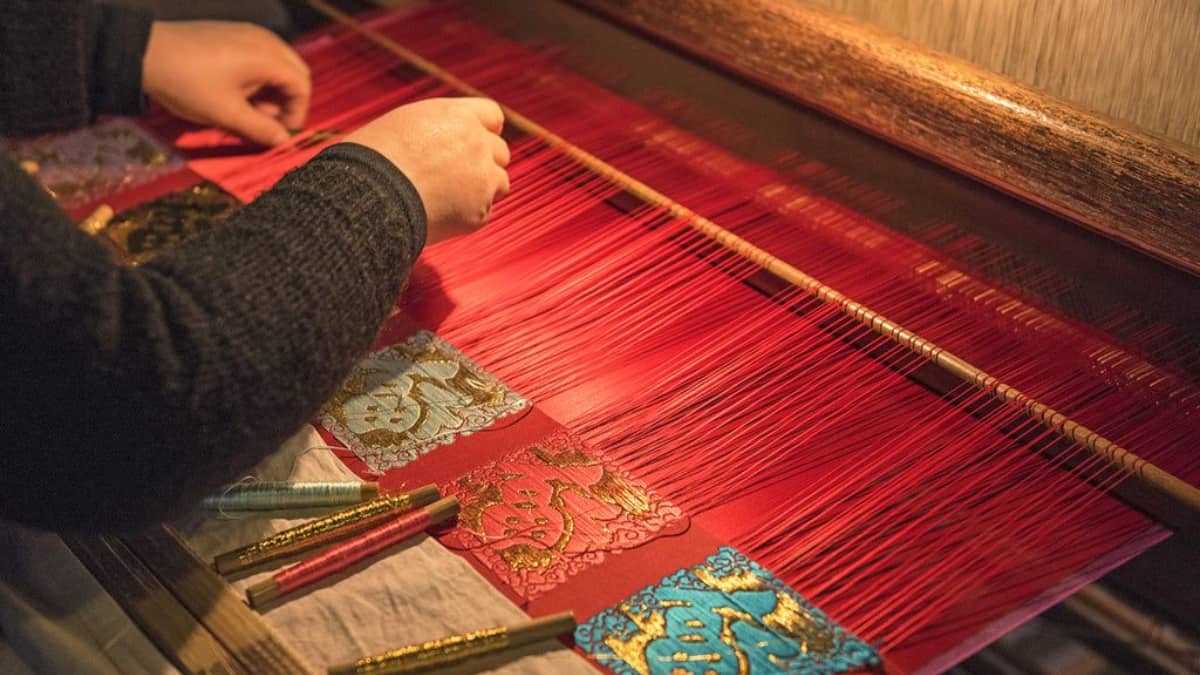
Brocade construction involves three yarn systems: warp, weft, and a supplementary weft that forms the decorative motifs. Historically, weaving brocade demanded immense skill and time, with artisans working on manual looms.
The advent of the Jacquard loom revolutionised the process, enabling complex designs through mechanised and later computerised systems. Today, most brocade fabrics are produced using advanced Jacquard technology while still echoing centuries-old craftsmanship.
Why Von der Leyen’s Outfit Resonated Beyond Fashion
Against the backdrop of Republic Day celebrations, von der Leyen’s choice of brocade carried symbolic weight. It reflected not only an appreciation for Indian artistry but also a diplomatic gesture, acknowledging heritage through attire rather than words.
In a moment where global leadership often communicates through optics as much as policy, her ensemble quietly underscored the cultural bridges that diplomacy can build.
At a parade defined by tradition, discipline, and national pride, Ursula von der Leyen’s brocade bandhgala stood as a reminder that clothing, when chosen thoughtfully, can speak volumes.
What's Your Reaction?