
































When Gold Breaks Five Thousand And Dollar Blinks
By K Raveendran Gold pushing decisively past the $5,000-a-troy-ounce threshold at the same moment the US dollar slides to a four-month low is not just a dramatic coincidence of charts. It marks a psychological rupture in global markets, challenging assumptions that have underpinned portfolio construction and macroeconomic thinking for decades. What once belonged to the […] The article When Gold Breaks Five Thousand And Dollar Blinks appeared first on Latest India news, analysis and reports on Newspack by India Press Agency). The article When Gold Breaks Five Thousand And Dollar Blinks appeared first on Arabian Post.

By K Raveendran
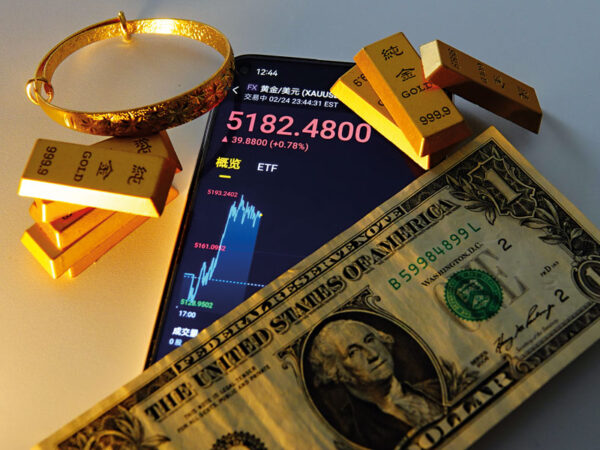
Gold pushing decisively past the $5,000-a-troy-ounce threshold at the same moment the US dollar slides to a four-month low is not just a dramatic coincidence of charts. It marks a psychological rupture in global markets, challenging assumptions that have underpinned portfolio construction and macroeconomic thinking for decades. What once belonged to the realm of tail-risk scenarios has arrived in real time, forcing investors, policymakers and central banks to confront a reassessment of US political credibility, policy coherence and the role of traditional safe havens in an increasingly fragmented global system.
For much of the post-Bretton Woods era, the dollar’s status as the world’s reserve currency has given it an almost reflexive strength during periods of turmoil. Crises elsewhere, whether financial, geopolitical or institutional, tended to trigger capital flows into US assets, reinforcing the greenback’s dominance. Gold, by contrast, was often treated as insurance against extreme outcomes: systemic collapse, runaway inflation or currency debasement. The idea that gold could surge to levels once considered implausible while the dollar simultaneously weakens disrupts that tidy framework.
The scale and speed of the move matter. Gold’s ascent beyond $5,000 did not unfold over a decade of slow erosion in fiat currencies but over a compressed period marked by repeated policy shocks, fiscal uncertainty and rising doubts about the long-term discipline of the US state. At the same time, the dollar’s retreat has not been driven by an isolated external crisis but by internal questions about governance, debt sustainability and the predictability of policy itself. Markets are signalling that the source of uncertainty is no longer comfortably “out there”.
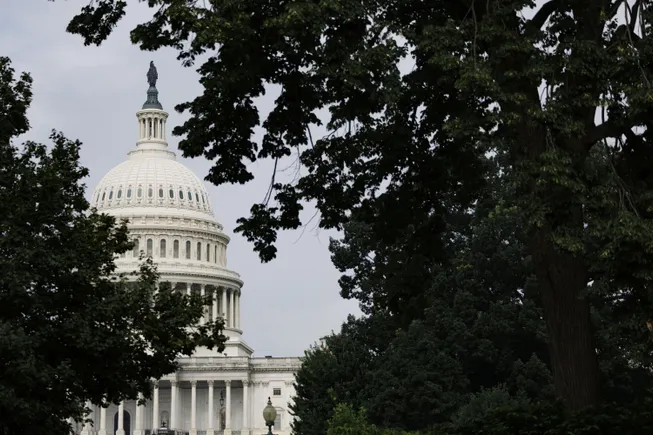
Analysts increasingly interpret this dual movement as a referendum on US political and policy risk. The dollar’s weakness reflects more than interest-rate differentials or cyclical data surprises; it captures unease over fiscal trajectories that appear unmoored from credible consolidation plans, intensifying political polarisation and the weaponisation of economic policy. Trade, sanctions and industrial policy have become tools of strategic competition rather than neutral instruments, injecting a premium for unpredictability into US assets. For global investors, the calculus is shifting from asking where growth is strongest to where rules are most stable.
This is where gold’s transformation becomes critical. The metal is no longer viewed merely as a hedge against catastrophe but as a core macro asset that responds to structural changes in the global order. Central banks, particularly outside the traditional Western bloc, have been accumulating gold not as a speculative bet but as a strategic reserve insulated from political leverage. That trend has gained momentum as financial sanctions, asset freezes and payment-system exclusions have demonstrated how reserve currencies can be entangled with foreign policy objectives.
Private investors are drawing similar conclusions. In an environment where real yields can be volatile and policy signals inconsistent, gold’s lack of counterparty risk has become an advantage rather than a drawback. Its price action above $5,000 suggests a market willing to capitalise years of latent demand for an asset that sits outside the sovereign credit system. The move implies that gold is being repriced not just for inflation risk but for institutional risk, including concerns about the durability of legal and political frameworks that underpin fiat money.
The dollar’s slide alongside this surge punctures another long-held belief: that uncertainty automatically strengthens the US currency. That assumption relied on a hierarchy of risk in which the United States, despite its flaws, was perceived as the least risky option in a troubled world. What markets appear to be questioning now is whether that hierarchy remains intact. When uncertainty emanates from Washington itself, the reflexive bid for dollars weakens, and diversification becomes a rational response rather than a defensive afterthought.
This does not mean the dollar is on the verge of losing its reserve status. Network effects, liquidity and the sheer depth of US financial markets remain formidable. Yet reserve currency dominance has always been a spectrum rather than a binary condition. Incremental shifts matter. A weaker dollar during periods of global stress suggests that investors are increasingly comfortable expressing caution about US assets without abandoning them altogether. Gold’s rise, in this sense, is less about replacing the dollar than about balancing it.
Gold’s ascent reflects a gradual decoupling in the global monetary psyche, where trust is no longer concentrated in a single issuer. Countries seeking to reduce exposure to currency risk tied to geopolitical alignment find in gold a politically neutral asset. The metal’s price, therefore, embeds not only macroeconomic variables but also the evolving architecture of global power, where multipolarity translates into monetary pluralism.
Critically, the symbolism of “impossible” milestones being breached should not be dismissed as mere narrative flourish. Markets are storytelling machines as much as pricing mechanisms. When gold crosses $5,000, it resets mental anchors and legitimises strategies that once seemed fringe. Similarly, a dollar at multi-month lows amid uncertainty invites investors to question automatic assumptions baked into models and mandates. These psychological shifts can be as influential as fundamentals in shaping medium-term trends.
For investors, the episode underscores the importance of adaptability. The elevation of gold from tail-risk hedge to core macro asset reflects a world where correlations are less stable and traditional refuges cannot be taken for granted. Portfolio construction is being forced to reckon with political risk in advanced economies, not just emerging markets, and to recognise that diversification now includes assets long regarded as relics of an earlier era.
Ultimately, the simultaneous weakening of the dollar and the surge of gold beyond $5,000 serve as a mirror held up to the global financial system. They reveal a market grappling with the erosion of old certainties and the emergence of new fault lines. Whether this moment marks a lasting regime shift or a sharp repricing within an evolving order will depend on how political and policy choices unfold. What is clear is that the assumption of inevitability, once attached to both the dollar’s strength and gold’s marginality, has been decisively broken. (IPA Service)
The article When Gold Breaks Five Thousand And Dollar Blinks appeared first on Latest India news, analysis and reports on Newspack by India Press Agency).
The article When Gold Breaks Five Thousand And Dollar Blinks appeared first on Arabian Post.
What's Your Reaction?