'Almost like a train': How Dubai's driverless transport system Glydways will cut traffic
Imagine having on-demand, personal vehicles available around the clock, enabling direct point-to-point travel without intermediate stops. That is the model Dubai is exploring as it moves closer to introducing an automated transit network designed to reshape short-distance urban travel.The Roads and Transport Authority (RTA) on Wednesday signed a cooperation agreement with Glydways, marking the launch of Dubai’s first automated transit network programme.RTA's Director General Mattar Al Tayer and Glydways' Mark Seeger sign an agreement to launch Dubai's first automated transit network programmeThe proposed system is based on driverless electric vehicles supported by artificial intelligence and operates independently of road traffic. It runs on compact, narrow guideways that can be elevated or deployed at ground level, minimising disruption to existing roads and utility networks.Stay up to date with the latest news. Follow KT on WhatsApp Channels.Glydways’ technology enables virtual platooning of more than 10 vehicles operating with a one-second headway. “This means that up to 10 cars can actually link together virtually, almost like a train. So, it's really like a proper public transport system. We think that it has good potential,” Ahmed Hashem Bahrozyan, Chief Executive Officer of the Public Transport Agency, explained to Khaleej Times in an interview on the sidelines of the World Governments Summit.Each vehicle can carry between four and six passengers and travel at speeds of up to 50km/h. The pods are equipped with 20 high-resolution LiDAR sensors, as well as advanced radar systems and high-definition cameras to support autonomous operation.Bahrozyan said the system’s width is narrow. “It will be good for areas which have narrow pathways and lots of traffic or people.”Proposed routesDesigned as an urban mobility solution, the system offers personalised, on-demand transport services that allow passengers to travel directly to their destination. It is expected to shorten journey times while offering customisable climate control and entertainment settings, alongside zero local emissions and safety standards comparable to mass transit systems.A prototype of the electric pod on display at the RTA pavilion during the World Government Summit Bahrozyan added that the first phase of the project will begin its test phase later this year in the Bluewaters Island area. “We think that's a good area to test,” he said. “If the results of the tests are successful, we will then hope that in the next two or three years, we will roll it out to other different areas in Dubai.”The agreement provides for the study of several proposed routes, including a 2.8km pilot linking National Paints Metro Station to Bluewaters Island. Additional routes would connect Dubai Metro stations to destinations such as Madinat Jumeirah, Alserkal Avenue, Times Square Centre and Dubai Festival City, strengthening integration with the wider metro network.RTA Director General Mattar Al Tayer said the system features high operational capacity, enabling the transport of more than 20,000 passengers per hour in both directions. He added that capital cost savings of up to 90 per cent and operational cost reductions of up to 70 per cent could be achieved compared with other transport modes, improving the efficiency of investment in sustainable transport projects.Mark Seeger, Founder and Co-CEO of Glydways, said launching the system in Dubai marked a milestone for the company. “Glydways represents a new form of mobility designed to support seamless movement between neighbourhoods,” he said, adding that Bluewaters Island provides an ideal environment to demonstrate the network’s ability to deliver high-capacity, on-demand transport at lower cost.Founded in 2016, Glydways develops high-capacity automated transit networks that operate autonomous electric vehicles on dedicated guideways. The company says its systems are scalable, cost-efficient and rapidly deployable, offering cities a sustainable and financially viable transport solution while providing passengers with affordable and personalised mobility options.Dubai unveils driverless pods to link 4 key locations with metro stationsHow Dubai Loop, Glydways transport system will help beat traffic'Top-tier city': Netizens react to Sheikh Hamdan, Elon Musk tweets about Dubai Loop
Imagine having on-demand, personal vehicles available around the clock, enabling direct point-to-point travel without intermediate stops. That is the model Dubai is exploring as it moves closer to introducing an automated transit network designed to reshape short-distance urban travel.
The Roads and Transport Authority (RTA) on Wednesday signed a cooperation agreement with Glydways, marking the launch of Dubai’s first automated transit network programme. RTA's Director General Mattar Al Tayer and Glydways' Mark Seeger sign an agreement to launch Dubai's first automated transit network programme
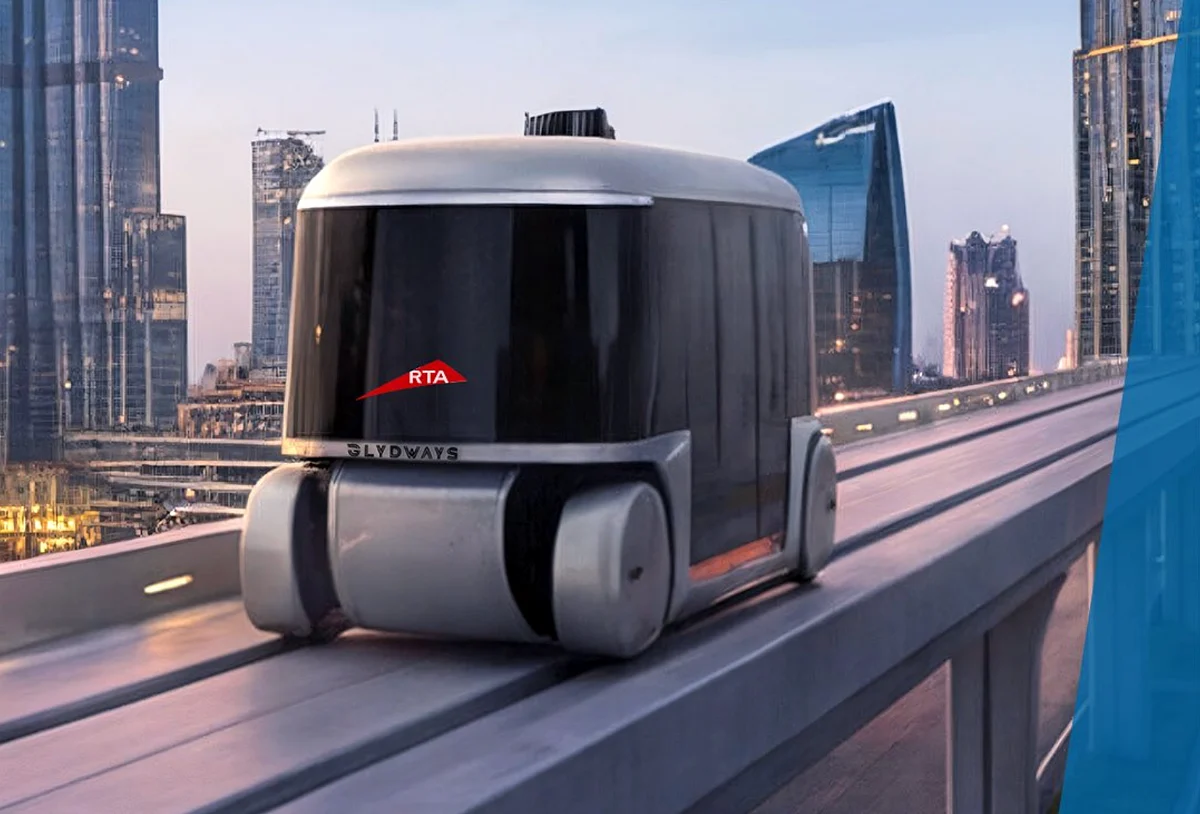
The proposed system is based on driverless electric vehicles supported by artificial intelligence and operates independently of road traffic. It runs on compact, narrow guideways that can be elevated or deployed at ground level, minimising disruption to existing roads and utility networks.
Stay up to date with the latest news. Follow KT on WhatsApp Channels.
Glydways’ technology enables virtual platooning of more than 10 vehicles operating with a one-second headway. “This means that up to 10 cars can actually link together virtually, almost like a train. So, it's really like a proper public transport system. We think that it has good potential,” Ahmed Hashem Bahrozyan, Chief Executive Officer of the Public Transport Agency, explained to Khaleej Times in an interview on the sidelines of the World Governments Summit.
Each vehicle can carry between four and six passengers and travel at speeds of up to 50km/h. The pods are equipped with 20 high-resolution LiDAR sensors, as well as advanced radar systems and high-definition cameras to support autonomous operation.
Bahrozyan said the system’s width is narrow. “It will be good for areas which have narrow pathways and lots of traffic or people.”
Proposed routes
Designed as an urban mobility solution, the system offers personalised, on-demand transport services that allow passengers to travel directly to their destination. It is expected to shorten journey times while offering customisable climate control and entertainment settings, alongside zero local emissions and safety standards comparable to mass transit systems. A prototype of the electric pod on display at the RTA pavilion during the World Government Summit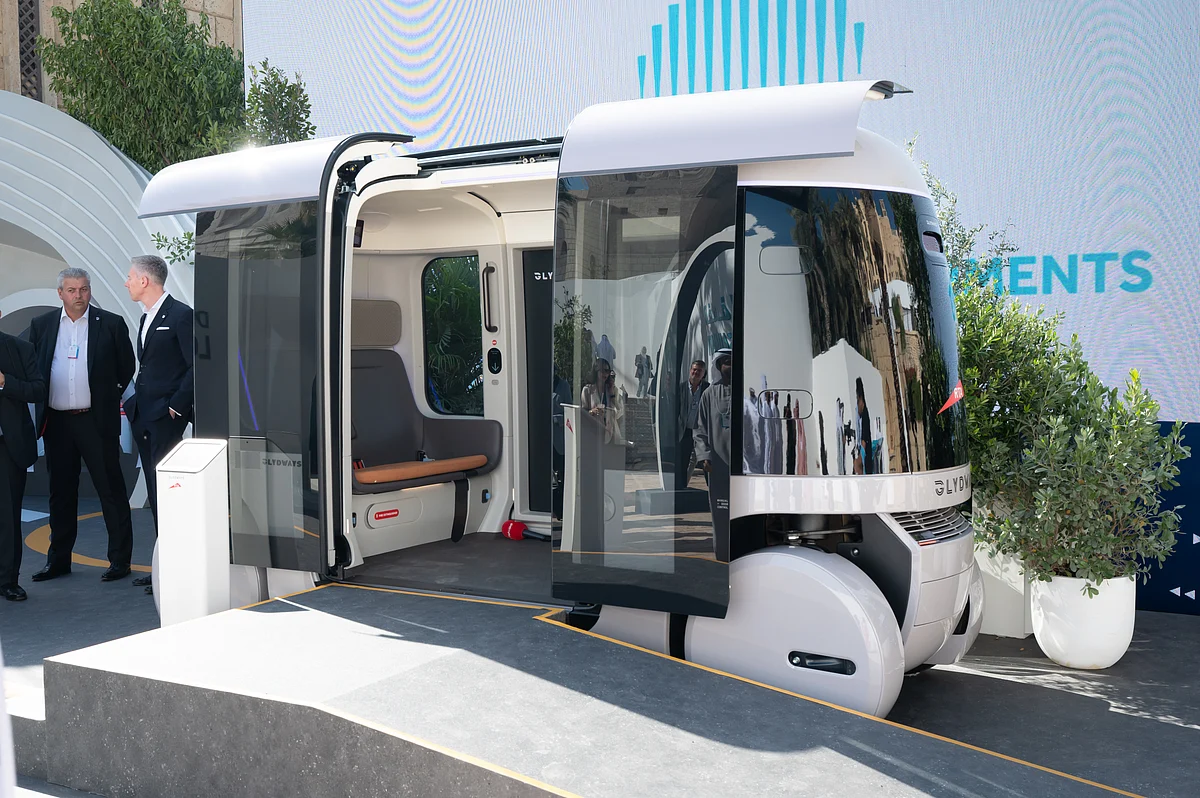
Bahrozyan added that the first phase of the project will begin its test phase later this year in the Bluewaters Island area. “We think that's a good area to test,” he said. “If the results of the tests are successful, we will then hope that in the next two or three years, we will roll it out to other different areas in Dubai.”
The agreement provides for the study of several proposed routes, including a 2.8km pilot linking National Paints Metro Station to Bluewaters Island. Additional routes would connect Dubai Metro stations to destinations such as Madinat Jumeirah, Alserkal Avenue, Times Square Centre and Dubai Festival City, strengthening integration with the wider metro network.
RTA Director General Mattar Al Tayer said the system features high operational capacity, enabling the transport of more than 20,000 passengers per hour in both directions. He added that capital cost savings of up to 90 per cent and operational cost reductions of up to 70 per cent could be achieved compared with other transport modes, improving the efficiency of investment in sustainable transport projects.
Mark Seeger, Founder and Co-CEO of Glydways, said launching the system in Dubai marked a milestone for the company. “Glydways represents a new form of mobility designed to support seamless movement between neighbourhoods,” he said, adding that Bluewaters Island provides an ideal environment to demonstrate the network’s ability to deliver high-capacity, on-demand transport at lower cost.
Founded in 2016, Glydways develops high-capacity automated transit networks that operate autonomous electric vehicles on dedicated guideways. The company says its systems are scalable, cost-efficient and rapidly deployable, offering cities a sustainable and financially viable transport solution while providing passengers with affordable and personalised mobility options.
What's Your Reaction?