



































Apple readies OLED touchscreen MacBook Pro
Arabian Post Staff -Dubai Apple is preparing what could become the most significant overhaul of its MacBook Pro line in years, with industry reports pointing to the introduction of an OLED display, touchscreen capability and a redesigned macOS interface that may incorporate elements similar to the Dynamic Island seen on the iPhone. Supply chain disclosures and analyst briefings indicate that the technology group is advancing plans to […] The article Apple readies OLED touchscreen MacBook Pro appeared first on Arabian Post.
Arabian Post Staff -Dubai
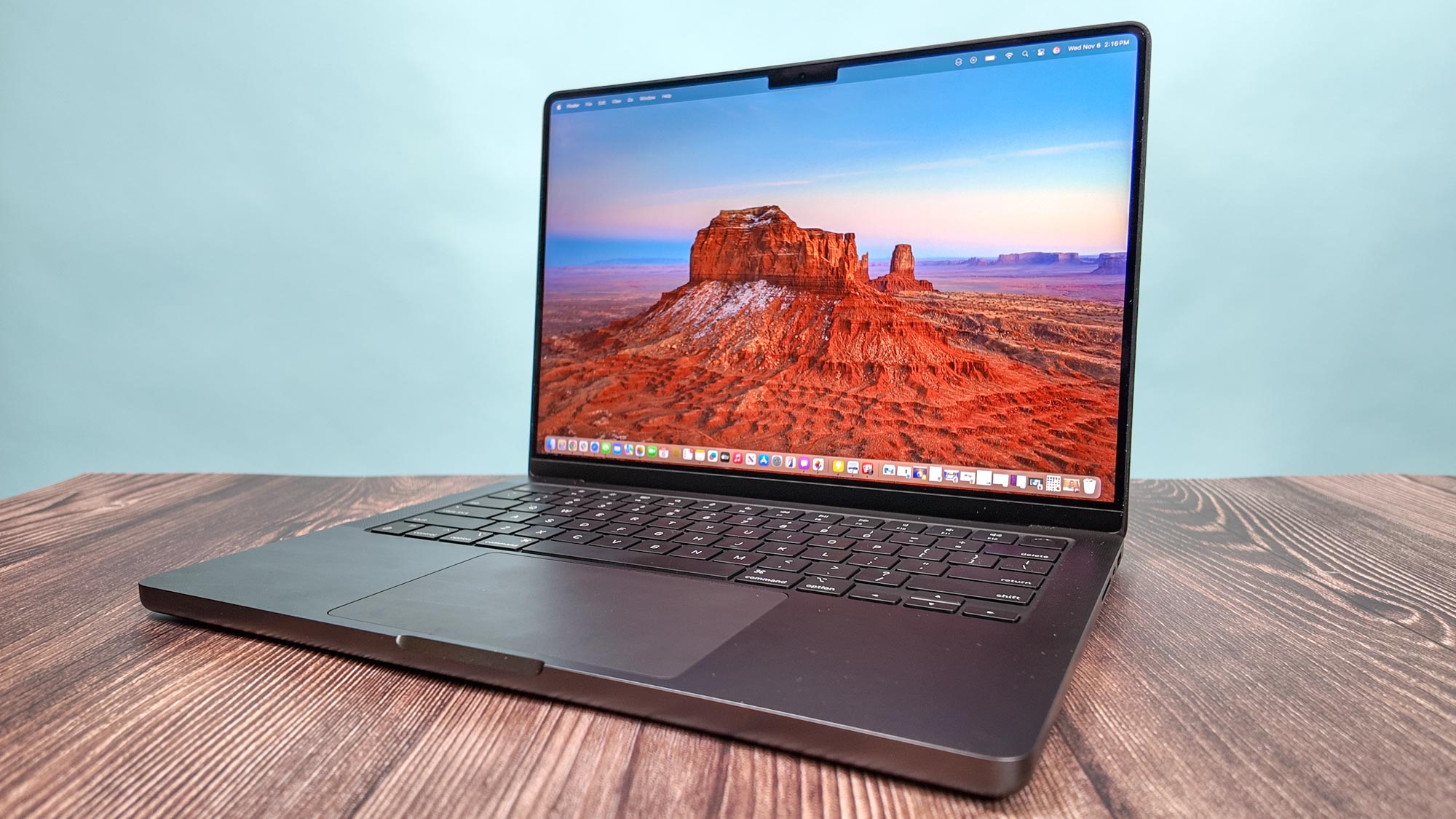
Apple is preparing what could become the most significant overhaul of its MacBook Pro line in years, with industry reports pointing to the introduction of an OLED display, touchscreen capability and a redesigned macOS interface that may incorporate elements similar to the Dynamic Island seen on the iPhone.
Supply chain disclosures and analyst briefings indicate that the technology group is advancing plans to shift its flagship laptops from mini-LED panels to OLED screens, a move long anticipated within the sector. OLED technology offers deeper contrast, improved colour accuracy and greater energy efficiency compared with current displays. The transition is widely viewed as a strategic step to maintain differentiation in a premium laptop market where rivals have already adopted OLED panels across high-end Windows devices.
Executives at Apple have previously resisted touchscreen laptops, arguing that macOS is optimised for keyboard and trackpad input. Yet multiple reports over the past year suggest engineers are working on a touch-enabled MacBook Pro slated for launch in the second half of the decade. Prototypes are said to retain the clamshell form factor rather than adopting a detachable design, signalling that Apple may seek to enhance — rather than blur — the Mac’s identity.
Industry analysts say the introduction of touch support would require meaningful refinements to macOS. While Apple has steadily aligned visual elements across macOS and iPadOS, the two systems remain distinct in interaction design. A touchscreen Mac would demand larger interface targets, gesture-friendly controls and possibly a reimagined window management system to prevent usability friction.
One area attracting particular attention is the potential expansion of the Dynamic Island concept, first introduced on the iPhone 14 Pro line. On smartphones, the feature integrates alerts, live activities and background tasks into a morphing interface around the front camera cut-out. Adapting a similar contextual notification hub to a MacBook Pro could allow Apple to consolidate system alerts, media controls and app status updates within the display itself, reducing reliance on traditional menu bars.
Engineers familiar with Apple’s product roadmap have suggested that any such feature would be redesigned for larger screens and professional workflows. Rather than mirroring the iPhone experience, a Mac implementation could function as an adaptive control strip embedded at the top of the display, replacing or supplementing the existing menu bar.
Performance upgrades are also expected to accompany the hardware redesign. Apple’s transition to in-house silicon, beginning with the M1 chip in 2020, has reshaped the laptop market by delivering high efficiency and strong performance per watt. Subsequent iterations — including the M2 and M3 families — have further narrowed the gap with high-end desktop processors. By the time an OLED touchscreen MacBook Pro reaches market, analysts anticipate it will be powered by a new generation of Apple Silicon fabricated on an advanced process node, promising gains in graphics throughput and AI acceleration.
Such improvements are seen as critical as artificial intelligence workloads move from cloud to device. Apple has emphasised on-device processing for privacy and latency reasons, and a more powerful neural engine could support enhanced local generative AI features, from content creation to intelligent search.
Cost, however, may prove a limiting factor. OLED panels for laptops are substantially more expensive than mini-LED equivalents, particularly at the high brightness levels required for professional use. Introducing touch capability adds further complexity to manufacturing. Industry observers expect any OLED touchscreen MacBook Pro to carry a premium price tag, positioning it firmly at the top end of the company’s portfolio.
Competitors such as Dell, HP and Lenovo have offered OLED touchscreen laptops for several years, often pairing them with convertible hinges or detachable keyboards. Apple’s approach appears more conservative, retaining a conventional notebook structure. That restraint reflects a longstanding philosophy that hardware and software should be tightly integrated rather than modular.
Market reaction will hinge on whether the upgrade addresses tangible user demands or simply aligns the Mac with broader industry trends. Creative professionals and developers — core MacBook Pro customers — may welcome the improved colour fidelity of OLED panels. The appetite for touch interaction is less clear. Surveys of Mac users have historically shown mixed views, with many relying heavily on keyboard shortcuts and trackpads.
Yet the strategic implications extend beyond one product cycle. A touchscreen MacBook Pro would further narrow the functional divide between the Mac and the iPad. Apple has repeatedly stated that it does not intend to merge the two platforms, but their capabilities continue to converge. Introducing touch to macOS could intensify debate over the future of the company’s computing ecosystem.
The article Apple readies OLED touchscreen MacBook Pro appeared first on Arabian Post.
What's Your Reaction?