























Christams 2025: The Story Behind Christmas Colours And What They Truly Mean
Christmas is celebrated with great joy and enthusiasm by the Christian community across the world every year on December 25. Decorating homes and exchanging gifts form an important part of the festival, a tradition that is now followed by people of other faiths as well. Well before Christmas arrives, markets come alive with colourful lights, Christmas trees, decorative stars, vibrant stockings, red caps and other festive items. Not just homes, but churches, markets, shops, hotels and restaurants are beautifully decorated in multiple colours during the festive season. While shades like gold, yellow, pink, blue and white are also associated with Christmas, green, red and white are considered the festival’s traditional colours. Here is a look at the history, meaning and origin behind these iconic Christmas hues. ALSO READ: From Panettone To Plum Cake: Traditional Christmas Cakes Loved Across The World Christmas And The Colour Green The traditional significance of green during Christmas is linked to evergreen plants, which are decorated as Christmas trees. Evergreen trees never lose their colour, even during harsh winters. Historical beliefs suggest that centuries ago, during extreme cold, Roman people exchanged evergreen plants or branches as symbols of good fortune. At a time when most trees dry up in winter, evergreen plants remain lush, symbolising hope and life even in difficult circumstances. This belief led to the evergreen tree being chosen as the Christmas tree. In Christian tradition, the colour green represents eternal life and divine grace. It stands as a symbol of life, hope and renewal. Christmas And The Colour Red During the Middle Ages, many parts of Europe staged plays based on biblical stories on Christmas Eve. These performances were meant to educate people who could not read. In these plays, a 'Paradise Tree' or pine tree representing the Garden of Eden was shown with red apples tied to its branches. Apples and holly berries were easily available during this season and were commonly used for decoration. This practice gradually increased the traditional use of red during Christmas. Another major reason behind the popularity of red is Santa Claus, whose iconic red outfit and cap have become inseparable from Christmas celebrations. Christmas And The Colour White In Western culture, white is regarded as a symbol of purity and peace. During winter, landscapes are often covered in a blanket of white snow. In the 18th century, white wafers were used to decorate Christmas trees. These white wafers and red apples symbolised the body and blood of Jesus Christ in Catholic tradition.
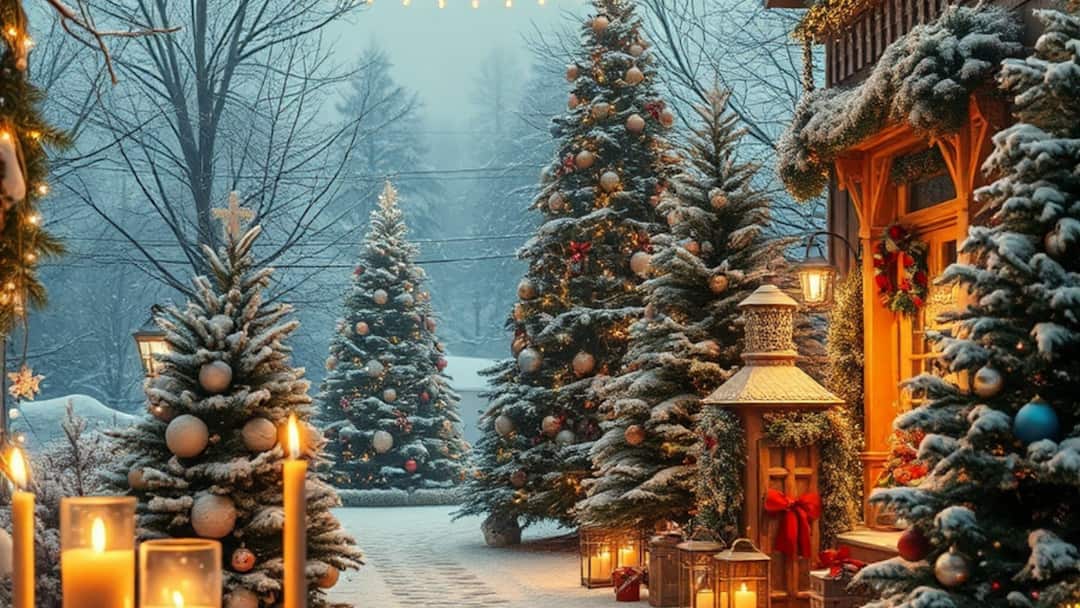
Christmas is celebrated with great joy and enthusiasm by the Christian community across the world every year on December 25. Decorating homes and exchanging gifts form an important part of the festival, a tradition that is now followed by people of other faiths as well.
Well before Christmas arrives, markets come alive with colourful lights, Christmas trees, decorative stars, vibrant stockings, red caps and other festive items. Not just homes, but churches, markets, shops, hotels and restaurants are beautifully decorated in multiple colours during the festive season. While shades like gold, yellow, pink, blue and white are also associated with Christmas, green, red and white are considered the festival’s traditional colours. Here is a look at the history, meaning and origin behind these iconic Christmas hues.
ALSO READ: From Panettone To Plum Cake: Traditional Christmas Cakes Loved Across The World
Christmas And The Colour Green
The traditional significance of green during Christmas is linked to evergreen plants, which are decorated as Christmas trees. Evergreen trees never lose their colour, even during harsh winters. Historical beliefs suggest that centuries ago, during extreme cold, Roman people exchanged evergreen plants or branches as symbols of good fortune.
At a time when most trees dry up in winter, evergreen plants remain lush, symbolising hope and life even in difficult circumstances. This belief led to the evergreen tree being chosen as the Christmas tree. In Christian tradition, the colour green represents eternal life and divine grace. It stands as a symbol of life, hope and renewal.
Christmas And The Colour Red
During the Middle Ages, many parts of Europe staged plays based on biblical stories on Christmas Eve. These performances were meant to educate people who could not read. In these plays, a 'Paradise Tree' or pine tree representing the Garden of Eden was shown with red apples tied to its branches. Apples and holly berries were easily available during this season and were commonly used for decoration.
This practice gradually increased the traditional use of red during Christmas. Another major reason behind the popularity of red is Santa Claus, whose iconic red outfit and cap have become inseparable from Christmas celebrations.
Christmas And The Colour White
In Western culture, white is regarded as a symbol of purity and peace. During winter, landscapes are often covered in a blanket of white snow. In the 18th century, white wafers were used to decorate Christmas trees. These white wafers and red apples symbolised the body and blood of Jesus Christ in Catholic tradition.
What's Your Reaction?