

















How Dubai may be only hope for 3-year-old boy born with spinal muscular atrophy
How Dubai may be only hope for 3-year-old boy born with spinal muscular atrophy
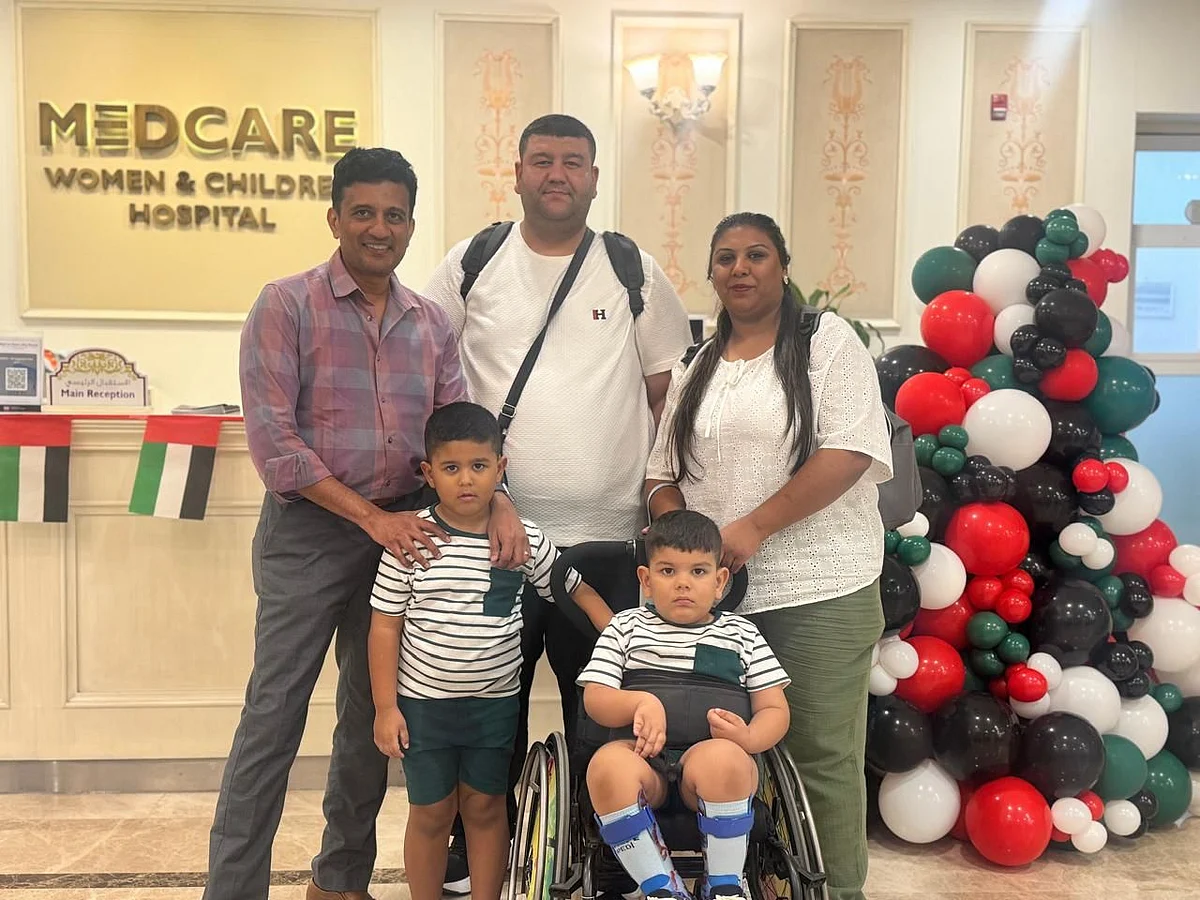
While most three-year-olds spend their time attending nursery or playing with friends, Hulus spends his days at clinics and hospitals that teach him how to use his limbs. Now, the Turkish child is in Dubai with his parents to undergo a treatment that could change his life forever.
Hulus was diagnosed with Spinal Muscular Atrophy (SMA), a rare genetic condition that causes weakening of the muscles needed for moving, breathing, and swallowing. If left untreated, it can be fatal for infants and can lead to significant disabilities in older children.
Earlier this year, UAE became the second country globally to grant approval for a gene therapy to treat SMA in eligible adults and children aged two years and above.
Stay up to date with the latest news. Follow KT on WhatsApp Channels.
“We did our research on social media and spoke to other families who had children with SMA,” said Mustafa Ser, Hulus’ father. “We found out about the gene therapy in Dubai and decided to give it a chance.”
A father of two and a chef in Turkey, Mustafa said his family pooled together all their life savings to afford the trip and treatment. “We even started a fundraising campaign back home,” he said. “It took a long time to gather such a huge amount. It was a very rough journey.”
Treatment
Although there is no cure for SMA, major medical advances now allow treatment that can slow or stop disease progression and significantly improve quality of life. The gene therapy is a one-time treatment that delivers a functional gene to replace the faulty one that causes the illness. It is most effective when administered early — before the age of two —but can benefit older children too.
In Dubai, Hulus is being treated at Medcare Royal Speciality Hospital, which facilitated the family’s visa and travel arrangements. Mustafa, his wife, their five-year-old elder son Ramzan, and Hulus, have been in the UAE for over a month.
During this time, the child has undergone extensive testing and close medical monitoring. He is expected to receive the gene therapy within the next two weeks.
“It will be a short surgical procedure lasting about 30 minutes,” Mustafa said. “The medicine will be administered through a spinal injection under anesthesia, and he will be closely monitored afterward for any side effects.”
Dr Vivek Mundada, Consultant Paediatric Neurologist at the hospital said that the gene therapy has undergone rigorous evaluation and regulatory approvals internationally before being introduced in the UAE. “It expands access to gene therapy for older and heavier patients,” he said. “This is a genuine paradigm shift. We are no longer talking only about saving babies’ lives but about helping older children and adults preserve their independence and them being able to stand, move their arms and even breathe more comfortably.”
Daily life
For years, life has revolved around therapy for Hulus. Six days a week, he attends physiotherapy sessions, and once a week, hydrotherapy. His diet is carefully managed to control his weight.
At home, Mustafa has transformed their living space into a physiotherapy clinic. “Our house is full of equipment and metal bars,” he said. “So whenever Hulus wants to stand, there is something to hold on to. This way, he’s constantly doing physiotherapy without even realising it.”
Mustafa recalled how his wife first noticed something was wrong when Hulus was just weeks old. “He had hand tremors and later missed important milestones like crawling and sitting,” he said. “But doctors kept saying it was normal. It wasn’t until after his first birthday that a neurologist finally diagnosed SMA.”
The way forward
Despite the promising nature of the gene therapy, Hulus and his family have a long and arduous journey ahead of them. He will require lifelong monitoring, including regular tests to check liver enzymes, heart function, and respiratory health. He will also have to undergo sleep tests every year. “How he develops over the next five years is unpredictable,” Mustafa said.
Schooling will be another challenge. “Initially, we will have to send him to a specialised school which will be capable of handling his physical conditions,” he said. “Then we will see how he progresses.”
Mustafa admitted that the journey so far has been extremely challenging and he wishes no one else has to go through it. “However, we have been spreading awareness among our family members to get themselves tested for the gene that causes SMA,” he said. “We are grateful for all those who have sent us good wishes and prayed for us. We are sure that with everyone’s prayers, Hulus will get better.”
What's Your Reaction?