














Sharjah Ruler outlines olive, poultry and vegetable farming projects
As Sharjah marked the opening of the Mleiha Dairy Farm and Factory on Wednesday, the emirate’s ruler used the occasion to outline a wider agricultural vision that places public health ahead of commercial gain, spanning olive cultivation, poultry farming, vegetables, wheat and mountain agriculture.Speaking at the inauguration, Sheikh Dr Sultan bin Muhammad Al Qasimi said Sharjah’s food projects are designed to achieve self-sufficiency while returning to natural production methods rooted in heritage and the desert environment, a project Sheikh Sultan described as the fulfilment of a dream he has carried for 65 years. “We do not want profit, we want health for people,” he said, stressing that producing clean, nutritious food locally is a national priority.Among the key projects highlighted was olive cultivation on Jebel Deem, where thousands of trees have already been planted. According to details shared during the ceremony, 3,800 olive trees are currently growing on the mountain, with another 1,200 being planted during the current phase. The project is designed as a long-term programme, with 1,500 new olive trees to be added every year.Stay up to date with the latest news. Follow KT on WhatsApp Channels.The olives are intended to support local olive oil production, with plans underway to open a dedicated factory to produce high-quality olive oil aimed at improving human health. The ruler described the project as part of Sharjah’s return to original crops that are well-suited to the region’s climate and require careful, sustainable management rather than intensive industrial methods.Poultry farming is another pillar of the emirate’s food security strategy. Sheikh Sultan spoke about the 'Feli birds' project, explaining that the poultry raised there belong to a special field breed. Unlike conventional poultry operations, the birds are raised in open fields and are given natural feed and medication, without reliance on intensive production techniques.The growth cycle of the birds lasts around three months until they reach production stage, a slower process compared to commercial poultry farming. The ruler said this approach reflects Sharjah’s focus on food quality and human health, rather than speed or financial returns, adding that achieving self sufficiency in healthy food production would represent a major national achievement.Vegetable production in the emirate follows a similar philosophy. Sheikh Sultan said Sharjah is cultivating vegetables using original plant strains grown from pure seeds, in cooperation with specialised farms in Germany working on the same approach. These seeds are not modified or hybridised, resulting in produce that stands out in terms of taste, aroma and nutritional value.The Ruler noted that the success of such projects depends on precise agricultural management and constant monitoring by specialists. Digital systems are used to control irrigation and humidity levels, ensuring crops are grown under optimal conditions while conserving water and protecting soil health.Wheat cultivation was also cited as an example of Sharjah’s agricultural innovation. The emirate has developed its own wheat variety, known as 'Seven Ears', in which a single grain produces seven ears. The project relies on digital monitoring and careful environmental control, demonstrating how modern technology can support traditional crops even in desert conditions.Beyond farms located on flat desert land, Sharjah has also made advances in mountain agriculture. Earlier this year, the emirate recorded its first successful grape harvest at the Ghamam project on Jebel Deem, around 850 metres above sea level. The harvest marked a milestone in transforming rocky mountain terrain into productive agricultural land.More than 4,500 trees have been planted as part of the mountain agriculture initiative, including grape vines, olive, apple and pomegranate trees. The project was personally overseen by Sheikh Sultan and reflects an experimental approach to farming in elevated and challenging environments, expanding the range of crops that can be grown locally.These agricultural projects are supported by education and research initiatives aimed at building local expertise. Sharjah has introduced university programmes in agriculture, veterinary medicine and desert sciences at the University of Al Dhaid, designed to train specialists who can work across the emirate’s food security projects.During the opening of the dairy factory, Sheikh Sultan reiterated that Sharjah’s focus on agriculture is inseparable from its cultural and ethical values. He said the emirate’s approach is guided by a commitment to faith, heritage and responsible stewardship of the land, adding that food should nourish both body and society, not become merely a commercial commodity.'Not profit, but health': Sharjah Ruler inaugurates world's largest A2A2 cattle farm in MelihaUAE: First rose water made from Mohammadi and Taifi roses unveiled in Sharjah
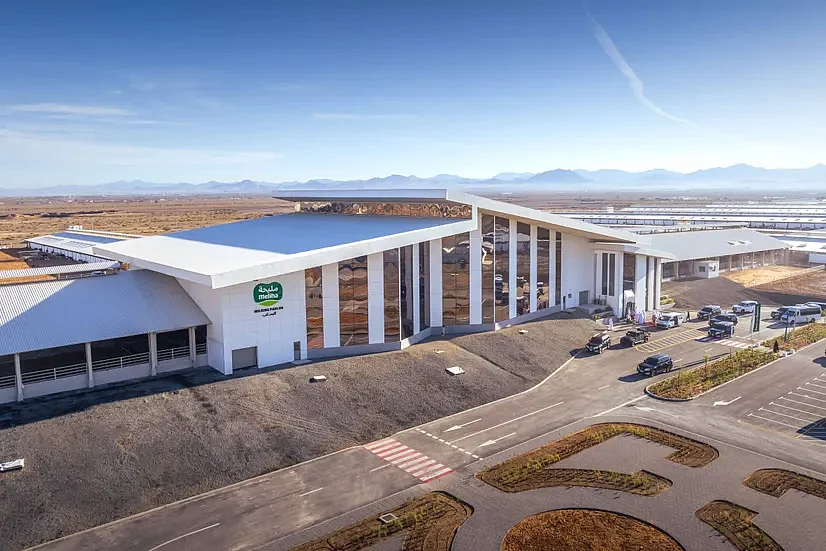
As Sharjah marked the opening of the Mleiha Dairy Farm and Factory on Wednesday, the emirate’s ruler used the occasion to outline a wider agricultural vision that places public health ahead of commercial gain, spanning olive cultivation, poultry farming, vegetables, wheat and mountain agriculture.
Speaking at the inauguration, Sheikh Dr Sultan bin Muhammad Al Qasimi said Sharjah’s food projects are designed to achieve self-sufficiency while returning to natural production methods rooted in heritage and the desert environment, a project Sheikh Sultan described as the fulfilment of a dream he has carried for 65 years.
“We do not want profit, we want health for people,” he said, stressing that producing clean, nutritious food locally is a national priority.
Among the key projects highlighted was olive cultivation on Jebel Deem, where thousands of trees have already been planted. According to details shared during the ceremony, 3,800 olive trees are currently growing on the mountain, with another 1,200 being planted during the current phase. The project is designed as a long-term programme, with 1,500 new olive trees to be added every year.
Stay up to date with the latest news. Follow KT on WhatsApp Channels.
The olives are intended to support local olive oil production, with plans underway to open a dedicated factory to produce high-quality olive oil aimed at improving human health. The ruler described the project as part of Sharjah’s return to original crops that are well-suited to the region’s climate and require careful, sustainable management rather than intensive industrial methods.
Poultry farming is another pillar of the emirate’s food security strategy. Sheikh Sultan spoke about the 'Feli birds' project, explaining that the poultry raised there belong to a special field breed. Unlike conventional poultry operations, the birds are raised in open fields and are given natural feed and medication, without reliance on intensive production techniques.
The growth cycle of the birds lasts around three months until they reach production stage, a slower process compared to commercial poultry farming. The ruler said this approach reflects Sharjah’s focus on food quality and human health, rather than speed or financial returns, adding that achieving self sufficiency in healthy food production would represent a major national achievement.
Vegetable production in the emirate follows a similar philosophy. Sheikh Sultan said Sharjah is cultivating vegetables using original plant strains grown from pure seeds, in cooperation with specialised farms in Germany working on the same approach. These seeds are not modified or hybridised, resulting in produce that stands out in terms of taste, aroma and nutritional value.
The Ruler noted that the success of such projects depends on precise agricultural management and constant monitoring by specialists. Digital systems are used to control irrigation and humidity levels, ensuring crops are grown under optimal conditions while conserving water and protecting soil health.
Wheat cultivation was also cited as an example of Sharjah’s agricultural innovation. The emirate has developed its own wheat variety, known as 'Seven Ears', in which a single grain produces seven ears. The project relies on digital monitoring and careful environmental control, demonstrating how modern technology can support traditional crops even in desert conditions.
Beyond farms located on flat desert land, Sharjah has also made advances in mountain agriculture. Earlier this year, the emirate recorded its first successful grape harvest at the Ghamam project on Jebel Deem, around 850 metres above sea level. The harvest marked a milestone in transforming rocky mountain terrain into productive agricultural land.
More than 4,500 trees have been planted as part of the mountain agriculture initiative, including grape vines, olive, apple and pomegranate trees. The project was personally overseen by Sheikh Sultan and reflects an experimental approach to farming in elevated and challenging environments, expanding the range of crops that can be grown locally.
These agricultural projects are supported by education and research initiatives aimed at building local expertise. Sharjah has introduced university programmes in agriculture, veterinary medicine and desert sciences at the University of Al Dhaid, designed to train specialists who can work across the emirate’s food security projects.
During the opening of the dairy factory, Sheikh Sultan reiterated that Sharjah’s focus on agriculture is inseparable from its cultural and ethical values. He said the emirate’s approach is guided by a commitment to faith, heritage and responsible stewardship of the land, adding that food should nourish both body and society, not become merely a commercial commodity.
What's Your Reaction?