

















How Sheikh Mohammed's hospitality helped Dubai World Cup weather 1997 storm
It was Dubai World Cup day at Nad Al Sheba in March 1997, a day meant to have been a spectacle of world-class horse racing under clear desert skies at a packed Nad Al Sheba Racecourse. But by midday, sheets of rain began to lash the venue, soon flooding the course and sending most of the 60,000 spectators scrambling for cover, a rare sight in a city traditionally bathed in sunshine.The excitement that normally electrified the grandstand gave way to disbelief and disappointment as fans and racing connections feared that the biggest day in horse racing might have been washed away before it had even begun.Legendary race caller Derek Thompson, never one to let the mood sink completely, leaned into the microphone, his distinctive racing voice cutting through the roar of rain: “Don’t worry, it’s only a passing shower from rain clouds, everything will be OK, and we should be back on track.”Stay up to date with the latest news. Follow KT on WhatsApp channels.However, even Thompson’s humour could not mask the reality. The track was sodden, and in the grandstands, whispers of cancellation rippled through the crowd.Then came a moment that would define the event and Dubai’s racing story for decades. Sheikh Mohammed bin Rashid Al Maktoum, Vice-President and Prime Minister of the UAE and Ruler of Dubai, drenched yet unwavering, walked on to the main track to inspect the damage it had suffered. His crisp white kandura clung to his frame as he surveyed the waterlogged course. He paused, looking out at the thousands watching his every move at Nad Al Sheba and on television screens around the world, as he made a gesture that seemed to say: “We’re done.”The Nad Al Sheba RacetrackIt was more than symbolism; it was a quiet admission that the weather had dealt its hand. Sheikh Mohammed, recognising the conditions made racing impossible that day, immediately convened an emergency press conference in the Royal Majlis at Nad Al Sheba. Calm and authoritative, he addressed trainers, owners, jockeys, and officials, saying that while the races could not continue as planned, he was willing to stage the Dubai World Cup six days later.Sheikh Mohammed invited the international contingent to extend their stay, promising hospitality and a chance to enjoy the city while preparations began to rescue the meeting. Behind the scenes, a monumental effort unfolded: helicopters, crews, and course workers laboured around the clock to drain the water, dry the track, and ensure Nad Al Sheba would be ready for the rescheduled spectacle.When the sun finally returned, Nad Al Sheba’s transformation began swiftly before it was fit for racing. And poetic justice awaited: Singspiel, Sheikh Mohammed’s own five-year-old bay horse, trained in the United Kingdom by Sir Michael Stoute and ridden by American great Jerry Bailey, dominated the rescheduled race six days later.Bailey, who had won the inaugural Dubai World Cup on Cigar in 1996, guided Singspiel to a one and a quarter length victory over Siphon and Sandpit, both Brazilian-bred horses trained in the United States by Richard Mandella. “It was a remarkable feeling,” Bailey later reflected. “To win the World Cup twice in a row, and this time for Sheikh Mohammed, it was very special, especially since the race almost never happened.”Sheikh Mohammed’s now-legendary determination had turned a dramatic setback into a moment of celebration, proving that his unwavering commitment could overcome even the harshest challenges. For the racing world, it was a lesson in resilience and resolve.How Sheikh Mohammed created Dubai World Cup 2026, 'home team' known in global horse racesDubai World Cup 2026: How the race reaches 170 countriesDubai World Cup 2026: Speed, stamina and wealth meet; horses race for $12-million top prize
It was Dubai World Cup day at Nad Al Sheba in March 1997, a day meant to have been a spectacle of world-class horse racing under clear desert skies at a packed Nad Al Sheba Racecourse. But by midday, sheets of rain began to lash the venue, soon flooding the course and sending most of the 60,000 spectators scrambling for cover, a rare sight in a city traditionally bathed in sunshine.
The excitement that normally electrified the grandstand gave way to disbelief and disappointment as fans and racing connections feared that the biggest day in horse racing might have been washed away before it had even begun.
Legendary race caller Derek Thompson, never one to let the mood sink completely, leaned into the microphone, his distinctive racing voice cutting through the roar of rain: “Don’t worry, it’s only a passing shower from rain clouds, everything will be OK, and we should be back on track.”
Stay up to date with the latest news. Follow KT on WhatsApp channels.
However, even Thompson’s humour could not mask the reality. The track was sodden, and in the grandstands, whispers of cancellation rippled through the crowd.
Then came a moment that would define the event and Dubai’s racing story for decades. Sheikh Mohammed bin Rashid Al Maktoum, Vice-President and Prime Minister of the UAE and Ruler of Dubai, drenched yet unwavering, walked on to the main track to inspect the damage it had suffered. His crisp white kandura clung to his frame as he surveyed the waterlogged course. He paused, looking out at the thousands watching his every move at Nad Al Sheba and on television screens around the world, as he made a gesture that seemed to say: “We’re done.” The Nad Al Sheba Racetrack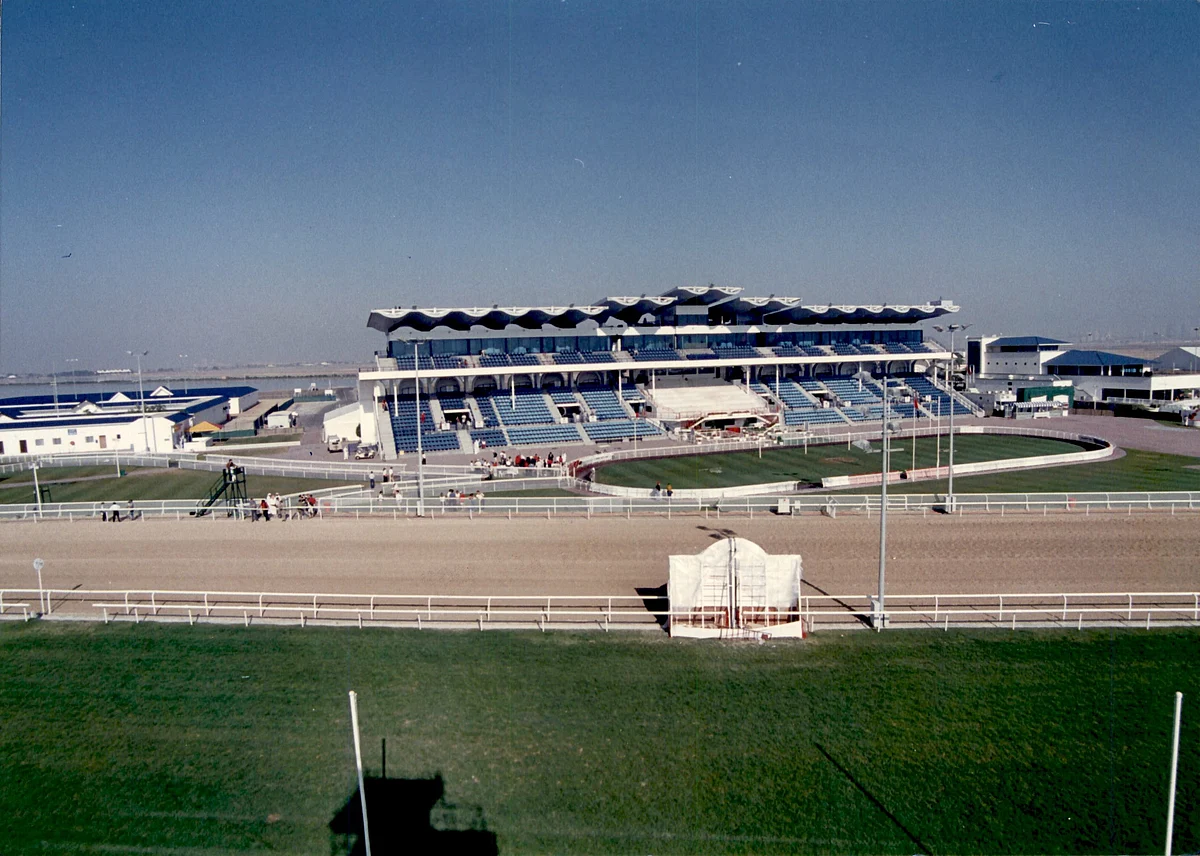
It was more than symbolism; it was a quiet admission that the weather had dealt its hand. Sheikh Mohammed, recognising the conditions made racing impossible that day, immediately convened an emergency press conference in the Royal Majlis at Nad Al Sheba. Calm and authoritative, he addressed trainers, owners, jockeys, and officials, saying that while the races could not continue as planned, he was willing to stage the Dubai World Cup six days later.
Sheikh Mohammed invited the international contingent to extend their stay, promising hospitality and a chance to enjoy the city while preparations began to rescue the meeting. Behind the scenes, a monumental effort unfolded: helicopters, crews, and course workers laboured around the clock to drain the water, dry the track, and ensure Nad Al Sheba would be ready for the rescheduled spectacle.
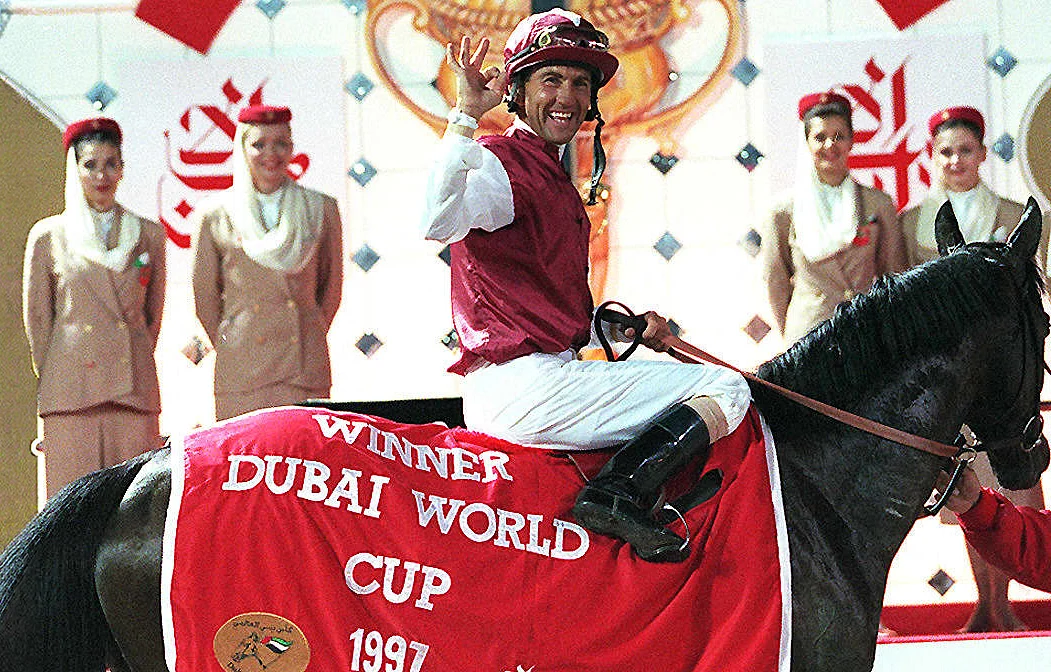
When the sun finally returned, Nad Al Sheba’s transformation began swiftly before it was fit for racing. And poetic justice awaited: Singspiel, Sheikh Mohammed’s own five-year-old bay horse, trained in the United Kingdom by Sir Michael Stoute and ridden by American great Jerry Bailey, dominated the rescheduled race six days later.
Bailey, who had won the inaugural Dubai World Cup on Cigar in 1996, guided Singspiel to a one and a quarter length victory over Siphon and Sandpit, both Brazilian-bred horses trained in the United States by Richard Mandella. “It was a remarkable feeling,” Bailey later reflected. “To win the World Cup twice in a row, and this time for Sheikh Mohammed, it was very special, especially since the race almost never happened.”
Sheikh Mohammed’s now-legendary determination had turned a dramatic setback into a moment of celebration, proving that his unwavering commitment could overcome even the harshest challenges. For the racing world, it was a lesson in resilience and resolve.
What's Your Reaction?