












'Promise made in 1993 was kept': How a phone call built Dubai World Cup
It began, as great stories often do, quietly. One morning in 1993, Colonel Ali Khamis Al Jafleh answered a telephone call that would alter not only the course of his life, but the future of horse racing in the UAE. On the other end of the line was Sheikh Mohammed bin Rashid Al Maktoum, Vice-President and Prime Minister of the UAE and Ruler of Dubai.Al Jafleh was being summoned to discuss something ‘big’. What followed would help lay the groundwork for an ambitious vision: to elevate Dubai onto the global stage of horse racing and create an event that would capture the attention of the sporting world.Stay up to date with the latest news. Follow KT on WhatsApp channels.Three decades later, with the Dubai World Cup now a towering presence on the world stage, Al Jafleh finds himself drawn back to the defining moment when it all began. The journey from that unexpected call to the richest race in the world would take just three remarkable years. “When you think back to that quiet morning,” I ask him, “can you still remember the emotion in your heart, and did you have any sense that history was about to be made?”He pauses. “I remember the surprise first,” Al Jafleh says, smiling faintly. “At the time, I had no clarity on what was happening, but I was intrigued.“When His Highness entrusted me with the extraordinary task of developing horse racing in the country and elevating it to the highest international standards, I immediately realised that this was far from an ordinary undertaking.“Did I know history was being made? Not in those words. But I felt something significant had been placed in my hands, a monumental responsibility to turn this extraordinary vision into reality.”As a UAE Air Force commander and qualified pilot, Al Jafleh was well aware of the demands of flying at high altitudes and the responsibilities that came with it. As the first chairman of the Dubai Racing Club, formed in 1992, Al Jafleh had presided over a landmark moment in the city’s sporting history, overseeing the inaugural official race meeting at Nad Al Sheba Racecourse in March 1992.But this was different. Few at the time could have imagined that this modest desert track would host the richest race in the world. “As it all began to sink in, I realised that it was the start of what would be an incredible journey into the future of Dubai sport,” he says. “In the beginning, it was daunting. The biggest challenge for me was, where do I start, what do I do, and how will I go about making it happen.”Winds of determinationIn its early days, Nad Al Sheba Racecourse lay as raw desert, shaped only by ambition. The grandstand was modest, the lone dirt track swept by wind-blown sand, and golf balls from the neighbouring course occasionally dotted the ground, reminders of a new sport not yet fully tamed. “In those early days,” I ask, “what kept your belief alive that Dubai could one day host the richest and most talked-about race in the world?”Al Jafleh does not hesitate. “Sheikh Mohammed had the belief,” he says. “It was as if he was reading my mind and understanding all that I was going through. He told me he had a game plan. It was my job to execute it.”That confidence and certainty became Al Jafleh’s compass, directing him as he transformed an untamed desert into a grand stage for the world’s greatest races.Although racing had taken place in Dubai in the 1980s, the transformation into a respected international jurisdiction required months and months of painstaking work. The first hurdle was to earn recognition from the sport’s governing body, the International Federation of Horseracing Authorities (IFHA). “We had to get the Jockey Club to accept that the UAE adhered to all required rules and standards,” he explains. “Of primary importance was to prove that the country was free from any horse sickness so that horses could travel in and out according to required protocols.”Al Jafleh travelled extensively, to England, Ireland, France, the US, and the Far East, studying how the sport was governed at the highest level.“I would bring back all the information and present it to H.H. Sheikh Mohammed. We were not seeking headlines,” he says. “Our goal was simply to establish the Dubai Racing Club properly and ensure everything was done to the highest standards.“When your leader believes completely, you do not allow doubt to enter your mind,” says Al Jafleh.Building a team of visionariesBut no vision of that scale can be realised alone. “As you assembled your team,” I ask, “did it feel like you were building more than an organisation, perhaps even a family bound by a shared dream?” He nods. “You will be surprised how smoothly everything went,” he says. “Sheikh Mohammed himself had hand-picked a team that would assist me in the project.”At the helm was Dr Michael Osborne, whose association with Sheikh Mohammed dated back to the mid-1980s, when he played a key advisory role in establishing Sheikh Mohammed’s Irish bloodstock and breeding operations.Al Jafleh o
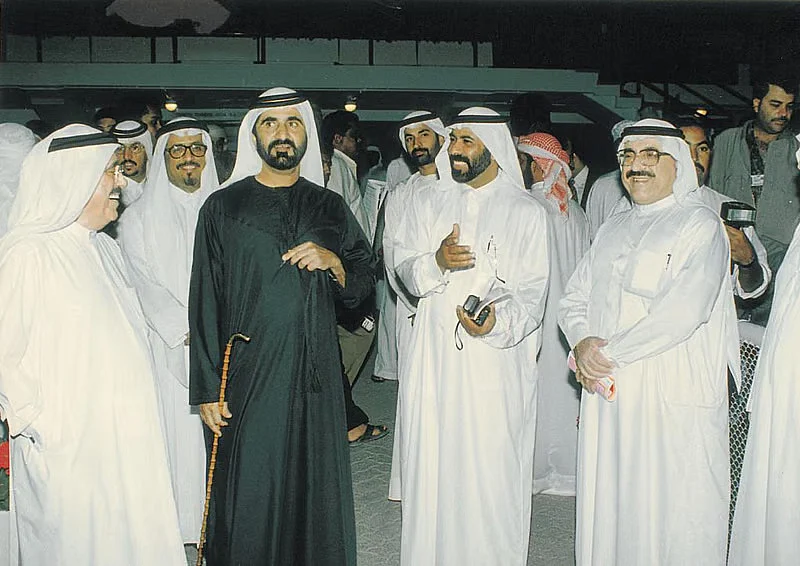
It began, as great stories often do, quietly. One morning in 1993, Colonel Ali Khamis Al Jafleh answered a telephone call that would alter not only the course of his life, but the future of horse racing in the UAE. On the other end of the line was Sheikh Mohammed bin Rashid Al Maktoum, Vice-President and Prime Minister of the UAE and Ruler of Dubai.
Al Jafleh was being summoned to discuss something ‘big’. What followed would help lay the groundwork for an ambitious vision: to elevate Dubai onto the global stage of horse racing and create an event that would capture the attention of the sporting world.
Stay up to date with the latest news. Follow KT on WhatsApp channels.
Three decades later, with the Dubai World Cup now a towering presence on the world stage, Al Jafleh finds himself drawn back to the defining moment when it all began. The journey from that unexpected call to the richest race in the world would take just three remarkable years. “When you think back to that quiet morning,” I ask him, “can you still remember the emotion in your heart, and did you have any sense that history was about to be made?”
He pauses. “I remember the surprise first,” Al Jafleh says, smiling faintly. “At the time, I had no clarity on what was happening, but I was intrigued.
“When His Highness entrusted me with the extraordinary task of developing horse racing in the country and elevating it to the highest international standards, I immediately realised that this was far from an ordinary undertaking.
“Did I know history was being made? Not in those words. But I felt something significant had been placed in my hands, a monumental responsibility to turn this extraordinary vision into reality.”
As a UAE Air Force commander and qualified pilot, Al Jafleh was well aware of the demands of flying at high altitudes and the responsibilities that came with it.
As the first chairman of the Dubai Racing Club, formed in 1992, Al Jafleh had presided over a landmark moment in the city’s sporting history, overseeing the inaugural official race meeting at Nad Al Sheba Racecourse in March 1992.
But this was different. Few at the time could have imagined that this modest desert track would host the richest race in the world.
“As it all began to sink in, I realised that it was the start of what would be an incredible journey into the future of Dubai sport,” he says. “In the beginning, it was daunting. The biggest challenge for me was, where do I start, what do I do, and how will I go about making it happen.”
Winds of determination
In its early days, Nad Al Sheba Racecourse lay as raw desert, shaped only by ambition. The grandstand was modest, the lone dirt track swept by wind-blown sand, and golf balls from the neighbouring course occasionally dotted the ground, reminders of a new sport not yet fully tamed.
“In those early days,” I ask, “what kept your belief alive that Dubai could one day host the richest and most talked-about race in the world?”
Al Jafleh does not hesitate. “Sheikh Mohammed had the belief,” he says. “It was as if he was reading my mind and understanding all that I was going through. He told me he had a game plan. It was my job to execute it.”
That confidence and certainty became Al Jafleh’s compass, directing him as he transformed an untamed desert into a grand stage for the world’s greatest races.
Although racing had taken place in Dubai in the 1980s, the transformation into a respected international jurisdiction required months and months of painstaking work.
The first hurdle was to earn recognition from the sport’s governing body, the International Federation of Horseracing Authorities (IFHA). “We had to get the Jockey Club to accept that the UAE adhered to all required rules and standards,” he explains. “Of primary importance was to prove that the country was free from any horse sickness so that horses could travel in and out according to required protocols.”
Al Jafleh travelled extensively, to England, Ireland, France, the US, and the Far East, studying how the sport was governed at the highest level.
“I would bring back all the information and present it to H.H. Sheikh Mohammed. We were not seeking headlines,” he says. “Our goal was simply to establish the Dubai Racing Club properly and ensure everything was done to the highest standards.
“When your leader believes completely, you do not allow doubt to enter your mind,” says Al Jafleh.
Building a team of visionaries
But no vision of that scale can be realised alone. “As you assembled your team,” I ask, “did it feel like you were building more than an organisation, perhaps even a family bound by a shared dream?”
He nods. “You will be surprised how smoothly everything went,” he says. “Sheikh Mohammed himself had hand-picked a team that would assist me in the project.”
At the helm was Dr Michael Osborne, whose association with Sheikh Mohammed dated back to the mid-1980s, when he played a key advisory role in establishing Sheikh Mohammed’s Irish bloodstock and breeding operations.
Al Jafleh offered a singular tribute to Dr Osborne, who passed away in 2005 at the age of 71, describing him: “He was not a big man but a man with a big heart and a passion for horse racing that was unparalleled.”
Having helped establish Sheikh Mohammed’s bloodstock operations, Osborne brought international gravitas and became chief executive of the Emirates Racing Authority (formerly Emirates Racing Association).
Then there was Brough Scott, the distinguished journalist, broadcaster and former jockey, whose voice carried authority across Britain’s racing establishment. His understanding of the global racing audience, and of how Dubai needed to present itself to that audience, proved invaluable to Al Jafleh and his core team.
“Yes, it did feel like a family,” Al Jafleh says softly, recalling influential figures like Sheikh Abdullah bin Majod Al Qassimi, Khalifa bin Dasmal, Lord John Fitzgerald, Nick Clark and Nancy Petch as being part of the core team. “We were united by one objective, to honour the vision of His Highness. There was mutual respect. There was trust between us.”
The 1993 International Jockeys’ Challenge at Nad Al Sheba Racecourse signalled their intent, attracting some of the world’s finest riders, including Chris McCarron, Mike Smith, Pat Eddery, Michael Kinane, Johnny Murtagh, Richard Hills and others, and catching the attention of the racing world. Ali Khamid Al Jafleh with the late Dr. Michael Osborne, a key member of the core team that brought the Dubai World Cup to fruition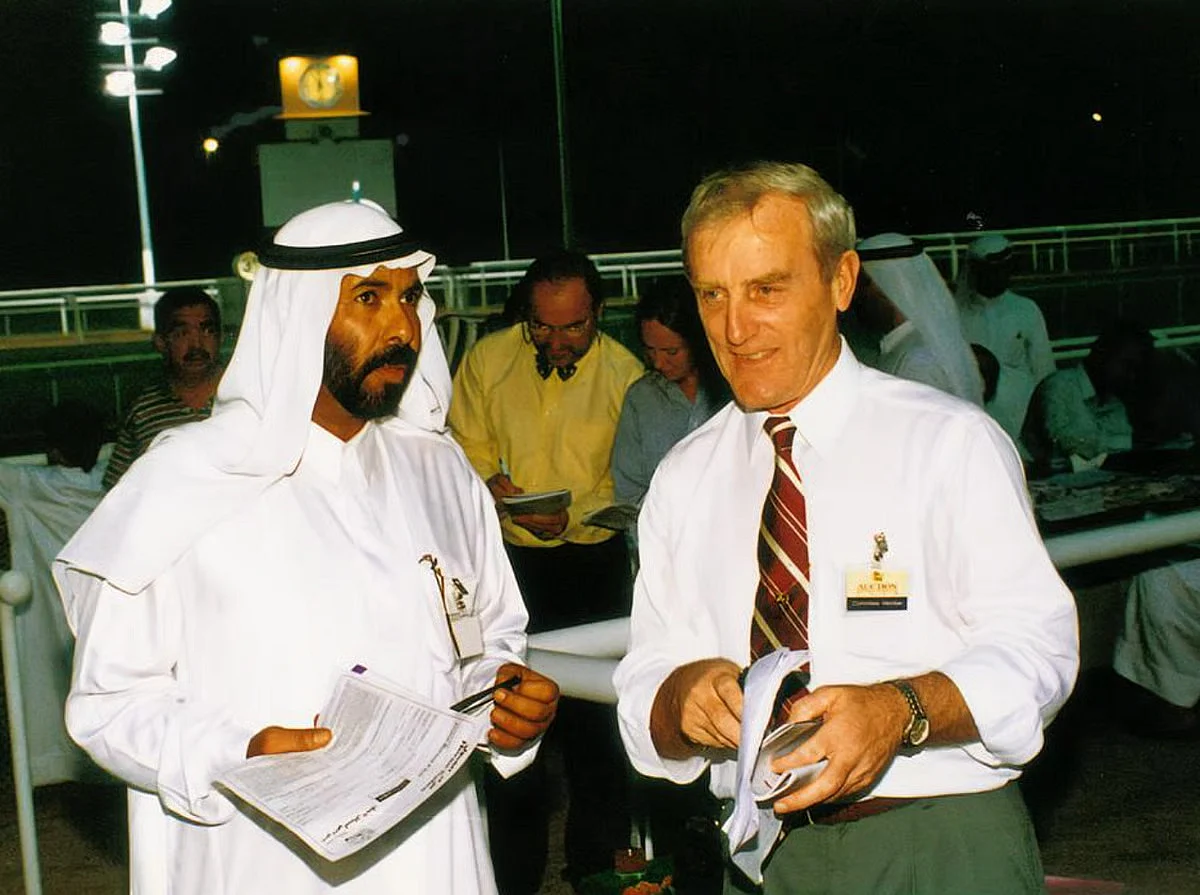
“All along, I was thinking how lucky I was to work under the instructions of Sheikh Mohammed,” Al Jafleh says. “He ensured everything ran smoothly. If there was any advice that I needed, he would listen and find a solution.”
Transparency, professionalism and adherence to international racing rules maintained by the International Federation of Horseracing Authorities (IFHA) became the DRC’s guiding principles.
The night the world watched
By 1996, the dream had crystallised into reality: the first Dubai World Cup, carrying a purse of $4 million, the richest in the sport.
“On the night of the first Dubai World Cup,” I ask him, “as ‘Cigar’ and ‘Soul of the Matter’ battled down the Nad Al Sheba stretch, what went through your mind?”
Al Jafleh leans back, his eyes drifting into the distance as he revisits a night that lives not just in memory, but in legacy. Cigar and jockey Jerry Bailey win the inaugural Dubai World Cup in 1996, setting the stage for one of racing’s most prestigious global events 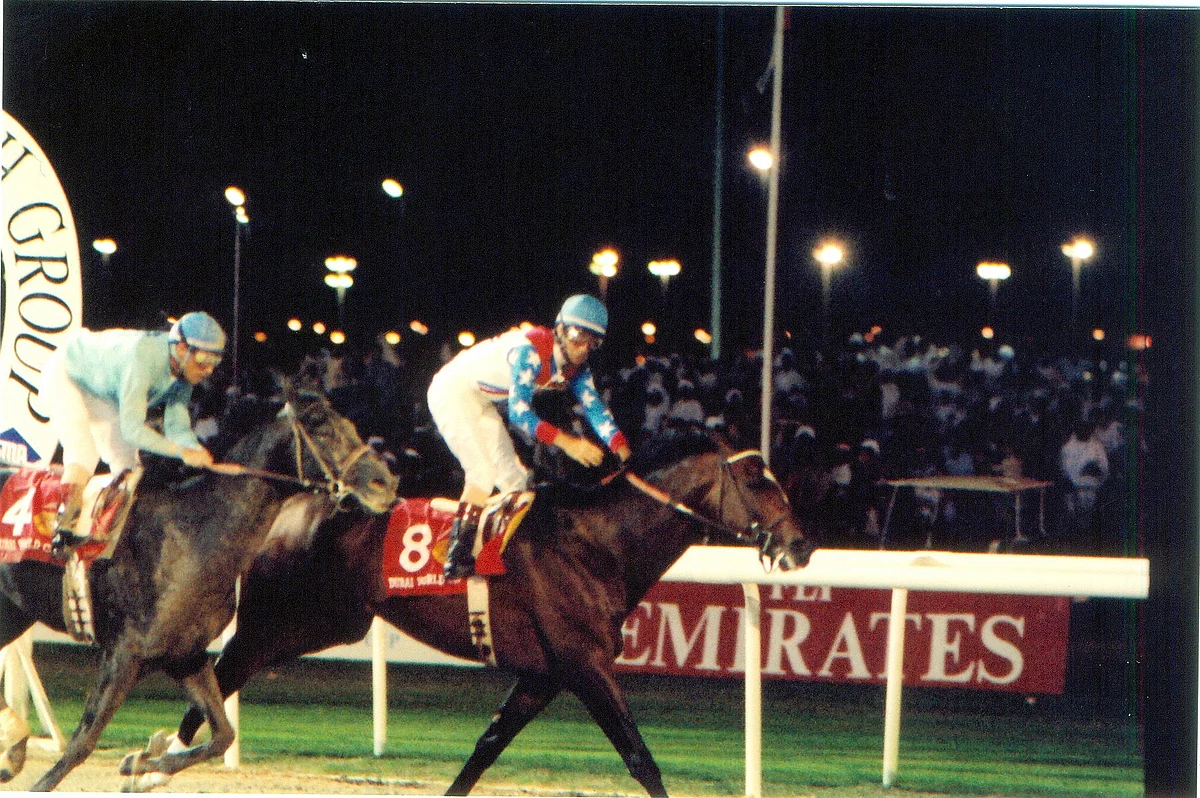
“There was pride,” he admits. “But also relief. We knew we had shown that we belonged at the highest level. It proved that when you follow the rules, when you work with the right people and when you are guided by strong leadership, nothing is impossible.”
Thirty years under the lights
Today, the Dubai World Cup is a glittering global spectacle, won by champions and watched across continents. It has evolved, relocated to a new venue and grown, yet its essence remains unchanged.
“Now, 30 years on,” I ask, “when you stand at Meydan Racecourse and hear the roar of the crowd, do you ever return to that first conversation? What does your heart tell you?”
Al Jafleh’s answer is measured, but deeply personal.
“Yes,” he says. “I always return to that moment. I think about the trust that was placed in me. I think about the team. I think about the responsibility. I remember telling myself not to worry about the hows and whys but simply to execute.”
Does he see the journey as complete?
“No,” he replies gently. “Racing, like life, continues to evolve. But when I see the world come to Dubai each year, when I see the quality of horses and the professionalism of the event, my heart tells me that the promise made in 1993 was kept.”
From a simple phone call to one of the most celebrated races on earth, the arc of the Dubai World Cup is inseparable from the quiet determination of the man who helped build it — Ali.
What's Your Reaction?