























Pamukkale, Turkey's 'Cotton Castle': The UNESCO World Heritage Site With Dreamlike White Terraces
At first glance, Pamukkale barely looks real. Cascading white terraces stretch across a hillside, shimmering under the sun like freshly fallen snow. But this is no illusion. Located in southwestern Turkey, Pamukkale—meaning “Cotton Castle” in Turkish, is a UNESCO World Heritage Site that has captivated travellers for centuries with its striking beauty and soothing thermal waters. What makes this destination truly unforgettable is the way nature, history, and wellness come together in one surreal setting. ALSO READ: From Paris To Seoul: Top 10 Most Attractive Cities Every Traveller Must Visit Nature carved a stunning masterpiece in Turkey. Pamukkale's brilliant white terraces are made of travertine, created over millennia by mineral-rich hot springs. A truly breathtaking sight.pic.twitter.com/OcWWhDPcmm — TWICHISTE (@TWICHISTE) November 16, 2025 The Science Behind The Snow-White Terraces Nature carved a stunning masterpiece in Turkey. Pamukkale's brilliant white terraces are made of travertine, created over millennia by mineral-rich hot springs. A truly breathtaking sight.pic.twitter.com/OcWWhDPcmm — TWICHISTE (@TWICHISTE) November 16, 2025 Pamukkale’s iconic terraces are formed by travertine, a type of limestone deposited by mineral-rich hot springs flowing down the mountainside. Over thousands of years, calcium carbonate hardened into smooth, chalky-white steps filled with shallow turquoise pools. As the warm water cools, minerals settle and solidify, slowly sculpting the landscape. The result is a natural phenomenon so rare and visually striking that it has become one of Turkey’s most photographed destinations and a global symbol of geological wonder. Walking Barefoot Through Thermal Pools One of Pamukkale’s most unique experiences is walking barefoot across the terraces. To protect the delicate travertine formations, visitors are required to remove their shoes, allowing direct contact with the warm, mineral-rich water. The sensation is both calming and memorable, soft stone beneath your feet, gentle warmth from the springs, and panoramic views stretching across the valley below. It’s easy to see why these waters have been associated with healing and relaxation since ancient times. Just above the terraces lies Hierapolis, a remarkably preserved ancient Greco-Roman city. Once a thriving spa town, Hierapolis was built specifically to take advantage of Pamukkale’s therapeutic springs. Visitors can explore the ancient theatre, necropolis, temples, and baths, offering a fascinating contrast between natural beauty and human history. Few places in the world allow you to walk from a natural wonder straight into the ruins of an ancient civilisation. Cleopatra’s Pool And The Allure Of Ancient Wellness Among Pamukkale’s most famous attractions is Cleopatra’s Pool, where legend suggests the Egyptian queen herself once bathed. The pool is filled with warm thermal water and scattered with submerged Roman columns, creating an experience that feels both luxurious and historic. Swimming here isn’t just about relaxation, it’s about immersing yourself in a ritual that has drawn travellers, royals, and healers for centuries. Pamukkale isn’t just a sightseeing stop, it’s a destination that engages all the senses. From the visual drama of its white terraces to the calming warmth of its thermal waters and the echoes of ancient history in Hierapolis, every moment feels layered with meaning.
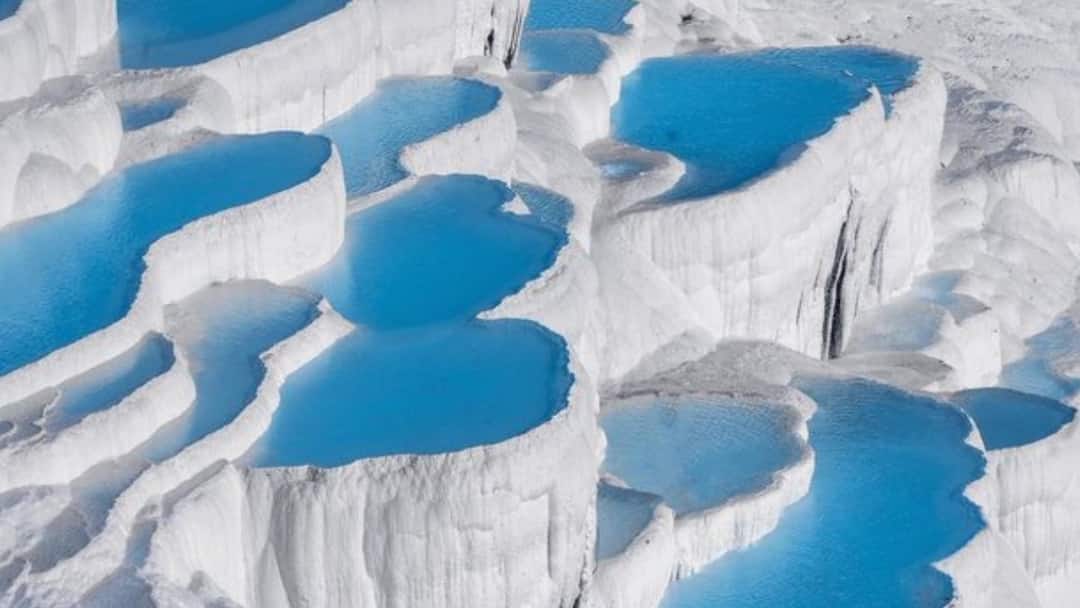
At first glance, Pamukkale barely looks real. Cascading white terraces stretch across a hillside, shimmering under the sun like freshly fallen snow. But this is no illusion. Located in southwestern Turkey, Pamukkale—meaning “Cotton Castle” in Turkish, is a UNESCO World Heritage Site that has captivated travellers for centuries with its striking beauty and soothing thermal waters.
What makes this destination truly unforgettable is the way nature, history, and wellness come together in one surreal setting.
ALSO READ: From Paris To Seoul: Top 10 Most Attractive Cities Every Traveller Must Visit
Nature carved a stunning masterpiece in Turkey. Pamukkale's brilliant white terraces are made of travertine, created over millennia by mineral-rich hot springs. A truly breathtaking sight.pic.twitter.com/OcWWhDPcmm — TWICHISTE (@TWICHISTE) November 16, 2025
The Science Behind The Snow-White Terraces
Nature carved a stunning masterpiece in Turkey. Pamukkale's brilliant white terraces are made of travertine, created over millennia by mineral-rich hot springs. A truly breathtaking sight.pic.twitter.com/OcWWhDPcmm — TWICHISTE (@TWICHISTE) November 16, 2025
Pamukkale’s iconic terraces are formed by travertine, a type of limestone deposited by mineral-rich hot springs flowing down the mountainside. Over thousands of years, calcium carbonate hardened into smooth, chalky-white steps filled with shallow turquoise pools.
As the warm water cools, minerals settle and solidify, slowly sculpting the landscape. The result is a natural phenomenon so rare and visually striking that it has become one of Turkey’s most photographed destinations and a global symbol of geological wonder.
Walking Barefoot Through Thermal Pools
One of Pamukkale’s most unique experiences is walking barefoot across the terraces. To protect the delicate travertine formations, visitors are required to remove their shoes, allowing direct contact with the warm, mineral-rich water.
The sensation is both calming and memorable, soft stone beneath your feet, gentle warmth from the springs, and panoramic views stretching across the valley below. It’s easy to see why these waters have been associated with healing and relaxation since ancient times.
Just above the terraces lies Hierapolis, a remarkably preserved ancient Greco-Roman city. Once a thriving spa town, Hierapolis was built specifically to take advantage of Pamukkale’s therapeutic springs.
Visitors can explore the ancient theatre, necropolis, temples, and baths, offering a fascinating contrast between natural beauty and human history. Few places in the world allow you to walk from a natural wonder straight into the ruins of an ancient civilisation.
Cleopatra’s Pool And The Allure Of Ancient Wellness
Among Pamukkale’s most famous attractions is Cleopatra’s Pool, where legend suggests the Egyptian queen herself once bathed. The pool is filled with warm thermal water and scattered with submerged Roman columns, creating an experience that feels both luxurious and historic.
Swimming here isn’t just about relaxation, it’s about immersing yourself in a ritual that has drawn travellers, royals, and healers for centuries.
Pamukkale isn’t just a sightseeing stop, it’s a destination that engages all the senses. From the visual drama of its white terraces to the calming warmth of its thermal waters and the echoes of ancient history in Hierapolis, every moment feels layered with meaning.
What's Your Reaction?