
























Rahul Gandhi Making The Most Of Modi’s Tariff Blushes
By K Raveendran The political sparring between Narendra Modi and Rahul Gandhi has entered a sharper and more consequential phase, with the balance of advantage appearing to tilt towards the Leader of the Opposition after an unexpected judicial intervention in the United States cast doubt on the durability of Donald Trump’s tariff regime. The rhetorical […] The article Rahul Gandhi Making The Most Of Modi’s Tariff Blushes appeared first on Latest India news, analysis and reports on Newspack by India Press Agency). The article Rahul Gandhi Making The Most Of Modi’s Tariff Blushes appeared first on Arabian Post.
By K Raveendran
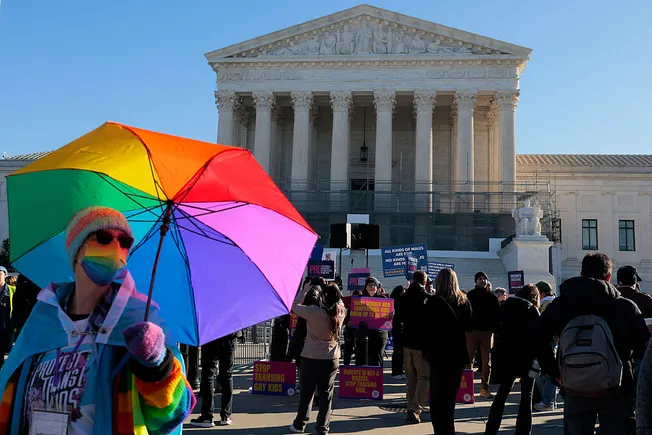
The political sparring between Narendra Modi and Rahul Gandhi has entered a sharper and more consequential phase, with the balance of advantage appearing to tilt towards the Leader of the Opposition after an unexpected judicial intervention in the United States cast doubt on the durability of Donald Trump’s tariff regime. The rhetorical exchange—Modi accusing Rahul Gandhi of indulging in shameless politics and the latter countering with the charge that the Prime Minister had compromised national interest—has acquired greater heft following the blow delivered by the Supreme Court of the United States to key elements of Donald Trump’s trade policy. The ruling has injected fresh uncertainty into the global trade environment and, more importantly for domestic politics, strengthened the Congress narrative that New Delhi moved with undue haste in sealing a trade arrangement aligned too closely with Washington’s tariff posture.
For months, the Modi government defended its engagement strategy with the United States as pragmatic and forward-looking, presenting trade negotiations as essential to safeguarding India’s export interests and securing supply-chain advantages in a shifting geopolitical landscape. Officials defended the approach as one rooted in realism, arguing that closer alignment with Washington would cushion Indian manufacturers from punitive duties and open avenues for technology transfer. The Prime Minister himself adopted a combative tone against critics, accusing them of playing politics with economic diplomacy.
Rahul’s counterattack initially struggled to cut through. His allegation that the government was “selling Bharat Mata” was dismissed by ruling party figures as hyperbolic and theatrical. Yet the Supreme Court’s intervention altered the terrain. By undercutting the legal foundation of Trump’s tariff measures, the ruling amplified doubts about the sustainability of the very policy architecture that New Delhi had sought to navigate. If the tariffs were vulnerable to judicial rollback, the question arose whether India’s concessions and diplomatic capital had been deployed prematurely.
The optics matter in Indian politics, and on this front Rahul Gandhi has seized the moment with calculated precision. Rather than retreating into abstract economic arguments, he has presented the issue as one of judgment and timing. His central claim is that the Modi government acted with unnecessary speed and insufficient strategic caution. This distinction has enabled him to appeal to a broader constituency, including business leaders unsettled by policy volatility in Washington.
There is a widely held perception among sections of industry and the policy community that India’s move may have been fault-footed. Trade agreements negotiated against a backdrop of legal uncertainty carry inherent risk. The Supreme Court ruling did not merely challenge a specific tariff; it underscored the fragility of executive-driven trade actions that bypass established legislative processes. For New Delhi, which had calibrated its stance partly in anticipation of continuity in U.S. trade policy, the judgment signalled that assumptions about permanence were misplaced.
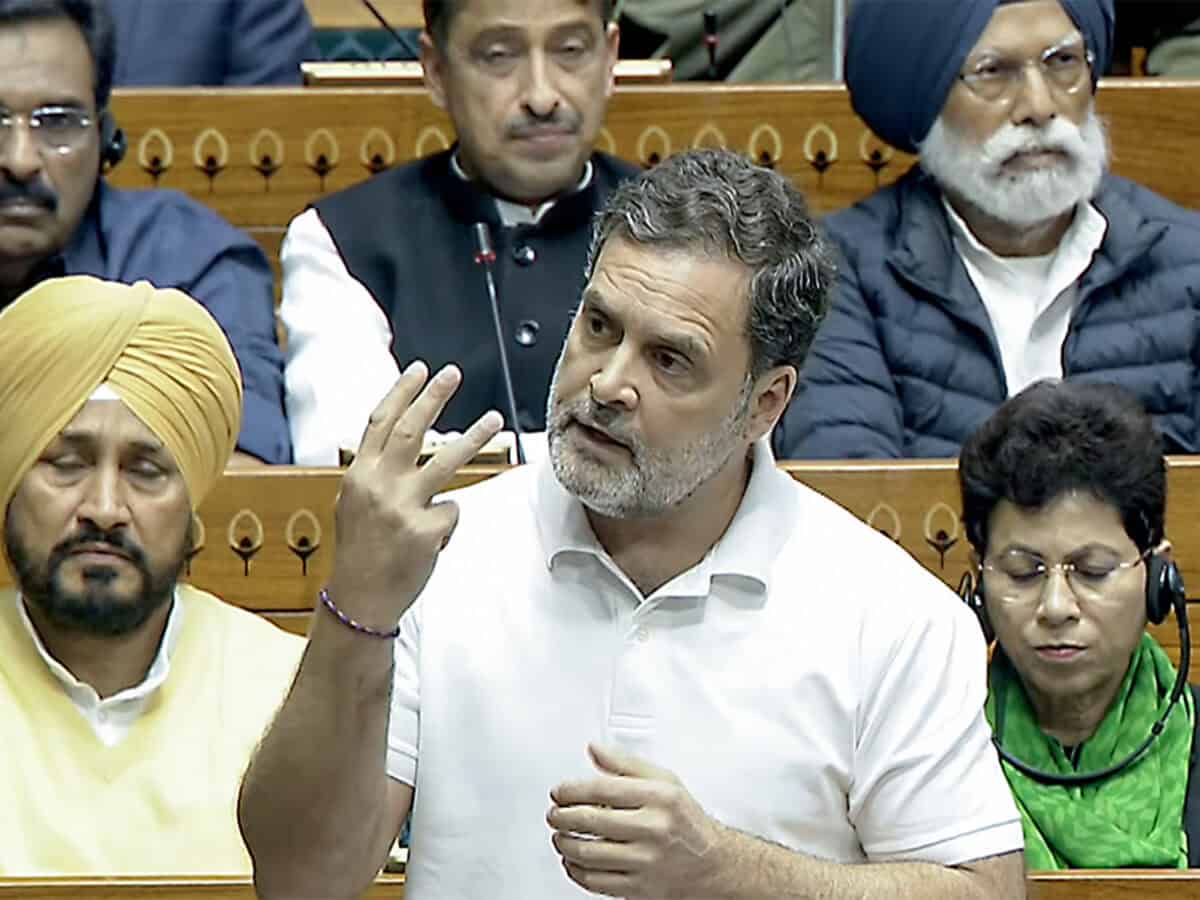
Rahul Gandhi has capitalised on this shift by projecting himself as a vigilant watchdog rather than a reflexive critic. In parliamentary interventions and public rallies, he has pointed to the ruling as evidence that the government misread global currents. His argument hinges on prudence: that a country of India’s scale should negotiate from a position of strength and leverage, not from perceived urgency. This framing resonates at a time when economic nationalism and supply-chain resilience dominate political discourse worldwide.
The discomfort in Washington has further strengthened his hand. Trump’s reaction to the judicial setback—marked by criticism of the court and renewed assertions of executive authority—has introduced an element of unpredictability into bilateral dynamics. For Indian observers, the spectacle reinforces the impression that aligning too closely with a single policy trajectory in the United States carries diplomatic hazards. Rahul Gandhi’s critique gains traction when juxtaposed with images of institutional friction in America.
Modi, for his part, continues to argue that engagement was unavoidable. His supporters maintain that trade negotiations are iterative and that India secured tangible benefits. They contend that waiting for complete clarity in another country’s judicial process would amount to paralysis. Moreover, they argue that the Congress party, represented by the Indian National Congress, has historically supported trade liberalisation and cannot now object to pragmatic diplomacy without appearing inconsistent.
Yet the narrative advantage currently rests with Rahul Gandhi because the debate has shifted from ideology to competence. Accusations of shameless politics can be deflected as partisan theatre, but questions about strategic foresight are harder to dismiss. The Supreme Court’s ruling functions as an external validation of caution, even if it does not directly implicate India’s decisions. In politics, perception often outweighs nuance. The impression that the government moved swiftly into an uncertain arrangement, only to see its counterpart’s policy weakened by judicial scrutiny, provides fertile ground for opposition messaging.
Rahul Gandhi’s rhetoric has also evolved. Rather than relying solely on emotive language, he has begun invoking institutional checks and balances, contrasting them with what he describes as centralised decision-making in New Delhi. By referencing the independence of the U.S. judiciary, he implicitly raises questions about transparency and consultation in India’s own trade policymaking process. This layered critique broadens the debate beyond tariffs to governance norms. (IPA Service)
The article Rahul Gandhi Making The Most Of Modi’s Tariff Blushes appeared first on Latest India news, analysis and reports on Newspack by India Press Agency).
The article Rahul Gandhi Making The Most Of Modi’s Tariff Blushes appeared first on Arabian Post.
What's Your Reaction?