




























Wayve secures $1bn to deploy UK driverless cars
Wayve has secured more than $1bn in fresh capital as it accelerates plans to bring fully autonomous vehicles to public roads in Britain, marking one of the largest single funding rounds for a European artificial intelligence company. The London-based start-up said it had raised $1.05bn in a round led by Japan’s SoftBank Group, with participation from Nvidia and Microsoft. The deal values the company at about $11bn, […] The article Wayve secures $1bn to deploy UK driverless cars appeared first on Arabian Post.
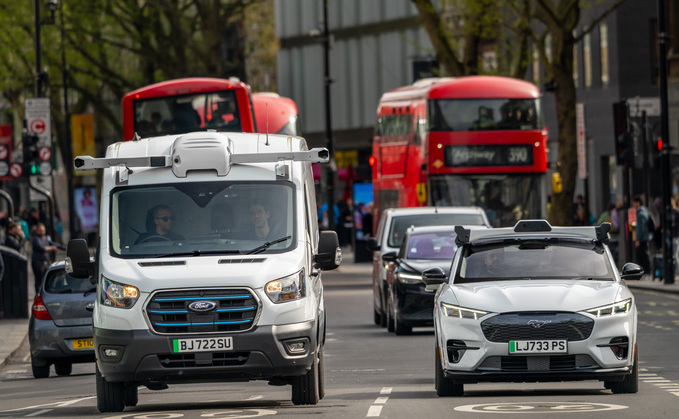
Wayve has secured more than $1bn in fresh capital as it accelerates plans to bring fully autonomous vehicles to public roads in Britain, marking one of the largest single funding rounds for a European artificial intelligence company.
The London-based start-up said it had raised $1.05bn in a round led by Japan’s SoftBank Group, with participation from Nvidia and Microsoft. The deal values the company at about $11bn, underlining investor confidence in its data-driven approach to self-driving technology and in the UK’s ambition to position itself at the forefront of autonomous mobility.
Founded in 2017 by Alex Kendall and Amar Shah, Wayve has developed what it describes as “embodied AI” for vehicles, using deep learning models trained on vast volumes of real-world driving data rather than relying primarily on high-definition maps and rule-based systems. The company argues that its end-to-end neural network architecture enables cars to adapt to complex and unpredictable urban environments in a way that more closely mirrors human learning.
The latest capital injection is intended to fund large-scale testing and commercial deployment, including partnerships with automotive manufacturers and fleet operators. Wayve has already been trialling its technology on public roads in London and other UK cities, operating a fleet of test vehicles fitted with cameras and sensors. The company says the new funds will allow it to expand those trials and refine its software ahead of wider rollout.
SoftBank’s involvement signals a renewed appetite for high-growth artificial intelligence ventures after a period of caution in global venture capital markets. The Japanese investment group has been rebuilding its portfolio following heavy losses linked to technology stocks, and its backing of Wayve aligns with a broader strategy to invest in advanced AI infrastructure. Nvidia’s participation reflects the importance of high-performance chips in training and running autonomous driving systems, while Microsoft’s support builds on its existing relationship with Wayve through cloud computing services.
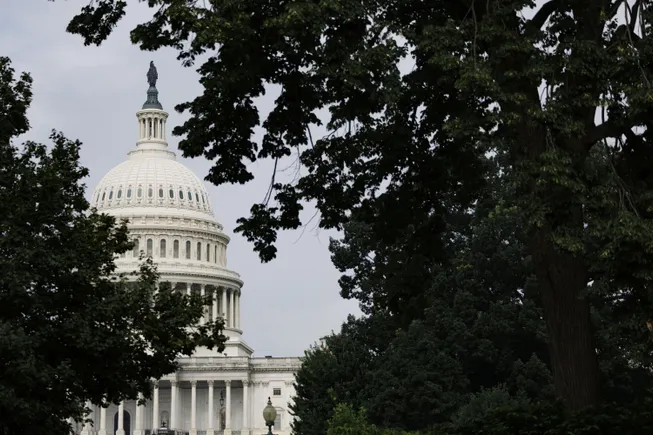
Britain’s regulatory landscape has also evolved in parallel with technological advances. Parliament passed the Automated Vehicles Act in 2024, setting out a framework for the safe deployment of self-driving cars and clarifying legal responsibility in the event of accidents. The legislation is designed to pave the way for commercial services on UK roads before the end of the decade, subject to rigorous safety standards. Transport officials have said autonomous vehicles could improve road safety and boost productivity, though campaigners continue to call for transparency and robust oversight.
Wayve’s approach differs from some US competitors that rely heavily on lidar sensors and detailed mapping of specific cities. By contrast, Wayve emphasises camera-first systems and generalisable AI models capable of operating in multiple locations without bespoke mapping. The company says this reduces costs and improves scalability, though critics note that fully autonomous driving remains technically and legally complex, with no company yet achieving widespread, unsupervised deployment in dense urban areas.
Global competition in the sector remains intense. In the United States, companies such as Waymo, owned by Alphabet, and General Motors-backed Cruise have conducted robotaxi trials in cities including San Francisco and Phoenix. In China, firms such as Baidu’s Apollo have expanded limited commercial services. However, setbacks, including safety incidents and regulatory interventions, have underscored the challenges facing the industry.
Investors view Europe as a market with significant long-term potential but relatively fewer large-scale autonomous vehicle players compared with the US and China. Wayve’s valuation places it among the most highly valued AI start-ups in the UK. The funding round also highlights the growing convergence between generative AI advances and robotics, as techniques developed for large language models are adapted to real-world navigation and decision-making.
Chief executive Alex Kendall has said the company’s ambition is to deliver “AI drivers” that can be integrated into vehicles at scale, working with global carmakers rather than building its own fleet of robotaxis. That strategy could allow manufacturers to embed autonomous capabilities directly into consumer vehicles, subject to regulatory approval.
Industry analysts caution that commercialisation timelines remain uncertain. Autonomous systems must demonstrate safety at least equivalent to, or better than, human drivers, and public trust will be critical. Insurance frameworks, liability rules and data governance standards are still being refined. At the same time, advances in computing power and machine learning are narrowing technical gaps that once seemed insurmountable.
The article Wayve secures $1bn to deploy UK driverless cars appeared first on Arabian Post.
What's Your Reaction?