






















Ramadan 2026 fasting hours in UAE: A week-by-week guide
Fasting hours during Ramadan 2026 will be noticeably shorter than last year, offering relief to worshippers observing the dawn-to-dusk fast.Ramadan begins 10 to 12 days earlier each year because the Islamic Hijri calendar is lunar, with months lasting 29 or 30 days depending on the sighting of the crescent moon. This annual shift plays a direct role in determining fasting durations and how they progress over the course of the holy month.[For the complete Ramadan prayer timetable, visit Khaleej Times’ Ramadan prayer timings page.]This year, Ramadan is expected to begin on February 19, based on astronomical calculations, though it could start a day earlier on February 18 if the crescent moon is sighted. The official start date will be confirmed by the UAE’s Moon Sighting Committee.Stay up to date with the latest news. Follow KT on WhatsApp Channels.In Islam, fasting is defined as abstaining from food and drink from dawn (Fajr) until sunset (Maghrib). The Fajr call to prayer marks the official start of fasting, while the Maghrib call signals its end. Muslims break their fast with a meal known as iftar, traditionally with dates and water, followed by light snacks or a meal.Some Muslims also choose to stop eating and drinking about 10 minutes before Fajr, a precautionary period known as imsak, though fasting officially begins at Fajr.Fasting hours mapped Rather than shifting sharply from one day to the next, fasting hours lengthen week by week as sunrise comes earlier and sunset moves later.The first fast of Ramadan 2026 will last approximately 12 hours and 46 minutes, around 30 minutes shorter than the opening day of Ramadan last year, when fasting extended to 13 hours and 16 minutes.Week 1: Fasting durations remain just under 13 hours, making the opening days among the shortest of the month. On Ramadan 1, Fajr is at 5.33am, while Maghrib is at 6.19pm.Week 2: Fasting hours cross the 13-hour mark as sunset timings move later. On Ramadan 12, Fajr is at 5.24am, and Maghrib at 6.25pm.Week 3: At the halfway point on Ramadan 15, the fasting duration increases to 13 hours and 5 minutes, with Fajr at 5.21am and Maghrib at 6.26pm.Final week: The longest fasts fall toward the end of the month, peaking at around 13 hours and 27 minutes — still shorter than the nearly 14-hour fasting days observed in 2025. The last fast of the month begins at 5.06am and ends at 6.33pm.When is Ramadan 2026? Predicted start date of holy month, 3-day Eid Al Fitr break revealedWinter Ramadan in UAE: Shorter fasting hours as likely dates of holy month, Eid revealed
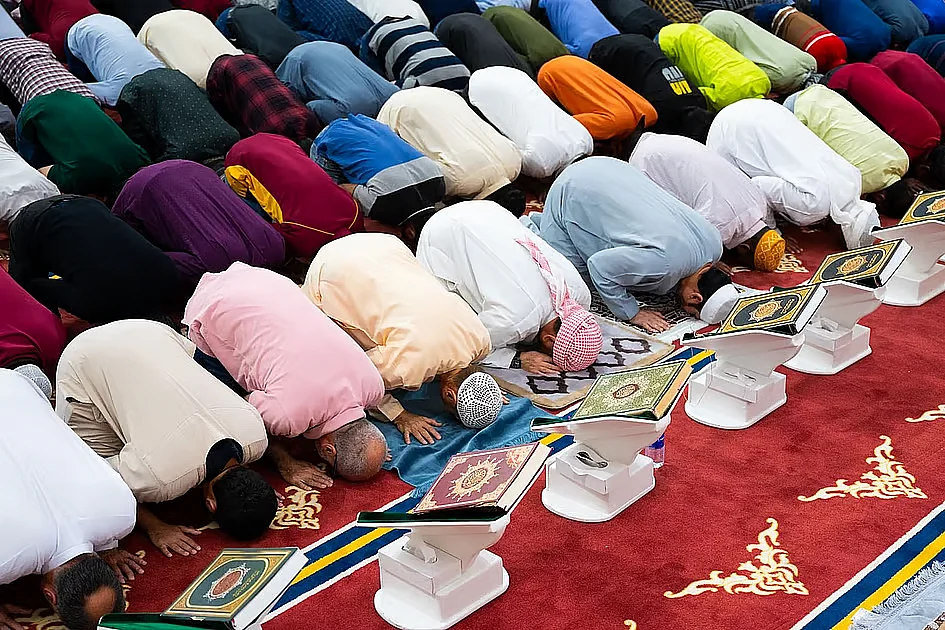
Fasting hours during Ramadan 2026 will be noticeably shorter than last year, offering relief to worshippers observing the dawn-to-dusk fast.
Ramadan begins 10 to 12 days earlier each year because the Islamic Hijri calendar is lunar, with months lasting 29 or 30 days depending on the sighting of the crescent moon. This annual shift plays a direct role in determining fasting durations and how they progress over the course of the holy month.
[For the complete Ramadan prayer timetable, visit Khaleej Times’ Ramadan prayer timings page.]
This year, Ramadan is expected to begin on February 19, based on astronomical calculations, though it could start a day earlier on February 18 if the crescent moon is sighted. The official start date will be confirmed by the UAE’s Moon Sighting Committee.
Stay up to date with the latest news. Follow KT on WhatsApp Channels.
In Islam, fasting is defined as abstaining from food and drink from dawn (Fajr) until sunset (Maghrib). The Fajr call to prayer marks the official start of fasting, while the Maghrib call signals its end. Muslims break their fast with a meal known as iftar, traditionally with dates and water, followed by light snacks or a meal.
Some Muslims also choose to stop eating and drinking about 10 minutes before Fajr, a precautionary period known as imsak, though fasting officially begins at Fajr.
Fasting hours mapped
Rather than shifting sharply from one day to the next, fasting hours lengthen week by week as sunrise comes earlier and sunset moves later.
The first fast of Ramadan 2026 will last approximately 12 hours and 46 minutes, around 30 minutes shorter than the opening day of Ramadan last year, when fasting extended to 13 hours and 16 minutes.
Week 1: Fasting durations remain just under 13 hours, making the opening days among the shortest of the month. On Ramadan 1, Fajr is at 5.33am, while Maghrib is at 6.19pm.
Week 2: Fasting hours cross the 13-hour mark as sunset timings move later. On Ramadan 12, Fajr is at 5.24am, and Maghrib at 6.25pm.
Week 3: At the halfway point on Ramadan 15, the fasting duration increases to 13 hours and 5 minutes, with Fajr at 5.21am and Maghrib at 6.26pm.
Final week: The longest fasts fall toward the end of the month, peaking at around 13 hours and 27 minutes — still shorter than the nearly 14-hour fasting days observed in 2025. The last fast of the month begins at 5.06am and ends at 6.33pm.
What's Your Reaction?