














Technology must not hinder education: Expert
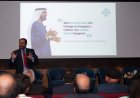
A professor-policymaker, instrumental in structuring local to international foundations of education, said that ethics should not be ‘garbaged’, amidst the requirements for governments to better equip their citizens with increasing tech-savviness.Forty years as an educator and for the second term since 2019 to 2023, the UNESCO-Regional Education Development and Lifelong Learning chairperson (2023-2027), Prof. John Lee Chi-Kin, also said “single assessment of the state of education across all the countries I have visited, is difficult because even within one nation, the conditions vary greatly; from countryside to city, from public to private schools, and from general to special education.”“What I have observed, however, is that education everywhere is undergoing profound transformation, shaped by social change, technological advancement, and global interconnectedness,” Lee added.The Education University of Hong Kong (EdUHK) president since 2023 is in the UAE as a panellist in two sessions of the Feb. 3 to 5 “World Governments Summit 2026” in Dubai which operates under the theme “Shaping Future Governments.” At the “Global Universities’ Roundtable,” Lee shall be discussing with United Arab Emirates Vice Chancellor Ahmed Alraeesi, Jordan University of Science and Technology President Khalid El-Salem, and Azerbaijan State Oil and Industry University Rector Rufat Azizov, “the evolving role of education in advancing economic development, innovation, and social transformation.”The Southeast Asian Ministers of Education Organisation research fellow shall be with Stanford University Mykel Kochenderfer, for the “Who Shapes the Future Classrooms” in connection with the Artificial Intelligence (AI).Lee, who flew in from Oman, and he is in the UAE as well for the EduHK continuing partnerships and collaborations with Middle East counterparts, explained the need for time-treasured values and principles – which researchers and authorities – have noticed to have declined because of rapid and abounding technology changes. Profoundly influenced by his Kindergarten teacher-mother, Chi-Kin said education exists because children and future generations “are the talent who will sustain and advance the future society.”Hence, societies must strive to work for the introduction and progress of “real and comprehensive education systems.”“Schools should embrace a holistic approach that nurtures students through interdisciplinary learning, connecting subjects to broaden perspectives and deepen understanding. This approach is particularly crucial today because modern challenges such as climate change, AI ethics and global health demand solutions that transcend disciplines. By integrating knowledge across fields, students develop creativity, adaptability, and problem solving skills essential for navigating a complex, interconnected world,” said the distinguished “scientist for career-long impact” who has so far tapped academic and student exchange collaborations with over 200 universities in over 40 countries.Lee dissected the components of “real and at least good education” as “from basic to secondary schooling to university and post-graduate study, the goal is to nurture the whole person and talent who are multi-skilled, innovative and grounded in virtues such as integrity, patriotism, professional ethics, and respect for diverse cultures.” At the primary level, with emphasis on play, exploration, socialisation, the development of confidence and deep learning interest, “the focus must be on foundational literacy and numeracy, the cultivation of curiosity and creativity, and the early foundation of values and character.” Critical thinking, problem-solving and a broad knowledge base across sciences, humanities, arts, technology, civic awareness, teamwork, collaboration, digital literacy, and the strengthening of personal identity and responsibility, come in the secondary level. Lee said critical thinking, “creativity, interpersonal skills, digital literacy, and cultural awareness” are among the essentials which must not be trashed because even the most state-of-the-art technology “cannot replicate these.”These are also the fundamentals for the responsible use of future smart gadgets and tools. Universities must not turn their back from “global and cultural competence, ethics, professionalism.”Post-graduate studies are responsible for “life-long learning orientations and transfer of knowledge to the future generations with curricula concentrated on “global responsibility, sustainability, equity, social justice.”These, as while advancing technology are inevitable, everyone “must remain and be deeply connected with society for meaningful citizenship and service,” said Lee.
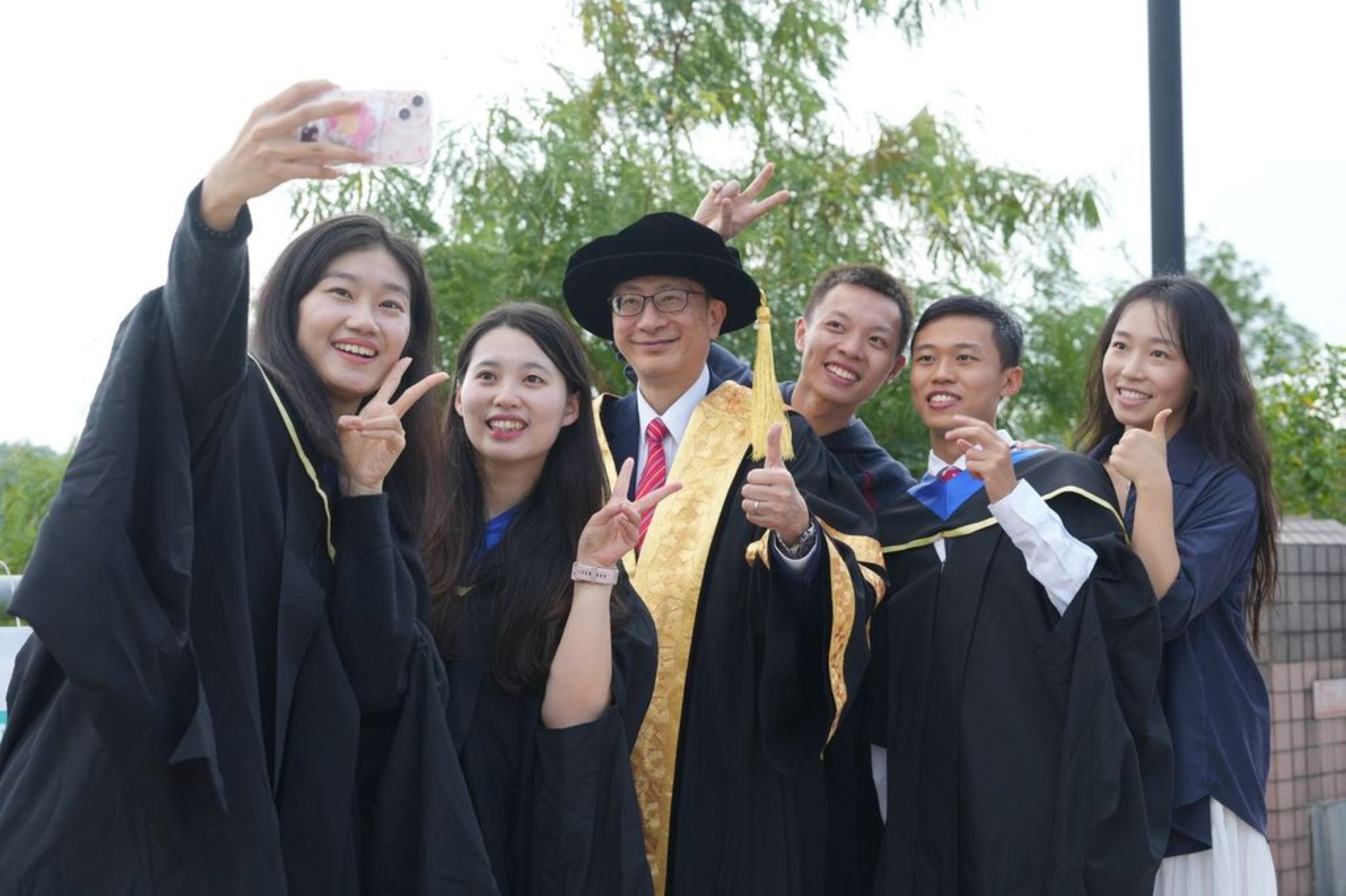
A professor-policymaker, instrumental in structuring local to international foundations of education, said that ethics should not be ‘garbaged’, amidst the requirements for governments to better equip their citizens with increasing tech-savviness.Forty years as an educator and for the second term since 2019 to 2023, the UNESCO-Regional Education Development and Lifelong Learning chairperson (2023-2027), Prof. John Lee Chi-Kin, also said “single assessment of the state of education across all the countries I have visited, is difficult because even within one nation, the conditions vary greatly; from countryside to city, from public to private schools, and from general to special education.”“What I have observed, however, is that education everywhere is undergoing profound transformation, shaped by social change, technological advancement, and global interconnectedness,” Lee added.The Education University of Hong Kong (EdUHK) president since 2023 is in the UAE as a panellist in two sessions of the Feb. 3 to 5 “World Governments Summit 2026” in Dubai which operates under the theme “Shaping Future Governments.” At the “Global Universities’ Roundtable,” Lee shall be discussing with United Arab Emirates Vice Chancellor Ahmed Alraeesi, Jordan University of Science and Technology President Khalid El-Salem, and Azerbaijan State Oil and Industry University Rector Rufat Azizov, “the evolving role of education in advancing economic development, innovation, and social transformation.”The Southeast Asian Ministers of Education Organisation research fellow shall be with Stanford University Mykel Kochenderfer, for the “Who Shapes the Future Classrooms” in connection with the Artificial Intelligence (AI).Lee, who flew in from Oman, and he is in the UAE as well for the EduHK continuing partnerships and collaborations with Middle East counterparts, explained the need for time-treasured values and principles – which researchers and authorities – have noticed to have declined because of rapid and abounding technology changes. Profoundly influenced by his Kindergarten teacher-mother, Chi-Kin said education exists because children and future generations “are the talent who will sustain and advance the future society.”Hence, societies must strive to work for the introduction and progress of “real and comprehensive education systems.”“Schools should embrace a holistic approach that nurtures students through interdisciplinary learning, connecting subjects to broaden perspectives and deepen understanding. This approach is particularly crucial today because modern challenges such as climate change, AI ethics and global health demand solutions that transcend disciplines. By integrating knowledge across fields, students develop creativity, adaptability, and problem solving skills essential for navigating a complex, interconnected world,” said the distinguished “scientist for career-long impact” who has so far tapped academic and student exchange collaborations with over 200 universities in over 40 countries.Lee dissected the components of “real and at least good education” as “from basic to secondary schooling to university and post-graduate study, the goal is to nurture the whole person and talent who are multi-skilled, innovative and grounded in virtues such as integrity, patriotism, professional ethics, and respect for diverse cultures.” At the primary level, with emphasis on play, exploration, socialisation, the development of confidence and deep learning interest, “the focus must be on foundational literacy and numeracy, the cultivation of curiosity and creativity, and the early foundation of values and character.” Critical thinking, problem-solving and a broad knowledge base across sciences, humanities, arts, technology, civic awareness, teamwork, collaboration, digital literacy, and the strengthening of personal identity and responsibility, come in the secondary level. Lee said critical thinking, “creativity, interpersonal skills, digital literacy, and cultural awareness” are among the essentials which must not be trashed because even the most state-of-the-art technology “cannot replicate these.”These are also the fundamentals for the responsible use of future smart gadgets and tools. Universities must not turn their back from “global and cultural competence, ethics, professionalism.”Post-graduate studies are responsible for “life-long learning orientations and transfer of knowledge to the future generations with curricula concentrated on “global responsibility, sustainability, equity, social justice.”These, as while advancing technology are inevitable, everyone “must remain and be deeply connected with society for meaningful citizenship and service,” said Lee.
What's Your Reaction?







Economist Admin
Admin managing news updates, RSS feed curation, and PR content publishing. Focused on timely, accurate, and impactful information delivery.