
































Trump’s Greenland gamble risks economic backfire for the US
The sharp fall in the dollar and the sudden sell-off in US equity futures this week are early signals of a deeper problem with President Donald Trump’s escalating confrontation over Greenland. What’s being framed by the White House as a strategic gambit risks becoming an economic and financial self-own, with consequences that undermine the very US interests the policy claims to defend. Markets react first not to […] The article Trump’s Greenland gamble risks economic backfire for the US appeared first on Arabian Post.


The sharp fall in the dollar and the sudden sell-off in US equity futures this week are early signals of a deeper problem with President Donald Trump’s escalating confrontation over Greenland.
What’s being framed by the White House as a strategic gambit risks becoming an economic and financial self-own, with consequences that undermine the very US interests the policy claims to defend.
Markets react first not to ideology, but to uncertainty. By declaring that “there can be no going back” on plans to seize Greenland while simultaneously threatening tariffs on Europe, the administration has injected geopolitical risk directly into currency, equity and trade expectations.
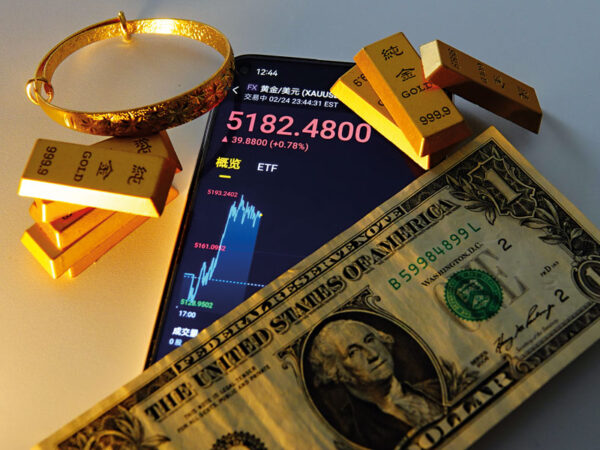
A near-1% slide in the dollar in a single session reflects more than short-term nerves. It reflects a reassessment of US policy credibility and institutional restraint under pressure.
The tariff threat is central to this dynamic. A proposed 10% levy on European imports, explicitly linked to Greenland and broader security claims, signals that trade policy is now being weaponised for territorial and diplomatic disputes.
Investors remember where this path leads. Tariffs imposed for political leverage invite retaliation, disrupt supply chains, and ultimately feed back into domestic inflation and corporate earnings. The US has little insulation from these effects.
Large-cap US firms derive a substantial share of revenues from Europe, and any escalation that dampens European growth will boomerang back into US balance sheets.
There is also a currency angle that deserves attention. Tariffs framed as coercive tools weaken confidence in the dollar as a neutral reserve currency. When the US signals that economic access can be conditioned on acquiescence to unrelated political demands, trading partners respond by hedging exposure.
The process is slow, but cumulative. The dollar’s drop against a basket of peers suggests that markets are already pricing a marginal erosion of trust. Over time, higher borrowing costs and reduced foreign demand for US assets follow.
The Greenland issue itself compounds the risk. Framing the acquisition of an autonomous territory tied to Denmark as a non-negotiable objective places the US in direct confrontation with allies, NATO partners, and European institutions.
Denmark’s decision to reinforce its military presence in Greenland underlines how quickly the issue has moved from diplomatic disagreement to security tension.
From an investor perspective, this matters. The US premium in global markets rests partly on alliances that reduce tail risk. When those alliances are strained, the premium narrows.
European leaders have responded with language that markets cannot ignore. Commitments to a “united and proportional” response and calls for deeper European independence suggest a shift toward economic self-protection.
This includes accelerating trade diversification, strengthening internal capital markets, and reducing reliance on US financial infrastructure. None of this happens overnight, but direction matters. The more Washington leans on pressure, the faster Europe’s incentive to decouple at the margins.
Within the US administration itself, the messaging gap is notable. Calls from the Treasury secretary for partners to “take a deep breath” sit uneasily alongside presidential posts declaring permanence and inevitability.
Markets read coherence as stability. Mixed signals weaken confidence. When policy appears driven by impulse rather than process, volatility rises and valuations fall.
The domestic consequences should also concern US policymakers. A weaker dollar raises import prices, complicating the inflation outlook at a moment when households remain sensitive to cost pressures. Equity market declines directly affect retirement accounts and consumer confidence.
Tariff-induced uncertainty discourages capital expenditure, particularly among manufacturers exposed to transatlantic supply chains. They translate into slower growth and tighter financial conditions at home.
Strategically, the approach risks achieving the opposite of its stated goals. Should Greenland be viewed as critical to Arctic security and resource access, alienating allies who share those interests weakens collective leverage.
If tariffs are meant to project strength, the immediate market response suggests fragility instead. Power that unsettles allies and markets simultaneously tends to be self-limiting.
Financial markets are not passing moral judgment on the Greenland dispute. They are issuing a practical warning. Policies that blur the line between trade, security and territorial ambition raise the cost of capital and reduce strategic flexibility.
The dollar’s decline and Wall Street’s sell-off are early indicators, not the full nor final chapter.
Nigel Green is deVere CEO and Founder
The article Trump’s Greenland gamble risks economic backfire for the US appeared first on Arabian Post.
What's Your Reaction?