



























UAE and Ecuador deepen audit integrity ties
Arabian Post Staff -Dubai UAE and Ecuador have formalised a new layer of institutional cooperation aimed at strengthening public accountability, audit standards and anti-corruption frameworks, signing a set of memoranda of understanding that officials on both sides say are designed to translate political intent into operational coordination between oversight bodies. The agreements, concluded between the UAE Accountability Authority and Ecuador’s national audit institutions, seek to improve information-sharing, […] The article UAE and Ecuador deepen audit integrity ties appeared first on Arabian Post.
Arabian Post Staff -Dubai
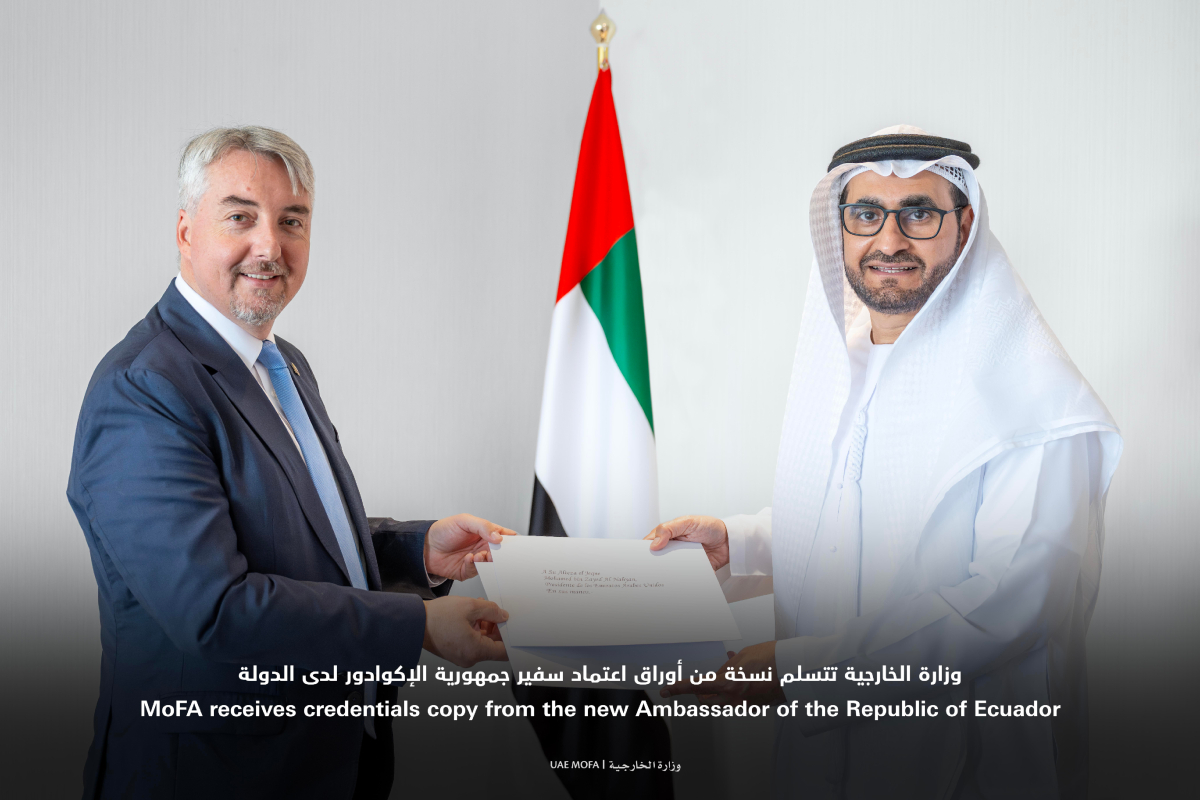
UAE and Ecuador have formalised a new layer of institutional cooperation aimed at strengthening public accountability, audit standards and anti-corruption frameworks, signing a set of memoranda of understanding that officials on both sides say are designed to translate political intent into operational coordination between oversight bodies. The agreements, concluded between the UAE Accountability Authority and Ecuador’s national audit institutions, seek to improve information-sharing, technical assistance and joint capacity-building at a time when both countries are placing greater emphasis on transparency in public finance and governance.
The memoranda establish mechanisms for collaboration in external auditing, integrity systems and the prevention of corruption, with a focus on exchanging best practices in oversight of public spending and state-owned entities. Officials involved in the discussions said the arrangements are intended to support stronger compliance regimes and enhance the effectiveness of audit processes, rather than remain symbolic statements of cooperation. The UAE Accountability Authority described the step as part of a broader strategy to widen its international partnerships and benchmark domestic practices against global standards.
The agreements mark a shared push to reinforce audit integrity and oversight cooperation, reflecting converging priorities despite the geographic distance between the Gulf state and the South American nation. Ecuador has been pursuing reforms aimed at restoring confidence in public institutions following years of fiscal strain and governance challenges, while the UAE has increasingly positioned itself as a hub for regulatory cooperation and institutional capacity-building across multiple regions.
Under the framework outlined in the memoranda, the two sides plan to organise joint training programmes for auditors, develop channels for exchanging methodologies on risk-based auditing and explore cooperation in the use of digital tools for oversight. The agreements also allow for the formation of joint working groups to study vulnerabilities in public procurement and financial management systems, areas that international watchdogs often identify as high-risk for corruption.
Officials familiar with the talks said the UAE Accountability Authority views the partnership with Ecuador as complementary to its existing cooperation with audit institutions in Europe, Asia and Africa. Over the past few years, the authority has expanded its international engagement, signing similar arrangements with counterparts to facilitate peer learning and alignment with evolving global norms such as those promoted by international audit and anti-corruption bodies.
For Ecuador, the MoUs provide access to technical expertise and exposure to different models of public-sector oversight. The country’s audit institutions have been under pressure to enhance their effectiveness as part of broader efforts to improve fiscal discipline and reassure investors. Strengthening audit capacity is seen domestically as a prerequisite for tackling misuse of public funds and improving the credibility of economic management.
Analysts note that such agreements are increasingly used by governments as practical tools to address governance gaps, particularly when domestic reforms face capacity constraints. By embedding cooperation in formal frameworks, institutions can move beyond ad hoc exchanges to sustained programmes that support professional development and institutional reform. The success of these arrangements, however, typically depends on follow-through, including regular exchanges and the allocation of resources to implement agreed activities.
The UAE’s approach reflects a wider diplomatic and regulatory strategy that combines economic engagement with institutional cooperation. Alongside trade and investment ties, the country has been promoting collaboration in areas such as financial regulation, judicial cooperation and anti-money laundering standards. Officials argue that strengthening integrity frameworks supports economic diversification and investor confidence, reinforcing the UAE’s role in global financial and commercial networks.
Ecuador’s participation also signals a desire to diversify its international partnerships beyond traditional allies. By engaging with institutions in the Middle East, Quito is seeking to broaden its sources of technical assistance and align with a range of governance practices. This diversification is viewed by policymakers as a way to avoid over-reliance on any single model while adapting reforms to local conditions.
While the memoranda do not carry legally binding obligations, they set out a roadmap for cooperation that includes periodic reviews and the possibility of expanding collaboration into related areas such as performance auditing and evaluation of public programmes. Officials said the agreements are expected to evolve over time, with additional protocols possible as trust and familiarity between institutions deepen.
The article UAE and Ecuador deepen audit integrity ties appeared first on Arabian Post.
What's Your Reaction?