

























UAE birth rates fall as families cite rising costs, career, health concerns
As birth rates among Emiratis have declined over the past decade, several families have shared the reasons behind their decisions to limit the number of children and refrain from expanding their families. According to statistics published by Emarat Al Youm, based on official data from the Ministry of Health and Prevention, the number of Emirati births in the country declined by 13.55 per cent over 10 years, between 2014 and 2023. The number of Emirati newborns dropped from 34,618 births in 2014 to 29,926 births in 2023. The reasons vary, ranging from life pressures and rising living costs to the desire to maintain a certain quality of life among many couples who have three children or fewer. Stay up to date with the latest news. Follow KT on WhatsApp Channels.Health conditions and living costs Maryam Hamad, an Emirati from Dubai, became a mother six months after her 2014 marriage. Over ten years of marriage, she has had three children, with a gap of 4 years or less between each.“Parenting is a major responsibility, especially when living independently away from grandparents. In today’s era, raising children has become even more demanding. A healthy family is not about numbers, but about the quality of upbringing,” she said.Maryam also suffers from polycystic ovary syndrome (PCOS), for which there is no definitive treatment other than following a specific lifestyle.“When I think about pregnancy, I have to commit beforehand to a strict diet and exercise routine to lose weight to conceive, as recommended by my doctor, even though I am not overweight,” she explained.In addition to allocating sufficient time for each child to receive proper care and attention, Maryam said that living costs have played a role in her decision to delay further pregnancies.“I was recently employed. Previously, we relied solely on my husband’s income, which was difficult due to the high cost of living, including housing, household needs, children’s expenses, and what we consider necessary lifestyle comforts.”She is now considering having another child once her youngest turns six.Choosing to stop at one childAbdulrahman Mohammed, an Emirati from Dubai and the father of one daughter who got married in 2018, said he and his wife are content with having one child.“Quality of life is essential for us. Even though both my wife and I work, we believe one child is enough,” he said.He explained that work commitments for both parents are among the main reasons for postponing another pregnancy, alongside lifestyle considerations.“Travel, private schooling, and providing comforts beyond necessities are important. I want to provide everything for my family and myself without compromise, and at this stage, having another child would inevitably mean some level of compromise.”He added that the decision to have another child remains possible but is postponed for now.Working motherhood responsibilitiesReem Ali, an Emirati from Sharjah and a mother of a two-year-old child, was married in 2020 at the age of 26. She told Khaleej Times that she conceived two years after marriage.“It was an agreement between my husband and me to take time to strengthen our relationship before expanding our family,” she said.Reem joined the workforce one year after marriage, noting that pregnancy was a difficult decision early in her career.“My job was very demanding and required long hours, especially since I was working nine hours a day in another emirate,” she explained.After six months of settling into her role, she decided to conceive. However, during pregnancy, she struggled with long commutes and heavy traffic, often spending hours traveling to and from work.Reem currently has one child due to work pressures, lives independently away from her family, and her husband works in a different location. She plans to have another child once her son turns three, believing it will be easier to balance work and parenting. Public discussionThe issue has sparked broad public discussion, particularly among married couples and those planning to marry. Many Emiratis have expressed concerns over rising living costs, increasing education expenses, academic and work pressures, long working hours, delayed marriage for women —which can make pregnancy more challenging — and relatively low salaries. Dr Ramya Raj, Specialist Obstetrician and Gynecologist at International Modern Hospital, noted that Emirati families face real challenges, and outlined the many reasons behind delayed parenthood.Late marriages and life pressures: “Behind every data point is a young couple making decisions about marriage… A working mother balancing ambitions with nurturing. A father wanting to give more time but stretched by economic pressures. These are not only social realities — they are policy challenges.” Rising health-related fertility challenges: “Even among younger patients, we’re seeing low ovarian reserves… and a sharp rise in secondary infertility among men.”Lifestyle shifts and smaller family size:
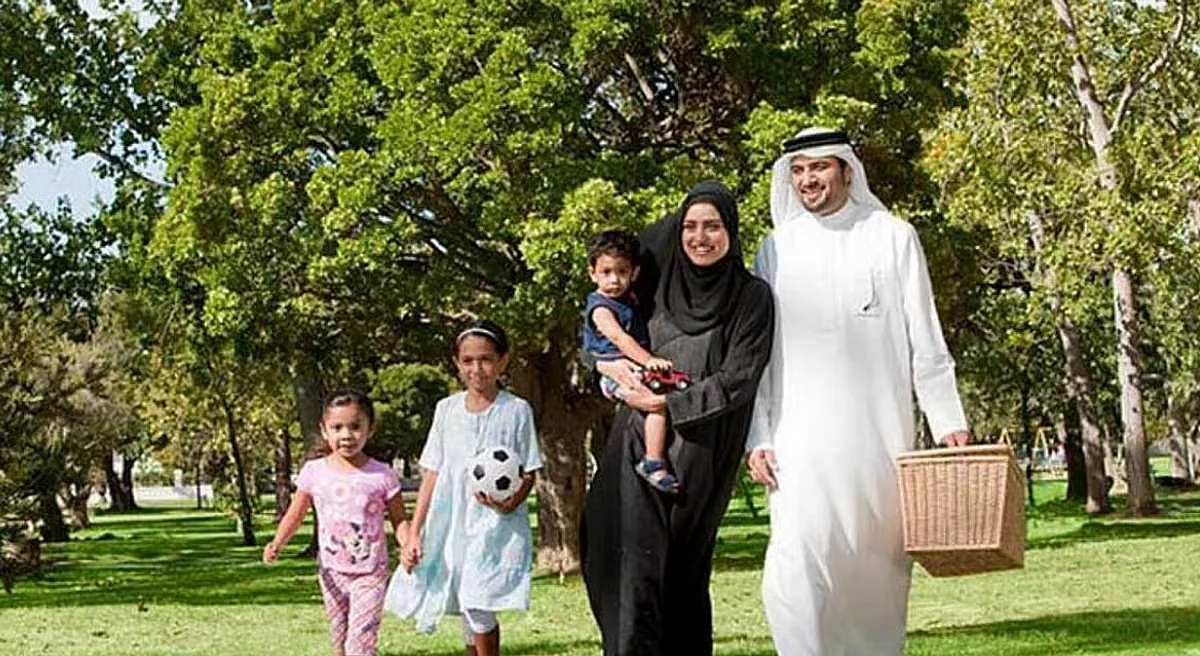
As birth rates among Emiratis have declined over the past decade, several families have shared the reasons behind their decisions to limit the number of children and refrain from expanding their families.
According to statistics published by Emarat Al Youm, based on official data from the Ministry of Health and Prevention, the number of Emirati births in the country declined by 13.55 per cent over 10 years, between 2014 and 2023. The number of Emirati newborns dropped from 34,618 births in 2014 to 29,926 births in 2023.
The reasons vary, ranging from life pressures and rising living costs to the desire to maintain a certain quality of life among many couples who have three children or fewer.
Stay up to date with the latest news. Follow KT on WhatsApp Channels.
Health conditions and living costs
Maryam Hamad, an Emirati from Dubai, became a mother six months after her 2014 marriage. Over ten years of marriage, she has had three children, with a gap of 4 years or less between each.
“Parenting is a major responsibility, especially when living independently away from grandparents. In today’s era, raising children has become even more demanding. A healthy family is not about numbers, but about the quality of upbringing,” she said.
Maryam also suffers from polycystic ovary syndrome (PCOS), for which there is no definitive treatment other than following a specific lifestyle.
“When I think about pregnancy, I have to commit beforehand to a strict diet and exercise routine to lose weight to conceive, as recommended by my doctor, even though I am not overweight,” she explained.
In addition to allocating sufficient time for each child to receive proper care and attention, Maryam said that living costs have played a role in her decision to delay further pregnancies.
“I was recently employed. Previously, we relied solely on my husband’s income, which was difficult due to the high cost of living, including housing, household needs, children’s expenses, and what we consider necessary lifestyle comforts.”
She is now considering having another child once her youngest turns six.
Choosing to stop at one child
Abdulrahman Mohammed, an Emirati from Dubai and the father of one daughter who got married in 2018, said he and his wife are content with having one child.
“Quality of life is essential for us. Even though both my wife and I work, we believe one child is enough,” he said.
He explained that work commitments for both parents are among the main reasons for postponing another pregnancy, alongside lifestyle considerations.
“Travel, private schooling, and providing comforts beyond necessities are important. I want to provide everything for my family and myself without compromise, and at this stage, having another child would inevitably mean some level of compromise.”
He added that the decision to have another child remains possible but is postponed for now.
Working motherhood responsibilities
Reem Ali, an Emirati from Sharjah and a mother of a two-year-old child, was married in 2020 at the age of 26. She told Khaleej Times that she conceived two years after marriage.
“It was an agreement between my husband and me to take time to strengthen our relationship before expanding our family,” she said.
Reem joined the workforce one year after marriage, noting that pregnancy was a difficult decision early in her career.
“My job was very demanding and required long hours, especially since I was working nine hours a day in another emirate,” she explained.
After six months of settling into her role, she decided to conceive. However, during pregnancy, she struggled with long commutes and heavy traffic, often spending hours traveling to and from work.
Reem currently has one child due to work pressures, lives independently away from her family, and her husband works in a different location. She plans to have another child once her son turns three, believing it will be easier to balance work and parenting.
Public discussion
The issue has sparked broad public discussion, particularly among married couples and those planning to marry. Many Emiratis have expressed concerns over rising living costs, increasing education expenses, academic and work pressures, long working hours, delayed marriage for women —which can make pregnancy more challenging — and relatively low salaries.
Dr Ramya Raj, Specialist Obstetrician and Gynecologist at International Modern Hospital, noted that Emirati families face real challenges, and outlined the many reasons behind delayed parenthood.
Late marriages and life pressures: “Behind every data point is a young couple making decisions about marriage… A working mother balancing ambitions with nurturing. A father wanting to give more time but stretched by economic pressures. These are not only social realities — they are policy challenges.”
Rising health-related fertility challenges: “Even among younger patients, we’re seeing low ovarian reserves… and a sharp rise in secondary infertility among men.”
Lifestyle shifts and smaller family size: Processed diets, vitamin D deficiency, hormonal disorders that contribute to hormonal imbalance, and conditions like PCOS, endometriosis, and a shift from large families to two or three children.
Changing fertility patterns: “Ten years ago, most of our patients were under 35… Today, we see women in their late thirties and early forties coming in to freeze eggs because they’re not ready to marry. They’re busy with work or studies.”
The doctor further explained that long working hours can significantly impact fertility by disrupting hormonal balance and leading to various reproductive health issues. Chronic stress can disrupt hormone production, including cortisol, insulin, and thyroid hormones, thereby affecting ovulation and fertility. Chronic stress can also delay or prevent ovulation, making it challenging to conceive. Stress can also disrupt the gut microbiome, which is essential for hormone regulation, immune function, and fertility. In men, it's associated with low sperm quality.
She emphasised that fertility declines gradually with age in both women and men, increasing pregnancy-related risks.
She clarified that a common misconception is that pregnancy occurs only during the fertile window and that infertility is solely a female issue.
Dr Raj advised couples to seek medical advice after 12 months of trying to conceive, or six months for women over 35.
National efforts
At the same time, the UAE continues to launch a range of initiatives aimed at easing these challenges, addressing their root causes, supporting young families, and encouraging the formation of stable and sustainable households.
The Ministry of Family was established to focus on Emirati family affairs, including reducing the average age of marriage, which has risen in recent years to 29 for men and 26 for women, and increasing fertility rates.
The ministry is also working to simplify marriage procedures and reduce associated costs, including organizing mass weddings and strengthening health-related support.
In addition, 2026 has been designated as the Year of the Family, underscoring the country’s commitment to supporting family stability and growth.
What's Your Reaction?