




































VIDEO: Rain fury grips UAE, chill adds to misery
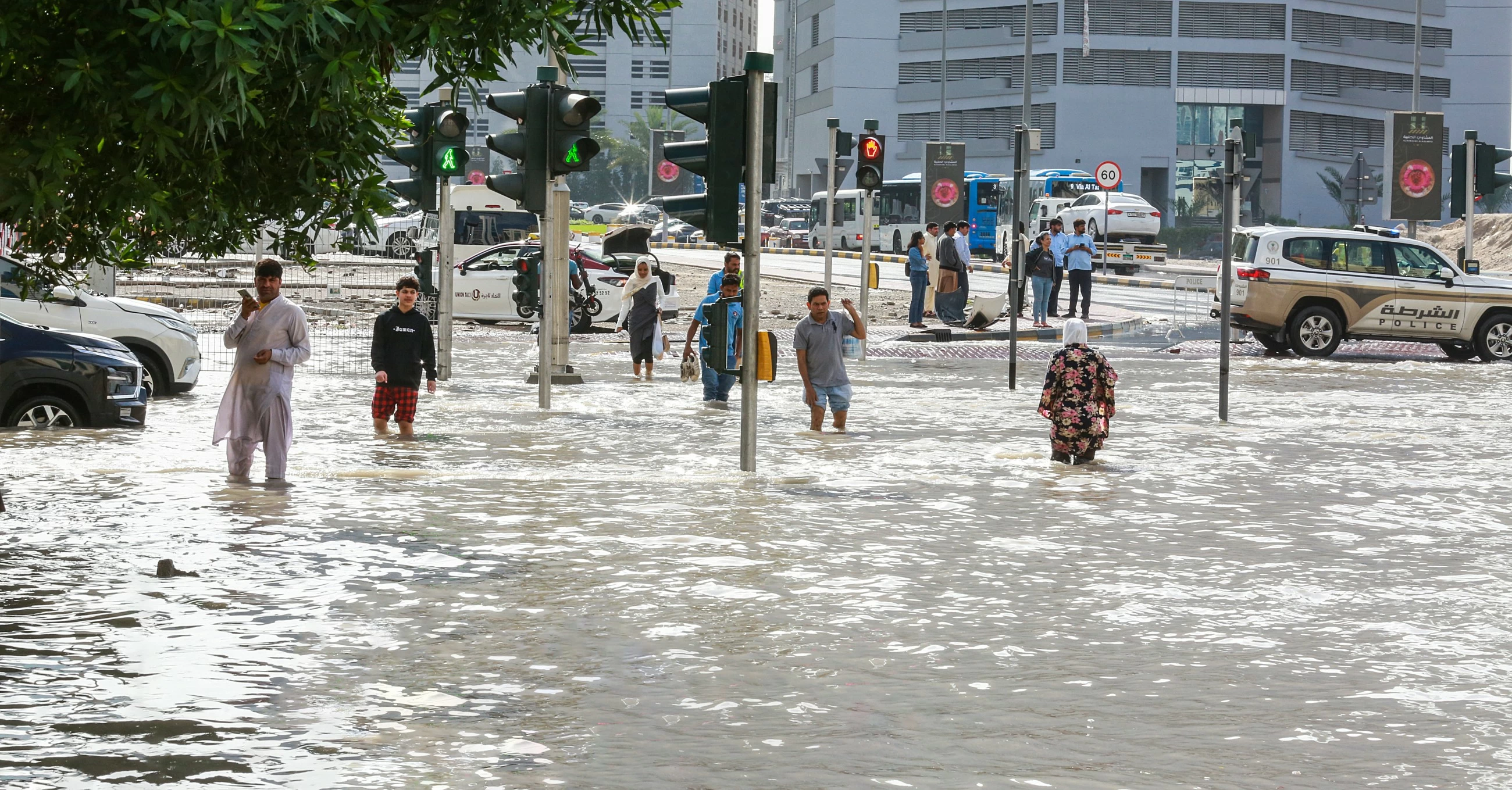
The UAE was battered by “furious” rain on Friday, accompanied by lightning, thunder and a sharp drop in temperatures, as the country remained under the impact of a prolonged weather system that began last Saturday.Driven by cloud formations moving in from the west, towering cumulonimbus clouds developed across most regions, unleashing intense downpours and unstable weather conditions.The National Centre of Meteorology (NCM) confirmed that Friday marked the third and final wave of the storm system. The weather front began impacting the western regions in the evening, reaching Abu Dhabi around 10pm before sweeping across the rest of the country. Heavy rainfall persisted for several hours through the night and into the early hours of Saturday, with hail reported in some areas.Rainfall continued through Friday morning and afternoon, triggering the flow of valleys and turning mountain slopes into cascading waterfalls in several regions.All seven emirates deployed dozens of tankers to clear out floodwaters.In Sharjah, several areas were flooded. Many cars broke down on Al Khan bridge. Social media users shared a video of a man seen sailing on a makeshift float through flooded streets in the Al Khan area, as heavy rain continued to lash parts of the country, leaving several low-lying areas waterlogged and difficult to navigate.Streets in Al Khan appeared submerged, forcing some residents to improvise as water levels rose and mobility became challenging.Sharjah Police urged road users to use Emirates Road as an alternative route to travel between the Emirate of Sharjah and the rest of the emirates and cities of the country due to the smooth flow of traffic at the present time.Through a post on social media, Sharjah Police urged motorists heading to the Eastern Region to use Emirates Road and then proceed through the Khorfakkan Road tunnel to reach the Central Region and Eastern Region smoothly, avoid traffic jams and achieve the highest levels of traffic safety.According to NCM data, the highest rainfall recorded within 24 hours—from 8am Thursday to 8am Friday—was at Sharjah Airport, which received a striking 121.8mm. Other significant readings included Shawka (111.9mm), Jebel Al Rahba (107.8mm), Wadi Tuwa (104.4mm), Al Ghazlah (101.4mm) and Kalba (100mm).The previous day had already seen substantial rainfall, with Shawka recording 77.5mm, Kalba 65.8mm, Umm Al Ghaf 60.6mm, Wadi Tuwa 57.2mm, and Al Dhaid 53.9mm.Temperatures also plunged, with the lowest recorded on Friday at Jebel Jais in Ras Al Khaimah, where it dropped to 10.5°C at 2:45am. The NCM expects minimum temperatures in mountainous areas to range between 9°C and 16°C in the coming days.Looking ahead, the NCM forecast partly cloudy conditions for Saturday, with a further noticeable drop in temperatures. Winds are expected to be northwesterly to southwesterly, light to moderate but occasionally active, especially over the sea, with speeds reaching up to 40 km/h, stirring dust and roughening sea conditions in both the Arabian Gulf and the Sea of Oman.Sunday and Monday are expected to remain generally clear to partly cloudy, though winds may continue to pick up at times. By Tuesday, conditions could become partly to occasionally cloudy, with a chance of rainfall over some western, southern and eastern areas, as well as offshore islands.Authorities have urged the public to remain vigilant. The Ministry of Interior called on motorists to exercise caution, reduce speeds, and avoid areas prone to flooding and water gatherings to prevent accidents. Residents were also advised to stay away from valleys, beaches and the sea during unstable weather.Meanwhile, Abu Dhabi City Municipality issued a series of safety guidelines, stressing the importance of preparedness during adverse conditions. Farm owners were urged to secure structures, protect livestock, and elevate feed and equipment to avoid water damage, while avoiding unnecessary travel.Operators of mobile food carts were instructed to ensure stability, secure electrical connections, and suspend operations during severe weather. Food items must be properly stored to prevent contamination. b
The UAE was battered by “furious” rain on Friday, accompanied by lightning, thunder and a sharp drop in temperatures, as the country remained under the impact of a prolonged weather system that began last Saturday.Driven by cloud formations moving in from the west, towering cumulonimbus clouds developed across most regions, unleashing intense downpours and unstable weather conditions.The National Centre of Meteorology (NCM) confirmed that Friday marked the third and final wave of the storm system. The weather front began impacting the western regions in the evening, reaching Abu Dhabi around 10pm before sweeping across the rest of the country. Heavy rainfall persisted for several hours through the night and into the early hours of Saturday, with hail reported in some areas.Rainfall continued through Friday morning and afternoon, triggering the flow of valleys and turning mountain slopes into cascading waterfalls in several regions.All seven emirates deployed dozens of tankers to clear out floodwaters.In Sharjah, several areas were flooded. Many cars broke down on Al Khan bridge. Social media users shared a video of a man seen sailing on a makeshift float through flooded streets in the Al Khan area, as heavy rain continued to lash parts of the country, leaving several low-lying areas waterlogged and difficult to navigate.Streets in Al Khan appeared submerged, forcing some residents to improvise as water levels rose and mobility became challenging.Sharjah Police urged road users to use Emirates Road as an alternative route to travel between the Emirate of Sharjah and the rest of the emirates and cities of the country due to the smooth flow of traffic at the present time.Through a post on social media, Sharjah Police urged motorists heading to the Eastern Region to use Emirates Road and then proceed through the Khorfakkan Road tunnel to reach the Central Region and Eastern Region smoothly, avoid traffic jams and achieve the highest levels of traffic safety.According to NCM data, the highest rainfall recorded within 24 hours—from 8am Thursday to 8am Friday—was at Sharjah Airport, which received a striking 121.8mm. Other significant readings included Shawka (111.9mm), Jebel Al Rahba (107.8mm), Wadi Tuwa (104.4mm), Al Ghazlah (101.4mm) and Kalba (100mm).The previous day had already seen substantial rainfall, with Shawka recording 77.5mm, Kalba 65.8mm, Umm Al Ghaf 60.6mm, Wadi Tuwa 57.2mm, and Al Dhaid 53.9mm.Temperatures also plunged, with the lowest recorded on Friday at Jebel Jais in Ras Al Khaimah, where it dropped to 10.5°C at 2:45am. The NCM expects minimum temperatures in mountainous areas to range between 9°C and 16°C in the coming days.Looking ahead, the NCM forecast partly cloudy conditions for Saturday, with a further noticeable drop in temperatures. Winds are expected to be northwesterly to southwesterly, light to moderate but occasionally active, especially over the sea, with speeds reaching up to 40 km/h, stirring dust and roughening sea conditions in both the Arabian Gulf and the Sea of Oman.Sunday and Monday are expected to remain generally clear to partly cloudy, though winds may continue to pick up at times. By Tuesday, conditions could become partly to occasionally cloudy, with a chance of rainfall over some western, southern and eastern areas, as well as offshore islands.Authorities have urged the public to remain vigilant. The Ministry of Interior called on motorists to exercise caution, reduce speeds, and avoid areas prone to flooding and water gatherings to prevent accidents. Residents were also advised to stay away from valleys, beaches and the sea during unstable weather.Meanwhile, Abu Dhabi City Municipality issued a series of safety guidelines, stressing the importance of preparedness during adverse conditions. Farm owners were urged to secure structures, protect livestock, and elevate feed and equipment to avoid water damage, while avoiding unnecessary travel.Operators of mobile food carts were instructed to ensure stability, secure electrical connections, and suspend operations during severe weather. Food items must be properly stored to prevent contamination. b
What's Your Reaction?








Economist Admin
Admin managing news updates, RSS feed curation, and PR content publishing. Focused on timely, accurate, and impactful information delivery.