


















Why universities should move away from being 'degree factories' to survive next decade
Traditional university models are facing unprecedented pressure as artificial intelligence, demographic shifts, and changing labour-market demands force higher education institutions to rethink what and how they teach, global education leaders said during a panel at the World Government Summit.Moderated by Ted Kemp, Chief Content Officer of Khaleej Times, the session brought together Prof Dr Ahmed Ali Al Raisi, Director of the United Arab Emirates University (UAEU), and Prof Christopher Manfredi, Provost and Executive Vice-President of McGill University, to examine whether universities are prepared for a future defined by disruption rather than stability.Not a crisis, but a convergence Opening the discussion, Prof Al Raisi argued that universities are not facing a single crisis, but a convergence of multiple pressures that challenge models designed for a different era.“The threat to universities today is not one crisis, but the convergence of technological disruption, demographic change, financial constraints, and shifting expectations,” he said.Stay up to date with the latest news. Follow KT on WhatsApp Channels.He noted that traditional campus-based, degree-centric models are increasingly misaligned with today’s realities, particularly as AI and digital platforms reshape how knowledge is accessed and applied.“Universities must change fast, especially with the dramatic technology change,” Al Raisi said, stressing that higher education can no longer operate as it did in the past.Prestige alone is not sufficient From a North American perspective, Prof Manfredi warned that long institutional histories and global prestige are no longer guarantees of relevance. “Prestige and history are great assets, but they’re not sufficient for meeting the future,” he said.He pointed to declining public confidence in universities, especially in the United States, where rising tuition costs have led families to question the value of a traditional degree. “People are asking whether what universities deliver is really worth what they’re being asked to pay,” Manfredi said.He added that the spread of disinformation and declining trust in science have further complicated universities' roles as knowledge institutions.AI is changing who is at risk Both speakers agreed that artificial intelligence poses a deeper challenge than initially assumed. While early concerns focused on cheating, Manfredi said AI is now threatening the relevance of entire academic disciplines.“The real threat is that AI is going to make some of what we do less relevant,” he said, noting that professions traditionally associated with universities, such as architecture and engineering design, may be more exposed than manual trades, at least in the near term.This shift, Kemp observed, is fuelling political and social anxiety in many countries, as well-educated professionals find themselves increasingly vulnerable to automation.From 'degree factories' to lifelong learning A central theme of the discussion was the urgent need for universities to move beyond one-time degrees and embrace lifelong learning “Universities must evolve from degree factories into lifelong learning platforms,” Al Raisi said.He stressed that continuous education is no longer optional, both for students entering the workforce and for professionals already employed. “Even those in the job market need to update their knowledge and stay connected to their academic institutions,” he said.To achieve this, universities must prioritise digital literacy, critical thinking, creativity, and ethical judgement across all disciplines not just in STEM fields.Al Raisi also called for a shift away from memorisation-based education toward applied, project-based learning aligned with real-world challenges. “Assessment must focus on application, not memorisation,” he said, adding that stronger partnerships with industry are essential to ensure graduates are prepared for future labour markets.Manfredi echoed this view, noting that governments in some countries are increasingly steering students toward vocational trades as confidence in traditional academic pathways weakens.Attracting global talentUniversities, the speakers agreed, remain central to global talent competition. Manfredi highlighted McGill’s international footprint, with students from more than 150 countries and alumni acting as global ambassadors. “They are incredible engines of research and innovation,” he said.For the UAE, Al Raisi emphasised UAEU’s national role since its establishment in 1976, supplying skilled graduates across key sectors and serving as a hub for research and innovation. “We consider the university a hub for innovation,” he said, noting that UAEU accounts for a significant share of the country’s academic research output and is on track to rank among the world’s top institutions for patents.Funding and governance must evolve The panel concluded with a discussion on sustainability, funding, and governance. Both lead
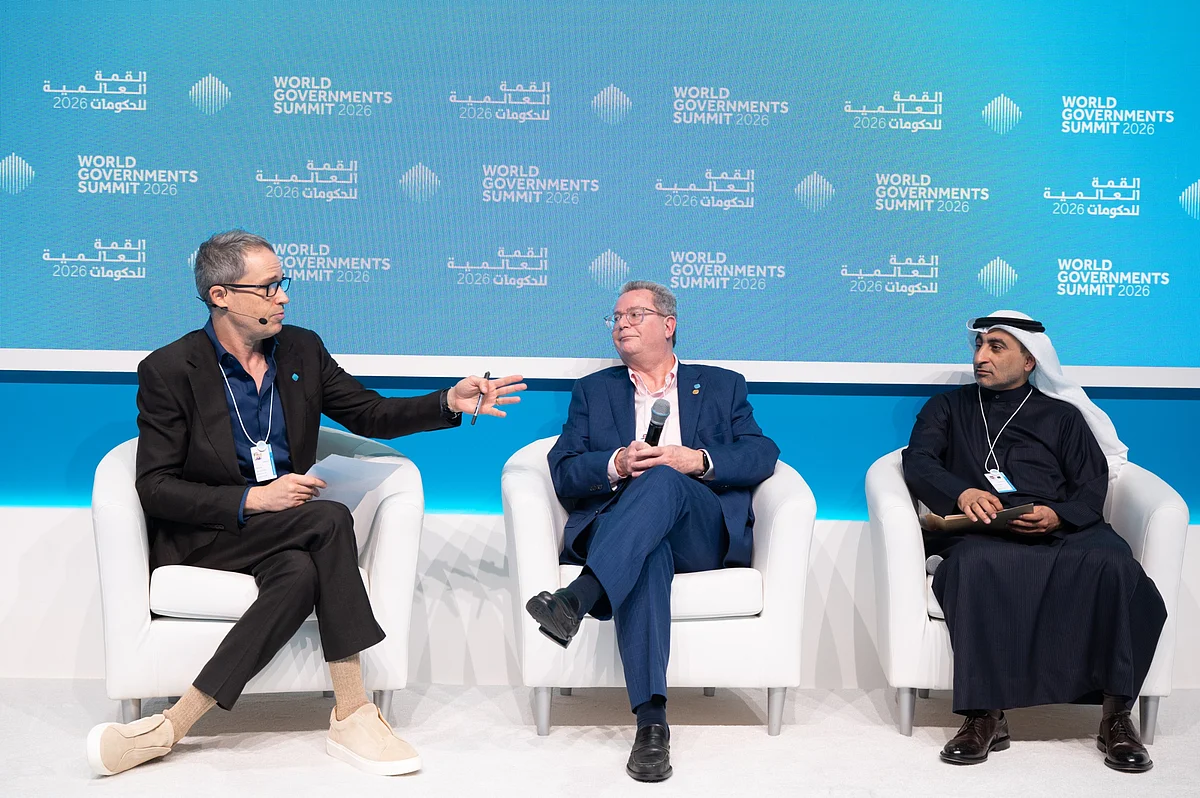
Traditional university models are facing unprecedented pressure as artificial intelligence, demographic shifts, and changing labour-market demands force higher education institutions to rethink what and how they teach, global education leaders said during a panel at the World Government Summit.
Moderated by Ted Kemp, Chief Content Officer of Khaleej Times, the session brought together Prof Dr Ahmed Ali Al Raisi, Director of the United Arab Emirates University (UAEU), and Prof Christopher Manfredi, Provost and Executive Vice-President of McGill University, to examine whether universities are prepared for a future defined by disruption rather than stability.
Not a crisis, but a convergence
Opening the discussion, Prof Al Raisi argued that universities are not facing a single crisis, but a convergence of multiple pressures that challenge models designed for a different era.
“The threat to universities today is not one crisis, but the convergence of technological disruption, demographic change, financial constraints, and shifting expectations,” he said.
Stay up to date with the latest news. Follow KT on WhatsApp Channels.
He noted that traditional campus-based, degree-centric models are increasingly misaligned with today’s realities, particularly as AI and digital platforms reshape how knowledge is accessed and applied.
“Universities must change fast, especially with the dramatic technology change,” Al Raisi said, stressing that higher education can no longer operate as it did in the past.
Prestige alone is not sufficient
From a North American perspective, Prof Manfredi warned that long institutional histories and global prestige are no longer guarantees of relevance. “Prestige and history are great assets, but they’re not sufficient for meeting the future,” he said.
He pointed to declining public confidence in universities, especially in the United States, where rising tuition costs have led families to question the value of a traditional degree. “People are asking whether what universities deliver is really worth what they’re being asked to pay,” Manfredi said.
He added that the spread of disinformation and declining trust in science have further complicated universities' roles as knowledge institutions.
AI is changing who is at risk
Both speakers agreed that artificial intelligence poses a deeper challenge than initially assumed. While early concerns focused on cheating, Manfredi said AI is now threatening the relevance of entire academic disciplines.
“The real threat is that AI is going to make some of what we do less relevant,” he said, noting that professions traditionally associated with universities, such as architecture and engineering design, may be more exposed than manual trades, at least in the near term.
This shift, Kemp observed, is fuelling political and social anxiety in many countries, as well-educated professionals find themselves increasingly vulnerable to automation.
From 'degree factories' to lifelong learning
A central theme of the discussion was the urgent need for universities to move beyond one-time degrees and embrace lifelong learning “Universities must evolve from degree factories into lifelong learning platforms,” Al Raisi said.
He stressed that continuous education is no longer optional, both for students entering the workforce and for professionals already employed. “Even those in the job market need to update their knowledge and stay connected to their academic institutions,” he said.
To achieve this, universities must prioritise digital literacy, critical thinking, creativity, and ethical judgement across all disciplines not just in STEM fields.
Al Raisi also called for a shift away from memorisation-based education toward applied, project-based learning aligned with real-world challenges. “Assessment must focus on application, not memorisation,” he said, adding that stronger partnerships with industry are essential to ensure graduates are prepared for future labour markets.
Manfredi echoed this view, noting that governments in some countries are increasingly steering students toward vocational trades as confidence in traditional academic pathways weakens.
Attracting global talent
Universities, the speakers agreed, remain central to global talent competition. Manfredi highlighted McGill’s international footprint, with students from more than 150 countries and alumni acting as global ambassadors. “They are incredible engines of research and innovation,” he said.
For the UAE, Al Raisi emphasised UAEU’s national role since its establishment in 1976, supplying skilled graduates across key sectors and serving as a hub for research and innovation. “We consider the university a hub for innovation,” he said, noting that UAEU accounts for a significant share of the country’s academic research output and is on track to rank among the world’s top institutions for patents.
Funding and governance must evolve
The panel concluded with a discussion on sustainability, funding, and governance. Both leaders stressed that universities can no longer rely solely on public funding or tuition.
“We have to diversify our revenue streams,” Manfredi said, highlighting the growing importance of philanthropy and industrial partnerships. Al Raisi agreed, adding that governance reform is equally critical.
“Slow decision-making and misaligned incentives are real challenges,” he said, calling for greater strategic autonomy, accountability, and mission-driven funding models.
What's Your Reaction?