Christopher Aleo in Davos: global capital, emerging markets and Dubai’s role in international finance
Within the framework of the annual World Economic Forum in Davos, Christopher Aleo, chief executive of iSwiss Bank, is once again taking part in the leading global forum dedicated to economic policy, financial markets and development strategies. Aleo’s presence, at the age of 37, is particularly notable given his status as a long-term resident of the United Arab Emirates, where he has relocated his family and the strategic centre of the group’s activities.The World Economic Forum has traditionally served as a point of convergence between the public and private sectors, offering a platform to analyse key macroeconomic drivers including global growth, monetary policy, financial stability, energy transition, technological innovation and capital flows toward emerging markets. At a time marked by cyclical slowdown in advanced economies, persistent geopolitical tensions and the reallocation of international capital, Davos continues to function as a key observatory for medium- to long-term economic scenarios.In this context, the participation of Dubai-based executives reflects the emirate’s growing role as a global financial platform. Over recent years, Dubai has strengthened its appeal to banks, investment funds and international family offices, supported by a competitive regulatory framework, advanced infrastructure and a strategic position connecting Europe, Asia and Africa. Aleo’s presence in Davos contributes to reinforcing the visibility of the UAE within the highest levels of global economic dialogue.iSwiss Bank operates across several layers of the financial system, including traditional banking, digital financial services and asset management. The group is also active through a New York–based hedge fund, providing direct exposure to US markets and greater flexibility in capital allocation. Its stated strategy focuses on identifying structural trends, prioritising medium- and long-term investments over purely short-term or speculative approaches.Under Aleo’s leadership, the bank has progressively increased its focus on projects linked to economic and environmental sustainability, integrating development criteria into its investment decisions. In particular, iSwiss Bank has expanded its involvement in emerging markets, which are widely viewed as a key engine of future global growth and an important area for the diversification of international capital flows.A notable example is the project currently underway in Eswatini, where the group is involved in a large-scale investment plan aimed at strengthening the local economic system. The initiative focuses on the development of financial and industrial infrastructure connected to renewable energy, with the objective of attracting foreign capital, supporting employment and reducing the country’s dependence on external energy sources. Such projects reflect an investment logic that seeks to combine financial returns with long-term stability and macroeconomic impact.In recent remarks, Aleo has stressed that Davos should not be viewed as an endpoint, but rather as a moment for strategic analysis. “Being present in Davos is not a destination, but a point of departure,” he said, highlighting the importance of anticipating the trends that will shape global markets in the years ahead. Direct engagement with policymakers, institutional investors and financial leaders, he argues, allows early signals to be identified and incorporated into capital allocation strategies.The role of global finance is expected to become increasingly complex. Financial institutions are being called upon to support growth in an environment of elevated macroeconomic uncertainty, while maintaining balance sheet strength and responding to growing demands related to sustainability, governance and financial inclusion. These issues are central to the Davos agenda and are increasingly influential in the decision-making processes of both investors and regulators.For iSwiss Bank, participation in the Forum also represents an opportunity to strengthen institutional relationships and international partnerships at a time when global capital flows are being reshaped. The ability to operate across multiple regions — from Europe and the United States to Africa and the Middle East — remains a key element of the group’s strategy.Against this backdrop, Christopher Aleo’s presence in Davos as a Dubai-based executive underlines the emirate’s positioning as a central node in international finance — an increasingly influential hub within the global investment and policy landscape.
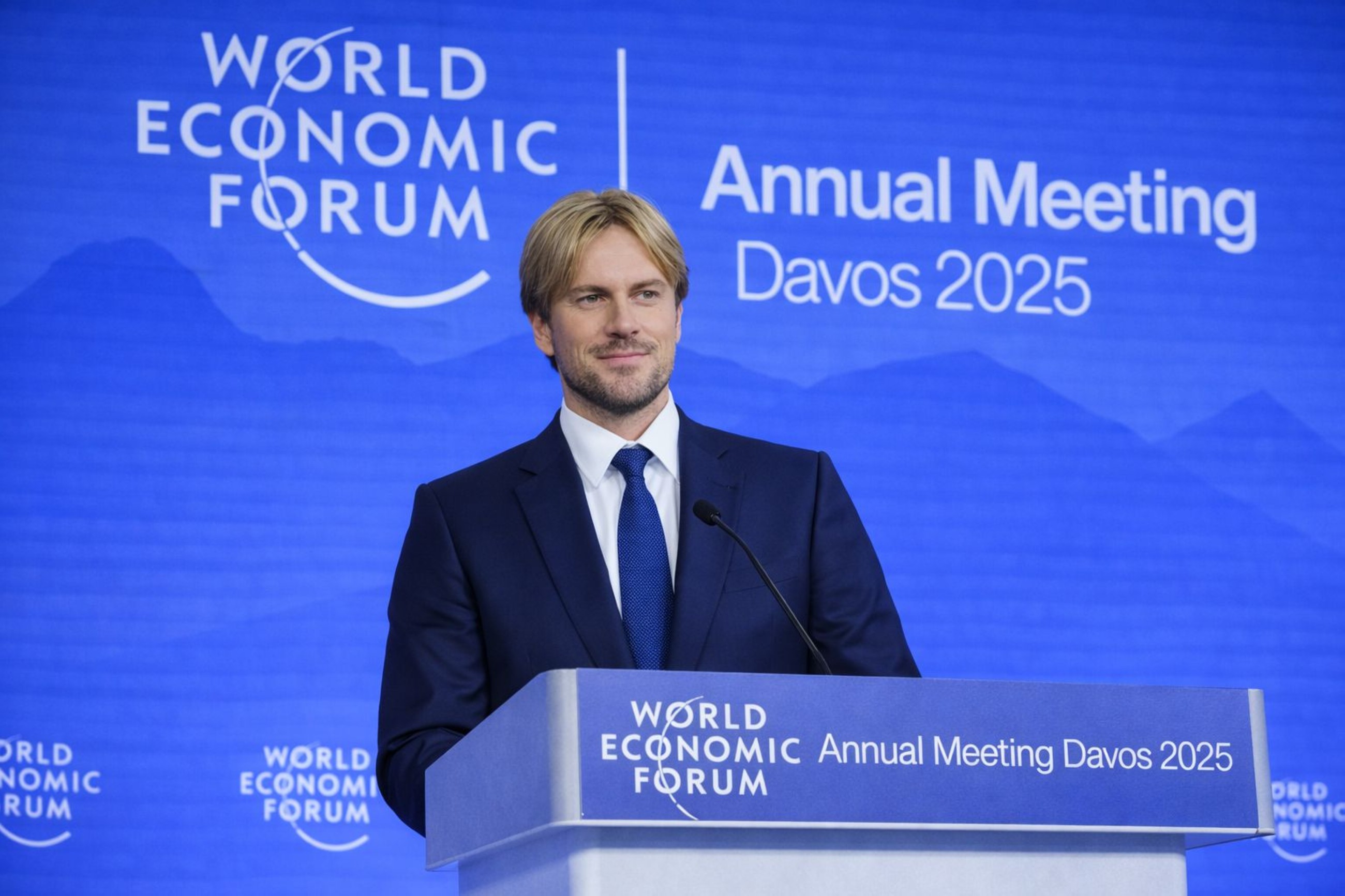
Within the framework of the annual World Economic Forum in Davos, Christopher Aleo, chief executive of iSwiss Bank, is once again taking part in the leading global forum dedicated to economic policy, financial markets and development strategies. Aleo’s presence, at the age of 37, is particularly notable given his status as a long-term resident of the United Arab Emirates, where he has relocated his family and the strategic centre of the group’s activities.The World Economic Forum has traditionally served as a point of convergence between the public and private sectors, offering a platform to analyse key macroeconomic drivers including global growth, monetary policy, financial stability, energy transition, technological innovation and capital flows toward emerging markets. At a time marked by cyclical slowdown in advanced economies, persistent geopolitical tensions and the reallocation of international capital, Davos continues to function as a key observatory for medium- to long-term economic scenarios.In this context, the participation of Dubai-based executives reflects the emirate’s growing role as a global financial platform. Over recent years, Dubai has strengthened its appeal to banks, investment funds and international family offices, supported by a competitive regulatory framework, advanced infrastructure and a strategic position connecting Europe, Asia and Africa. Aleo’s presence in Davos contributes to reinforcing the visibility of the UAE within the highest levels of global economic dialogue.iSwiss Bank operates across several layers of the financial system, including traditional banking, digital financial services and asset management. The group is also active through a New York–based hedge fund, providing direct exposure to US markets and greater flexibility in capital allocation. Its stated strategy focuses on identifying structural trends, prioritising medium- and long-term investments over purely short-term or speculative approaches.Under Aleo’s leadership, the bank has progressively increased its focus on projects linked to economic and environmental sustainability, integrating development criteria into its investment decisions. In particular, iSwiss Bank has expanded its involvement in emerging markets, which are widely viewed as a key engine of future global growth and an important area for the diversification of international capital flows.A notable example is the project currently underway in Eswatini, where the group is involved in a large-scale investment plan aimed at strengthening the local economic system. The initiative focuses on the development of financial and industrial infrastructure connected to renewable energy, with the objective of attracting foreign capital, supporting employment and reducing the country’s dependence on external energy sources. Such projects reflect an investment logic that seeks to combine financial returns with long-term stability and macroeconomic impact.In recent remarks, Aleo has stressed that Davos should not be viewed as an endpoint, but rather as a moment for strategic analysis. “Being present in Davos is not a destination, but a point of departure,” he said, highlighting the importance of anticipating the trends that will shape global markets in the years ahead. Direct engagement with policymakers, institutional investors and financial leaders, he argues, allows early signals to be identified and incorporated into capital allocation strategies.The role of global finance is expected to become increasingly complex. Financial institutions are being called upon to support growth in an environment of elevated macroeconomic uncertainty, while maintaining balance sheet strength and responding to growing demands related to sustainability, governance and financial inclusion. These issues are central to the Davos agenda and are increasingly influential in the decision-making processes of both investors and regulators.For iSwiss Bank, participation in the Forum also represents an opportunity to strengthen institutional relationships and international partnerships at a time when global capital flows are being reshaped. The ability to operate across multiple regions — from Europe and the United States to Africa and the Middle East — remains a key element of the group’s strategy.Against this backdrop, Christopher Aleo’s presence in Davos as a Dubai-based executive underlines the emirate’s positioning as a central node in international finance — an increasingly influential hub within the global investment and policy landscape.
What's Your Reaction?








Economist Admin
Admin managing news updates, RSS feed curation, and PR content publishing. Focused on timely, accurate, and impactful information delivery.