




























India raises capital expenditure to record $133 billion in 2026-27 Budget
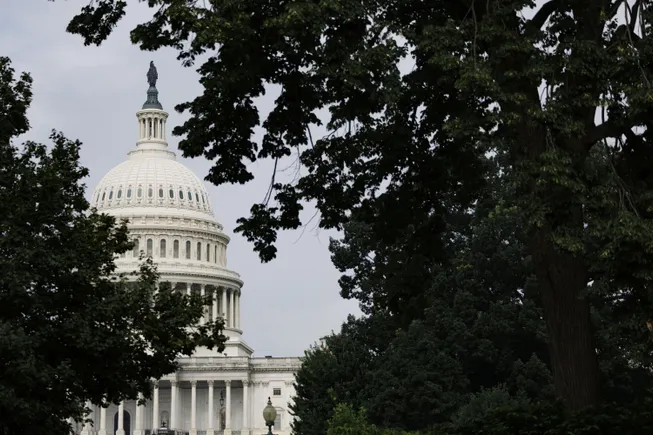
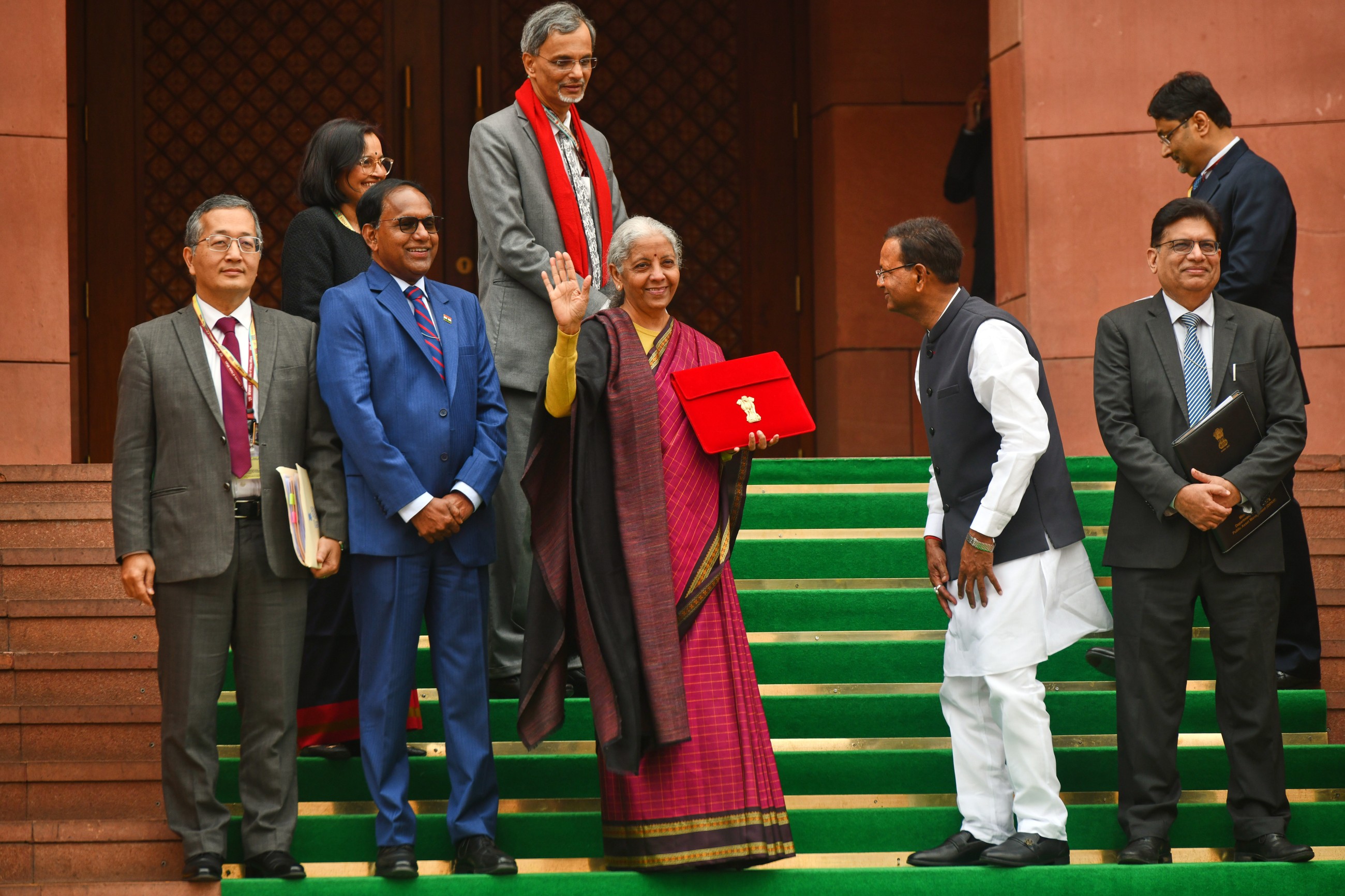
Prime Minister Narendra Modi’s government presented its annual budget to Parliament on Sunday, focusing on sustaining the country’s economic growth despite volatile financial markets and trade uncertainty.In a speech introducing the budget, Finance Minister Nirmala Sitharaman said the governments plans to boost investments in infrastructure and domestic manufacturing while sticking to fiscal prudence.Other measures for non-resident investment announced in Budget 2026 including raising the individual investment limit for Persons Resident Outside India (PROIs) from 5 per cent to 10 per cent, increasing the overall investment limit for all PROIs from 10 per cent to 24 per cent, and allowing residents living abroad to invest in Indian equities via a portfolio route.Here are some key takeaways from the budget:Sitharaman offered no populist giveaways, saying New Delhi will focus on building resilience at home while positioning itself more firmly in the global supply chain.Last year’s budget wooed the salaried middle class with steep tax cuts after Modi secured a landslide victory in the national polls."India will continue to take confident steps towards Viksit Bharat (Developed India), balancing ambition with inclusion,” Sitharaman said.The focus will be on structural reforms, mainly in the manufacturing sector, while also stepping up investments in niche industries such as biopharma and artificial intelligence, she added.The budget calls for the government’s capital expenditure for the next fiscal year to reach 12.2 trillion rupees ($133 billion), mainly on infrastructure, up from 11.2 trillion rupees last year.This comes at a time when many advanced economies are cutting back public investments due to high debt and tightened monetary policy. India will use state spending to prop up growth.Sitharaman said the government will scale up manufacturing in seven strategic sectors including biopharma, semiconductors, electronics components and rare earth magnets. To reduce import dependency, three chemical production parks will be set up.Sitharaman outlined steps to deepen India’s financial markets, including measures to strengthen the corporate bond market and ease certain rules for foreign investors.With global capital increasingly selective amid higher interest rates in the West, emerging markets are competing for stable and long-term investment."I propose a comprehensive review of the Foreign Exchange Management (Non-debt Instruments) Rules to create a more contemporary, user-friendly framework for foreign investments, consistent with India’s evolving economic priorities,” Sitharaman said.Sitharaman said India plans to promote environmentally sustainable travel with seven high-speed rail corridors between key cities such as Mumbai-Pune, Hyderabad-Bengaluru, Pune-Hyderabad, and Chennai-Bengaluru.For cargo movement, an unspecified number of new dedicated freight corridors will be set up and 20 new waterways operationalized over the next five years, she said.Dedicated freight corridors will also be set up for rare earths to promote mining, processing, research and manufacturing.In addition, she said that the government will develop ecologically sustainable mountain and coastal trails to promote ecological tourism.Other highlights:• Tax holiday till 2047 for foreign companies providing global cloud services via Indian data centres• Taxpayers allowed to update returns even after reassessment begins, with an additional 10% tax• Deadline for revising returns extended to March 31 with nominal fee• Import duty exemptions extended to drugs, medicines, and FSMP (Foods for Special Medical Purposes) for 7 additional rare diseases• Nuclear power projects exempted from basic customs duty on imports until 2035, expanded to all nuclear plants• Interest awarded by Motor Accident Claims Tribunal exempted from income tax; TDS removed• Revised baggage clearance rules for international travellers with enhanced duty-free allowances• Tariff rate on all dutiable goods imported for personal use reduced from 20% to 10%• Basic customs duty exempted on 17 drugs and medicines for cancer patients• TDS on sale of immovable property by non-residents to be deposited via resident buyer's PAN challan instead of TAN• Cargo clearance approvals to be processed through a single interconnected digital window by end of FY2026• Clearance processes for food, drugs, plant, animal, and wildlife products to be operationalised by April 2026• Fish catch by Indian vessels in EEZ or High Seas made duty-free; landing at foreign ports treated as exports• Honest taxpayers encouraged to settle disputes by paying additional amounts instead of penalties
Prime Minister Narendra Modi’s government presented its annual budget to Parliament on Sunday, focusing on sustaining the country’s economic growth despite volatile financial markets and trade uncertainty.In a speech introducing the budget, Finance Minister Nirmala Sitharaman said the governments plans to boost investments in infrastructure and domestic manufacturing while sticking to fiscal prudence.Other measures for non-resident investment announced in Budget 2026 including raising the individual investment limit for Persons Resident Outside India (PROIs) from 5 per cent to 10 per cent, increasing the overall investment limit for all PROIs from 10 per cent to 24 per cent, and allowing residents living abroad to invest in Indian equities via a portfolio route.Here are some key takeaways from the budget:Sitharaman offered no populist giveaways, saying New Delhi will focus on building resilience at home while positioning itself more firmly in the global supply chain.Last year’s budget wooed the salaried middle class with steep tax cuts after Modi secured a landslide victory in the national polls."India will continue to take confident steps towards Viksit Bharat (Developed India), balancing ambition with inclusion,” Sitharaman said.The focus will be on structural reforms, mainly in the manufacturing sector, while also stepping up investments in niche industries such as biopharma and artificial intelligence, she added.The budget calls for the government’s capital expenditure for the next fiscal year to reach 12.2 trillion rupees ($133 billion), mainly on infrastructure, up from 11.2 trillion rupees last year.This comes at a time when many advanced economies are cutting back public investments due to high debt and tightened monetary policy. India will use state spending to prop up growth.Sitharaman said the government will scale up manufacturing in seven strategic sectors including biopharma, semiconductors, electronics components and rare earth magnets. To reduce import dependency, three chemical production parks will be set up.Sitharaman outlined steps to deepen India’s financial markets, including measures to strengthen the corporate bond market and ease certain rules for foreign investors.With global capital increasingly selective amid higher interest rates in the West, emerging markets are competing for stable and long-term investment."I propose a comprehensive review of the Foreign Exchange Management (Non-debt Instruments) Rules to create a more contemporary, user-friendly framework for foreign investments, consistent with India’s evolving economic priorities,” Sitharaman said.Sitharaman said India plans to promote environmentally sustainable travel with seven high-speed rail corridors between key cities such as Mumbai-Pune, Hyderabad-Bengaluru, Pune-Hyderabad, and Chennai-Bengaluru.For cargo movement, an unspecified number of new dedicated freight corridors will be set up and 20 new waterways operationalized over the next five years, she said.Dedicated freight corridors will also be set up for rare earths to promote mining, processing, research and manufacturing.In addition, she said that the government will develop ecologically sustainable mountain and coastal trails to promote ecological tourism.Other highlights:• Tax holiday till 2047 for foreign companies providing global cloud services via Indian data centres• Taxpayers allowed to update returns even after reassessment begins, with an additional 10% tax• Deadline for revising returns extended to March 31 with nominal fee• Import duty exemptions extended to drugs, medicines, and FSMP (Foods for Special Medical Purposes) for 7 additional rare diseases• Nuclear power projects exempted from basic customs duty on imports until 2035, expanded to all nuclear plants• Interest awarded by Motor Accident Claims Tribunal exempted from income tax; TDS removed• Revised baggage clearance rules for international travellers with enhanced duty-free allowances• Tariff rate on all dutiable goods imported for personal use reduced from 20% to 10%• Basic customs duty exempted on 17 drugs and medicines for cancer patients• TDS on sale of immovable property by non-residents to be deposited via resident buyer's PAN challan instead of TAN• Cargo clearance approvals to be processed through a single interconnected digital window by end of FY2026• Clearance processes for food, drugs, plant, animal, and wildlife products to be operationalised by April 2026• Fish catch by Indian vessels in EEZ or High Seas made duty-free; landing at foreign ports treated as exports• Honest taxpayers encouraged to settle disputes by paying additional amounts instead of penalties
What's Your Reaction?








Economist Admin
Admin managing news updates, RSS feed curation, and PR content publishing. Focused on timely, accurate, and impactful information delivery.