



















Ramadan 2026: One donor sponsors iftar tent serving 8,000 people daily in Dubai
As Ramadan unfolds across the UAE, large iftar tents once again stand as powerful symbols of generosity and social solidarity. Among them is one of the largest Ramadan iftar tents in the country, located in the Hor Al Anz area of Dubai, serving around 8,000 fasting people each day and fully funded by a single donor.Stay up to date with the latest news. Follow KT on WhatsApp Channels.According to Khalifa Al Falasi, media and relations consultant for the entity overseeing the initiative, the entire project is sponsored by one benefactor who chose to underwrite the iftar tent throughout the holy month, motivated by the spiritual reward and the tangible social impact of the project. “One generous donor took the initiative to sponsor the iftar tent in full throughout Ramadan, believing in the reward of this act and its significant humanitarian impact,” Al Falasi said. “The total cost of a project of this scale amounts to millions of dirhams over the course of the month.” He explained that the budget covers meal preparation, logistics, daily operations and on-site management, reflecting the scale and complexity of the initiative. Ramadan Prayer Timings Providing daily iftar meals for thousands requires a carefully planned system. Al Falasi noted that 8,000 meals are prepared every single day, with work beginning early in the morning to ensure quality, safety and timely delivery. “The preparation process starts in the early morning hours and moves through cooking, packaging, transportation and distribution well ahead of iftar time,” he said. “Operational teams, volunteers and suppliers all work together under a precise plan to ensure smooth execution.”The operation runs daily throughout Ramadan, with strict timelines and quality controls in place to accommodate the large number of beneficiaries. Al Falasi also highlighted a noticeable shift in charitable giving trends in recent years, particularly during Ramadan. Donors are increasingly opting to support specific, clearly defined projects rather than general donations. “We clearly see a growing preference among donors for contributions directed toward specific initiatives, especially seasonal Ramadan projects such as iftar tents, food parcels and zakat al-fitr,” he said.This approach, he explained, allows donors to directly witness the results of their contributions within a defined timeframe. However, general donations remain essential. “Public donations are still extremely important, as they give charitable organisations the flexibility to support the most urgent and critical cases,” he added, noting that the balance between both models reflects a more mature and impact-driven culture of giving.For donors interested in supporting iftar tents, Al Falasi said a range of options is available, from sponsoring an entire tent for the whole month to partially funding a set number of meals.“Costs vary depending on the size of the tent and the number of beneficiaries,” he said. “They can start from tens of thousands of dirhams and reach millions for large-scale tents serving thousands daily.”Digital giving has also played a growing role in Ramadan initiatives. Donations made via online links and QR codes are processed quickly, enabling funds to be converted into meals or aid almost immediately. “Digital donations are highly efficient,” Al Falasi said. “In many cases, contributions are translated into actual meals or assistance within a very short time, sometimes even on the same day.”Ramadan in UAE: Thousands break first fast at Sharjah iftar; volunteers as young as 5 serve faithful How Dubai-based brothers feed 33,000 people an iftar meal every day of Ramadan
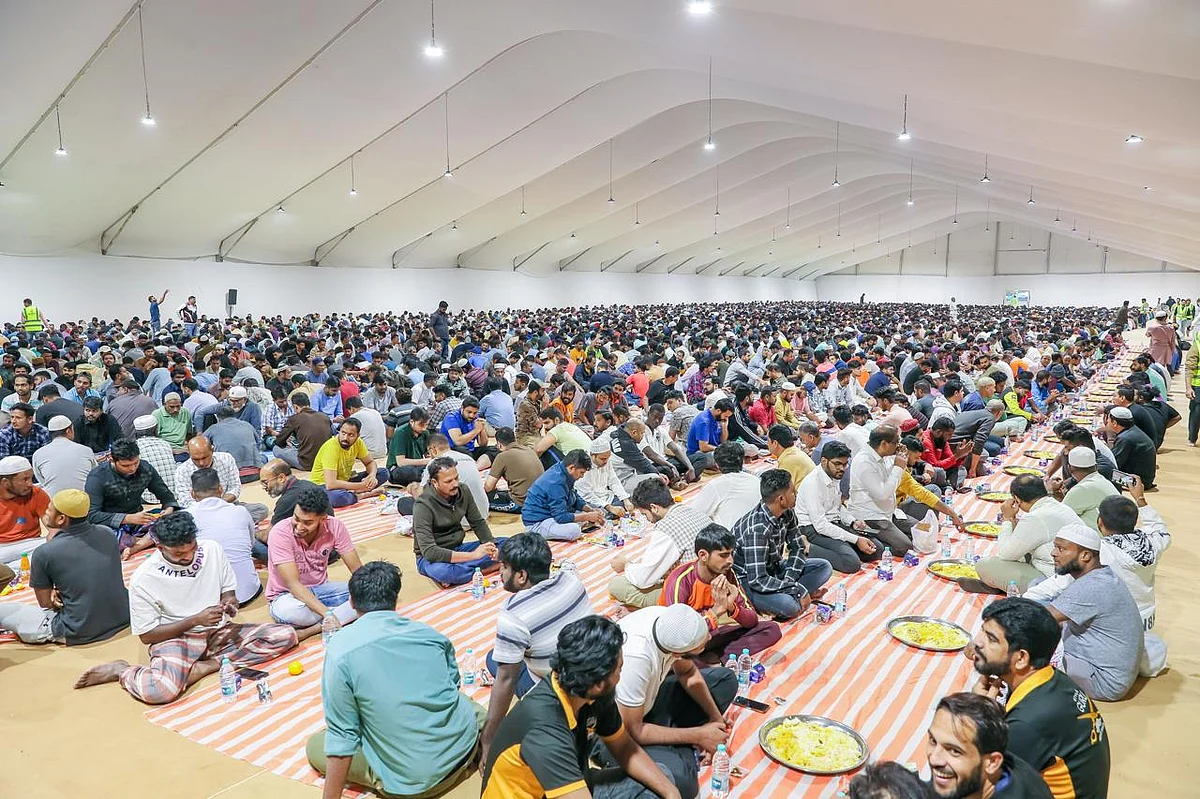
As Ramadan unfolds across the UAE, large iftar tents once again stand as powerful symbols of generosity and social solidarity.
Among them is one of the largest Ramadan iftar tents in the country, located in the Hor Al Anz area of Dubai, serving around 8,000 fasting people each day and fully funded by a single donor.
Stay up to date with the latest news. Follow KT on WhatsApp Channels.
According to Khalifa Al Falasi, media and relations consultant for the entity overseeing the initiative, the entire project is sponsored by one benefactor who chose to underwrite the iftar tent throughout the holy month, motivated by the spiritual reward and the tangible social impact of the project.
“One generous donor took the initiative to sponsor the iftar tent in full throughout Ramadan, believing in the reward of this act and its significant humanitarian impact,” Al Falasi said. “The total cost of a project of this scale amounts to millions of dirhams over the course of the month.”
He explained that the budget covers meal preparation, logistics, daily operations and on-site management, reflecting the scale and complexity of the initiative. Ramadan Prayer Timings
Providing daily iftar meals for thousands requires a carefully planned system. Al Falasi noted that 8,000 meals are prepared every single day, with work beginning early in the morning to ensure quality, safety and timely delivery.
“The preparation process starts in the early morning hours and moves through cooking, packaging, transportation and distribution well ahead of iftar time,” he said. “Operational teams, volunteers and suppliers all work together under a precise plan to ensure smooth execution.”
The operation runs daily throughout Ramadan, with strict timelines and quality controls in place to accommodate the large number of beneficiaries.
Al Falasi also highlighted a noticeable shift in charitable giving trends in recent years, particularly during Ramadan. Donors are increasingly opting to support specific, clearly defined projects rather than general donations.
“We clearly see a growing preference among donors for contributions directed toward specific initiatives, especially seasonal Ramadan projects such as iftar tents, food parcels and zakat al-fitr,” he said.
This approach, he explained, allows donors to directly witness the results of their contributions within a defined timeframe. However, general donations remain essential.
“Public donations are still extremely important, as they give charitable organisations the flexibility to support the most urgent and critical cases,” he added, noting that the balance between both models reflects a more mature and impact-driven culture of giving.
For donors interested in supporting iftar tents, Al Falasi said a range of options is available, from sponsoring an entire tent for the whole month to partially funding a set number of meals.
“Costs vary depending on the size of the tent and the number of beneficiaries,” he said. “They can start from tens of thousands of dirhams and reach millions for large-scale tents serving thousands daily.”
Digital giving has also played a growing role in Ramadan initiatives. Donations made via online links and QR codes are processed quickly, enabling funds to be converted into meals or aid almost immediately.
“Digital donations are highly efficient,” Al Falasi said. “In many cases, contributions are translated into actual meals or assistance within a very short time, sometimes even on the same day.”
What's Your Reaction?