






























Security Council weighs Hormuz force mandate
Arabian Post Staff -Dubai Diplomatic efforts are under way at the United Nations as members of the Security Council prepare to negotiate a draft resolution that could authorise military action to safeguard commercial shipping in the Strait of Hormuz, one of the world’s most strategically vital energy corridors. The proposal, circulated by Bahrain, reflects mounting concern among maritime and energy stakeholders over persistent threats to vessels transiting […]The article Security Council weighs Hormuz force mandate appeared first on Arabian Post.

Arabian Post Staff -Dubai
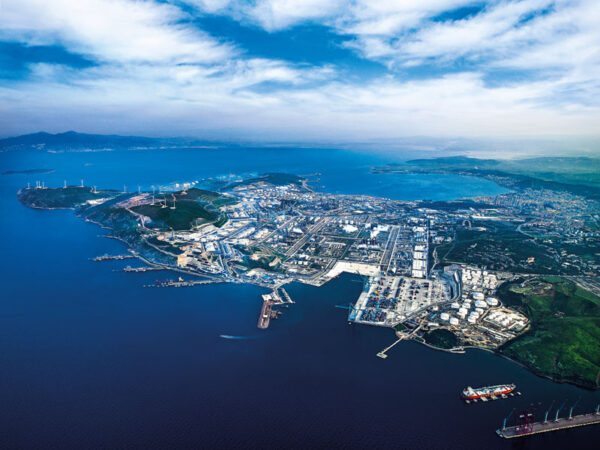
Diplomatic efforts are under way at the United Nations as members of the Security Council prepare to negotiate a draft resolution that could authorise military action to safeguard commercial shipping in the Strait of Hormuz, one of the world’s most strategically vital energy corridors.
The proposal, circulated by Bahrain, reflects mounting concern among maritime and energy stakeholders over persistent threats to vessels transiting the narrow waterway, through which a significant share of global oil supplies passes. Diplomats familiar with the draft indicate that it seeks to establish a legal framework permitting coordinated international action, including the possible use of force, to deter attacks and ensure freedom of navigation.
Tensions in the Strait of Hormuz have fluctuated over the past several years, shaped by geopolitical rivalries, sanctions disputes and sporadic incidents involving tankers and naval patrols. The renewed push at the Security Council signals a shift towards a more formalised multilateral response, moving beyond ad hoc naval deployments led by individual states or coalitions.
Officials involved in the discussions say the draft resolution aims to balance deterrence with restraint. Language under consideration is expected to emphasise proportionality and adherence to international law, including the United Nations Convention on the Law of the Sea. At the same time, it may grant member states the authority to take “all necessary measures” to protect vessels, a phrase that in UN practice has often been interpreted as allowing the use of force.
The initiative is likely to expose divisions within the Council. Western members, along with several Gulf states, have voiced support for stronger measures to secure maritime routes, arguing that disruptions in the Strait pose risks not only to regional stability but also to global energy markets. Insurance costs for shipping through the area have climbed during periods of heightened tension, and any sustained disruption could have wider economic repercussions.
Other members, including Russia and China, are expected to approach the proposal with caution. Both have traditionally advocated for diplomatic solutions and have raised concerns about mandates that could be seen as open-ended or prone to escalation. Diplomats from these countries have indicated in past debates that military authorisation should be a last resort, and that any resolution must clearly define its scope and duration.
Regional dynamics are also shaping the debate. Bahrain’s role in introducing the draft underscores the concerns of Gulf states that rely heavily on uninterrupted maritime trade. At the same time, the proposal is likely to be closely scrutinised by Iran, which borders the Strait and has historically rejected external military presence in the area, viewing it as a threat to its sovereignty and security interests.
Shipping companies and energy firms are monitoring developments closely. Industry executives have warned that uncertainty in the Strait of Hormuz can quickly translate into volatility in oil prices and supply chains. Analysts note that even limited incidents can have outsized effects, given the concentration of traffic through the narrow passage.
Efforts to protect shipping in the region have taken various forms in recent years, including multinational naval patrols and information-sharing initiatives designed to improve situational awareness. The draft resolution under discussion would mark a more formal endorsement by the Security Council of collective security measures, potentially bringing greater coordination but also raising the stakes.
Legal experts point out that any authorisation of force would need to be carefully calibrated to avoid unintended consequences. Past UN mandates involving maritime security have typically included reporting requirements and sunset clauses to ensure oversight. Negotiators are expected to debate such provisions in detail as talks progress.
The article Security Council weighs Hormuz force mandate appeared first on Arabian Post.
What's Your Reaction?