

































Tips for keeping your kids off screens during the regional conflict
[Editor's Note: Follow Khaleej Times live blog amid US-Israel-Iran war for the latest regional developments.]As schools across the UAE prepare to resume distance learning from Monday, March 23, families are once again bracing for screen-heavy routines. After a brief spring break, laptops and tablets are set to take centre stage, ensuring continuity in education but raising concerns for some parents.The shift comes amid ongoing regional tensions that limit outdoor movement as a precautionary measure, making digital tools an even greater part of daily life.Stay up to date with the latest news. Follow KT on WhatsApp Channels.While schools emphasise structured, interactive lessons, working parents say the reality at home is often more complex. Screens are not just educational tools — they can become companions, distractions, or comfort when parents are busy.Experts acknowledge that increased screen use may be unavoidable in the coming weeks but stress that simple strategies can help families reduce its impact on children’s wellbeing.Here are practical tips for keeping your kids off screens during the regional conflict.How can parents balance screen time during distance learning?For many UAE parents, the return to online classes is necessary but comes with a new struggle.Dubai resident Shreya Goswami says screens have become central to her child’s routine, especially with both parents working. “With both of us working, and one of us going to the office in person, it’s natural for the child to turn to devices,” she said, explaining that extended distance learning only adds to that reliance.She acknowledged that while distance learning is necessary for everyone’s safety, it comes with trade-offs. “At the same time, it’s a comfort and companion for my son, who doesn’t have a sibling or a pet. We’re busy or away at work, so at times there is no option. Fifteen minutes turn into an hour… I try to take it back, and then the battle begins,” she added, noting that balancing this with outdoor play remains “a constant challenge".Other parents share similar concerns, particularly about what children may be missing out on.“Honestly, I never imagined my children would be on screens so much… but with distance learning, it’s also become unavoidable as everyone’s safety and wellbeing is a priority at the moment,” said Dubai-based mother Justine Robertson.Even with conscious efforts to introduce offline activities, she said the struggle will be ongoing. “I will try to balance it with the help of my house help… with reading together, drawing, and little moments of play, but it’ll be a daily struggle,” she added, echoing a sense of guilt many parents experience.Will children be on screens all day?Educators are quick to point out that distance learning is not designed to keep children glued to devices continuously.Dr Neil Hopkin, Director of Education at Fortes Education, said it is important to distinguish between passive and active screen use. “Not all screen time is equal. A child passively scrolling social media and a child collaborating with classmates on a science investigation are having fundamentally different experiences,” he said.He explained that schools have structured lessons to include interaction, problem-solving, and creative work, alongside planned offline intervals to reduce continuous exposure.Barney Durrant, Headmaster at Brighton College Abu Dhabi, reinforced this, saying online classes mirror classroom dynamics rather than long lectures.“Online learning involves discussions, group work and independent tasks,” he said, adding that schools are also encouraging activities away from screens — including projects, home experiments, and physical challenges.What are the health risks parents should watch for?With screen time set to rise again, doctors warn that children’s eye health and overall wellbeing need close attention.Dr Pavly Moawad, specialist ophthalmologist at Saudi German Hospital Ajman, said prolonged exposure can lead to digital eye strain, with symptoms such as blurred vision, dry eyes, and headaches.“Excessive screen use can lead to a condition commonly referred to as digital eye strain… along with potential long-term effects on visual development,” she said.She added that behavioural signs — including frequent eye rubbing, squinting, or complaints of discomfort — should not be ignored.Dr Ahmed Mamdouh, a specialist in ophthalmology at Burjeel Day Surgery Centre in Al Shahama, said fatigue can also affect children’s focus and energy levels.“Short, structured pauses… help children reset their attention and reduce fatigue,” he said, stressing the importance of breaks and movement throughout the day.What practical steps can parents take at home?Experts say the key lies in creating structure rather than trying to eliminate screen use altogether.Dr Moawad recommends dividing the day into clear segments — study time, breaks, and limited leisure screen use — “to avoid prolonged, uninterrupted exposure".He adde
[Editor's Note: Follow Khaleej Times live blog amid US-Israel-Iran war for the latest regional developments.]
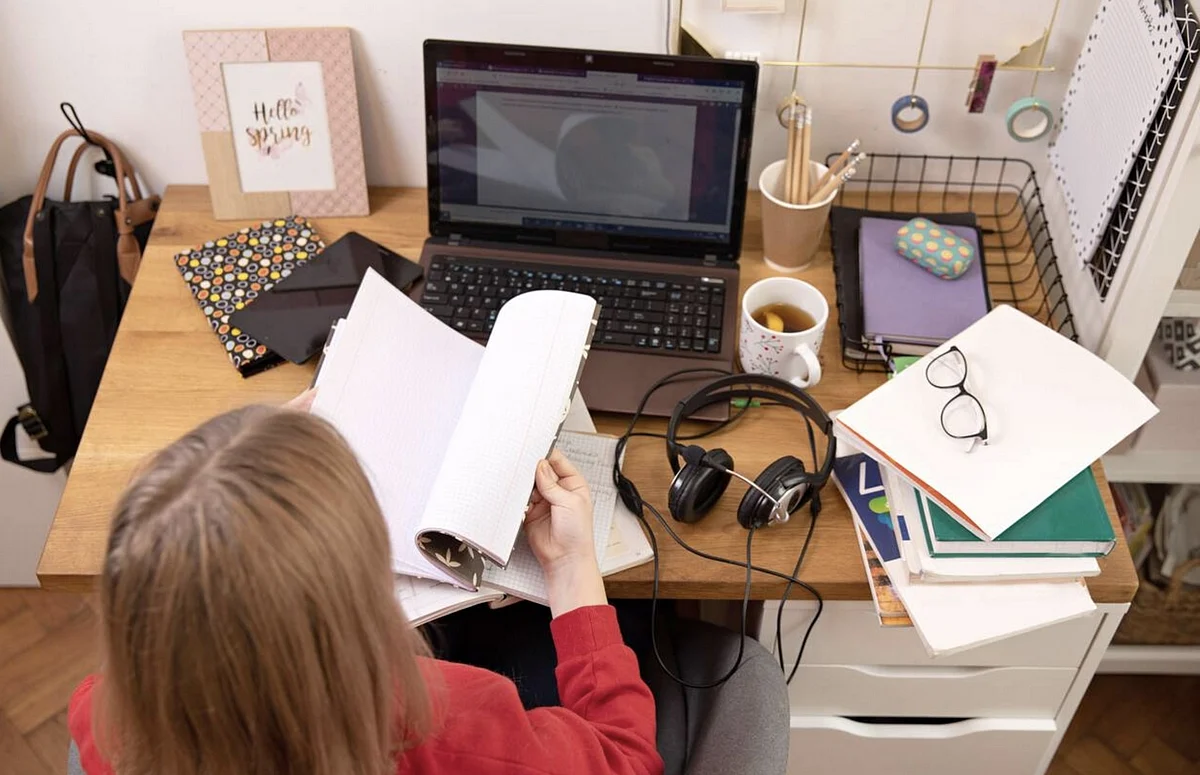
As schools across the UAE prepare to resume distance learning from Monday, March 23, families are once again bracing for screen-heavy routines. After a brief spring break, laptops and tablets are set to take centre stage, ensuring continuity in education but raising concerns for some parents.
The shift comes amid ongoing regional tensions that limit outdoor movement as a precautionary measure, making digital tools an even greater part of daily life.
Stay up to date with the latest news. Follow KT on WhatsApp Channels.
While schools emphasise structured, interactive lessons, working parents say the reality at home is often more complex. Screens are not just educational tools — they can become companions, distractions, or comfort when parents are busy.
Experts acknowledge that increased screen use may be unavoidable in the coming weeks but stress that simple strategies can help families reduce its impact on children’s wellbeing.
Here are practical tips for keeping your kids off screens during the regional conflict.
How can parents balance screen time during distance learning?
For many UAE parents, the return to online classes is necessary but comes with a new struggle.
Dubai resident Shreya Goswami says screens have become central to her child’s routine, especially with both parents working. “With both of us working, and one of us going to the office in person, it’s natural for the child to turn to devices,” she said, explaining that extended distance learning only adds to that reliance.
She acknowledged that while distance learning is necessary for everyone’s safety, it comes with trade-offs. “At the same time, it’s a comfort and companion for my son, who doesn’t have a sibling or a pet. We’re busy or away at work, so at times there is no option. Fifteen minutes turn into an hour… I try to take it back, and then the battle begins,” she added, noting that balancing this with outdoor play remains “a constant challenge".
Other parents share similar concerns, particularly about what children may be missing out on.
“Honestly, I never imagined my children would be on screens so much… but with distance learning, it’s also become unavoidable as everyone’s safety and wellbeing is a priority at the moment,” said Dubai-based mother Justine Robertson.
Even with conscious efforts to introduce offline activities, she said the struggle will be ongoing. “I will try to balance it with the help of my house help… with reading together, drawing, and little moments of play, but it’ll be a daily struggle,” she added, echoing a sense of guilt many parents experience.
Will children be on screens all day?
Educators are quick to point out that distance learning is not designed to keep children glued to devices continuously.
Dr Neil Hopkin, Director of Education at Fortes Education, said it is important to distinguish between passive and active screen use. “Not all screen time is equal. A child passively scrolling social media and a child collaborating with classmates on a science investigation are having fundamentally different experiences,” he said.
He explained that schools have structured lessons to include interaction, problem-solving, and creative work, alongside planned offline intervals to reduce continuous exposure.
Barney Durrant, Headmaster at Brighton College Abu Dhabi, reinforced this, saying online classes mirror classroom dynamics rather than long lectures.
“Online learning involves discussions, group work and independent tasks,” he said, adding that schools are also encouraging activities away from screens — including projects, home experiments, and physical challenges.
What are the health risks parents should watch for?
With screen time set to rise again, doctors warn that children’s eye health and overall wellbeing need close attention.
Dr Pavly Moawad, specialist ophthalmologist at Saudi German Hospital Ajman, said prolonged exposure can lead to digital eye strain, with symptoms such as blurred vision, dry eyes, and headaches.
“Excessive screen use can lead to a condition commonly referred to as digital eye strain… along with potential long-term effects on visual development,” she said.
She added that behavioural signs — including frequent eye rubbing, squinting, or complaints of discomfort — should not be ignored.
Dr Ahmed Mamdouh, a specialist in ophthalmology at Burjeel Day Surgery Centre in Al Shahama, said fatigue can also affect children’s focus and energy levels.
“Short, structured pauses… help children reset their attention and reduce fatigue,” he said, stressing the importance of breaks and movement throughout the day.
What practical steps can parents take at home?
Experts say the key lies in creating structure rather than trying to eliminate screen use altogether.
Dr Moawad recommends dividing the day into clear segments — study time, breaks, and limited leisure screen use — “to avoid prolonged, uninterrupted exposure".
He added, “Techniques like the 20-20-20 rule can also help reduce eye strain.”
Equally important is encouraging meaningful breaks. Instead of switching devices, children should step away entirely — whether it’s for outdoor play, reading, or creative activities.
Dr Mamdouh suggests making offline options more accessible. “Parents can also make non-screen activities more appealing by keeping books, puzzles, art supplies, and hands-on projects easily accessible,” he said.
He also highlighted the importance of leading by example, noting that children often mirror their parents’ habits.
How can families maintain a healthy balance during this period?
Building a routine that blends online learning with offline engagement is essential, highlight experts from UAE-based technology companies that focus on child online protection.
Nidal Taha, CEO of KIDZONET, recommends setting clear boundaries around device use. “Parents should prioritise simple solutions that allow them to block or limit access to harmful content,” he said, adding that limiting non-essential apps can help maintain balance.
Syed Aizad, Lead Security Researcher at Acronis TRU, said, "Centralised parental dashboards and federated learning approaches can further strengthen protection while limiting exposure of sensitive user information.”
Experts also emphasise the importance of communication. “Open conversations remain essential, helping children understand boundaries and develop healthier, more intentional digital habits,” added Taha.
What's Your Reaction?